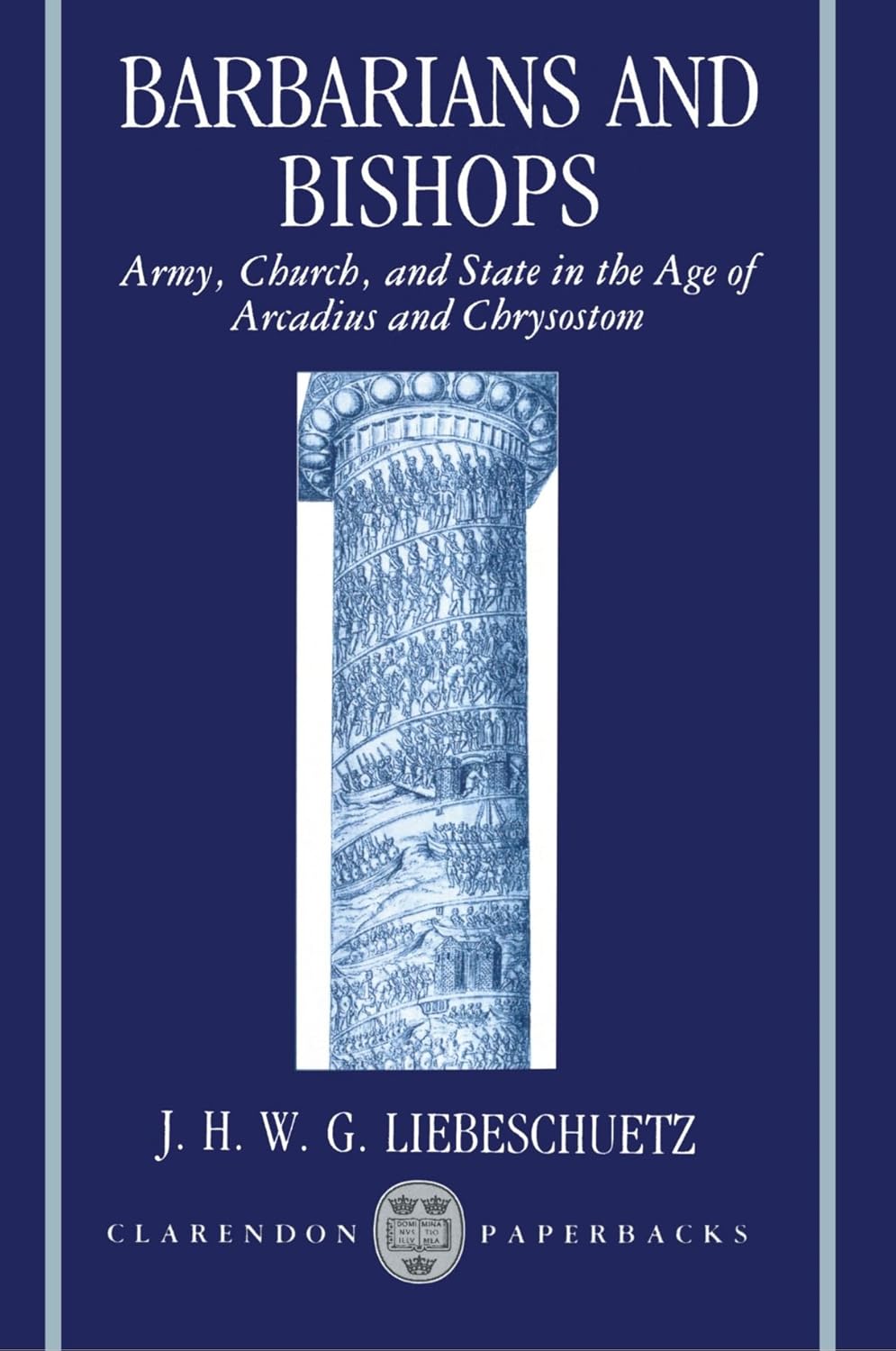
Barbarians and Bishops: Army, Church, and State in the Age of Arcadius
Barbarians and Bishops: Army, Church, and State in the Age of Arcadius
Price subject to change. Tap below for current.
Couldn't load pickup availability
In Barbarians and Bishops, J. H. W. G. Liebeschuetz delves into the intricate relationship between the army, church, and state during the pivotal era of Arcadius and Chrysostom. This scholarly work offers a comprehensive analysis of how these three powerful entities interacted and influenced each other in the late Roman Empire.
The book meticulously explores the role of the army in shaping political dynamics and its impact on ecclesiastical authority. Liebeschuetz provides a detailed account of military campaigns and their repercussions on both the church and the state, illustrating how the military was not just a tool of the government but also a significant player in religious affairs.
Moreover, the author examines the rise of the church's influence during this period, highlighting how bishops like Chrysostom navigated the complex political landscape. The church emerged as a formidable institution, often at odds with imperial power, and Liebeschuetz captures this tension with remarkable clarity.
One of the standout features of this book is its rich historical context. Liebeschuetz does not merely recount events; he provides a nuanced understanding of the social and cultural factors that shaped the era. The interplay between barbarians and the Roman state is particularly well-articulated, showcasing how external pressures influenced internal politics.
Throughout the text, the author employs a variety of sources, from contemporary writings to archaeological findings, to support his arguments. This rigorous approach lends credibility to his analysis and makes for a compelling read. The book is not just for historians; it is also accessible to anyone interested in the intersection of religion and politics in ancient times.
In conclusion, Barbarians and Bishops is an essential read for those who wish to understand the complexities of the late Roman Empire. J. H. W. G. Liebeschuetz has crafted a work that is both informative and engaging, making it a valuable addition to the library of any history enthusiast.
Share