Dynamics of Corporate Information Infrastructures and Control
Dynamics of Corporate Information Infrastructures and Control
Price subject to change. Tap below for current.
Couldn't load pickup availability
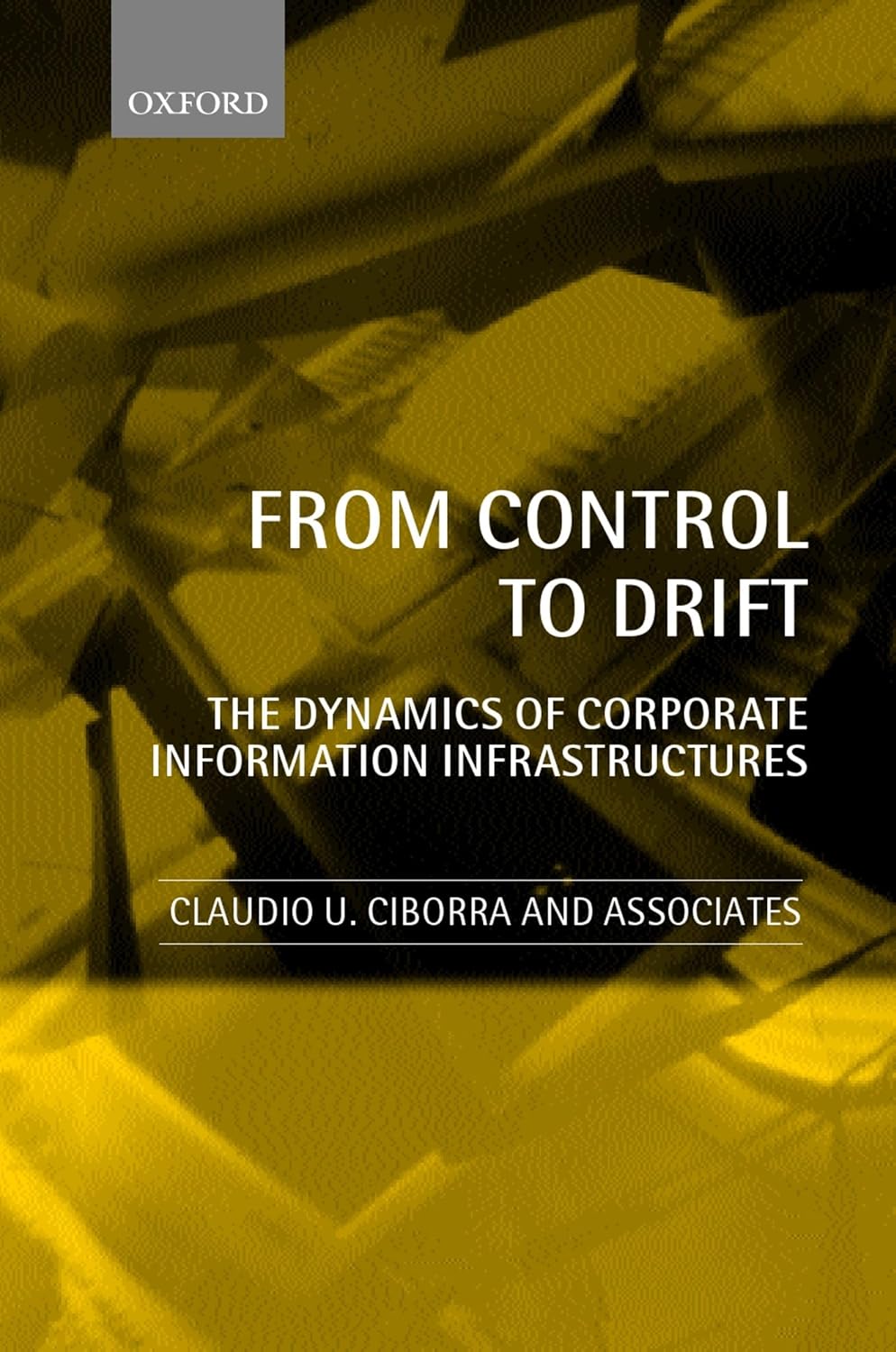
The book From Control to Drift offers a profound exploration of the complexities surrounding corporate information infrastructures. Authored by a team of experts, including Claudio U. Ciborra and Kristin Braa, this work delves into the intricate dynamics that shape how organizations manage their information systems.
One of the key themes in this book is the transition from a state of control to one of drift. This concept is crucial for understanding how organizations adapt to the rapidly changing technological landscape. The authors argue that traditional models of information management often fail to account for the unpredictable nature of organizational behavior.
Through a series of case studies and theoretical insights, the book illustrates how corporate information infrastructures are not merely technical systems but are deeply embedded in social practices. This perspective challenges readers to rethink their assumptions about the role of technology in organizations.
The authors emphasize the importance of recognizing the dynamics of drift in information management. They suggest that organizations must embrace flexibility and adaptability to thrive in an environment characterized by constant change. This approach is particularly relevant for leaders and managers who are tasked with navigating the complexities of modern information systems.
Another significant aspect of the book is its focus on the interplay between technology and organizational culture. The authors argue that cultural factors play a critical role in shaping how information infrastructures are developed and utilized. By examining this relationship, the book provides valuable insights for practitioners seeking to foster a more effective information management strategy.
In addition to theoretical discussions, the book also offers practical recommendations for organizations looking to enhance their information systems. The authors provide a framework for understanding the interdependencies between technology, people, and processes, which can help organizations make informed decisions about their information management practices.
Overall, From Control to Drift is an essential read for anyone interested in the field of information systems. Its unique perspective on the dynamics of corporate information infrastructures makes it a valuable resource for academics, practitioners, and students alike. The insights provided by the authors will undoubtedly contribute to a deeper understanding of how organizations can effectively manage their information resources in an ever-evolving landscape.
Share