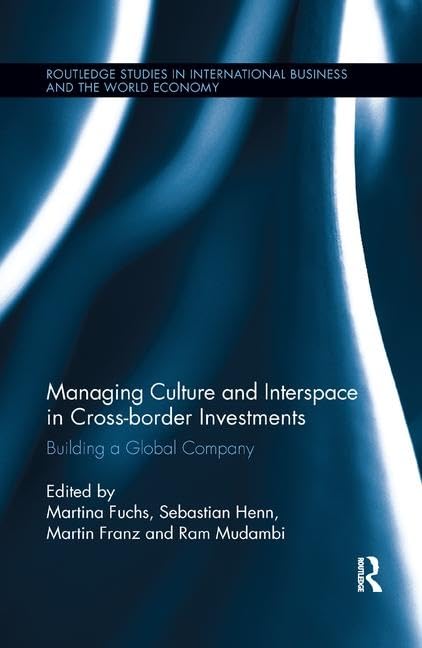
Managing Culture and Interspace in Global Investments for Success
Managing Culture and Interspace in Global Investments for Success
Price subject to change. Tap below for current.
Couldn't load pickup availability
In today's globalized economy, understanding how to manage culture and interspace in cross-border investments is crucial for building a successful global company. The book Managing Culture and Interspace in Cross-border Investments provides invaluable insights into the complexities of international business operations.
This comprehensive guide delves into the intricate relationship between culture and business practices across different countries. It emphasizes the importance of recognizing cultural differences and adapting strategies accordingly. By doing so, companies can enhance their chances of success in foreign markets.
One of the key themes explored in this book is the concept of cross-border investments. The authors, including renowned experts in international business, present a thorough analysis of how cultural factors influence investment decisions. They argue that understanding local customs and business etiquette is essential for fostering positive relationships with stakeholders.
The book also highlights the significance of building a global company that can navigate the challenges of diverse markets. It offers practical frameworks and case studies that illustrate how successful companies have managed to integrate cultural considerations into their business strategies.
Moreover, the authors discuss the role of interspace in cross-border investments. This concept refers to the transitional spaces where different cultures interact. By effectively managing these interspaces, companies can create synergies that lead to innovative solutions and competitive advantages.
Throughout the book, readers will find a wealth of knowledge on how to approach international business with a cultural lens. The authors provide actionable recommendations for managers and decision-makers looking to expand their operations globally. By embracing cultural diversity, businesses can unlock new opportunities and drive growth.
In conclusion, Managing Culture and Interspace in Cross-border Investments is an essential read for anyone involved in international business. It equips readers with the tools needed to understand and navigate the complexities of cultural interactions in a globalized world. This book is a must-have for professionals seeking to enhance their cross-border investment strategies.
Share