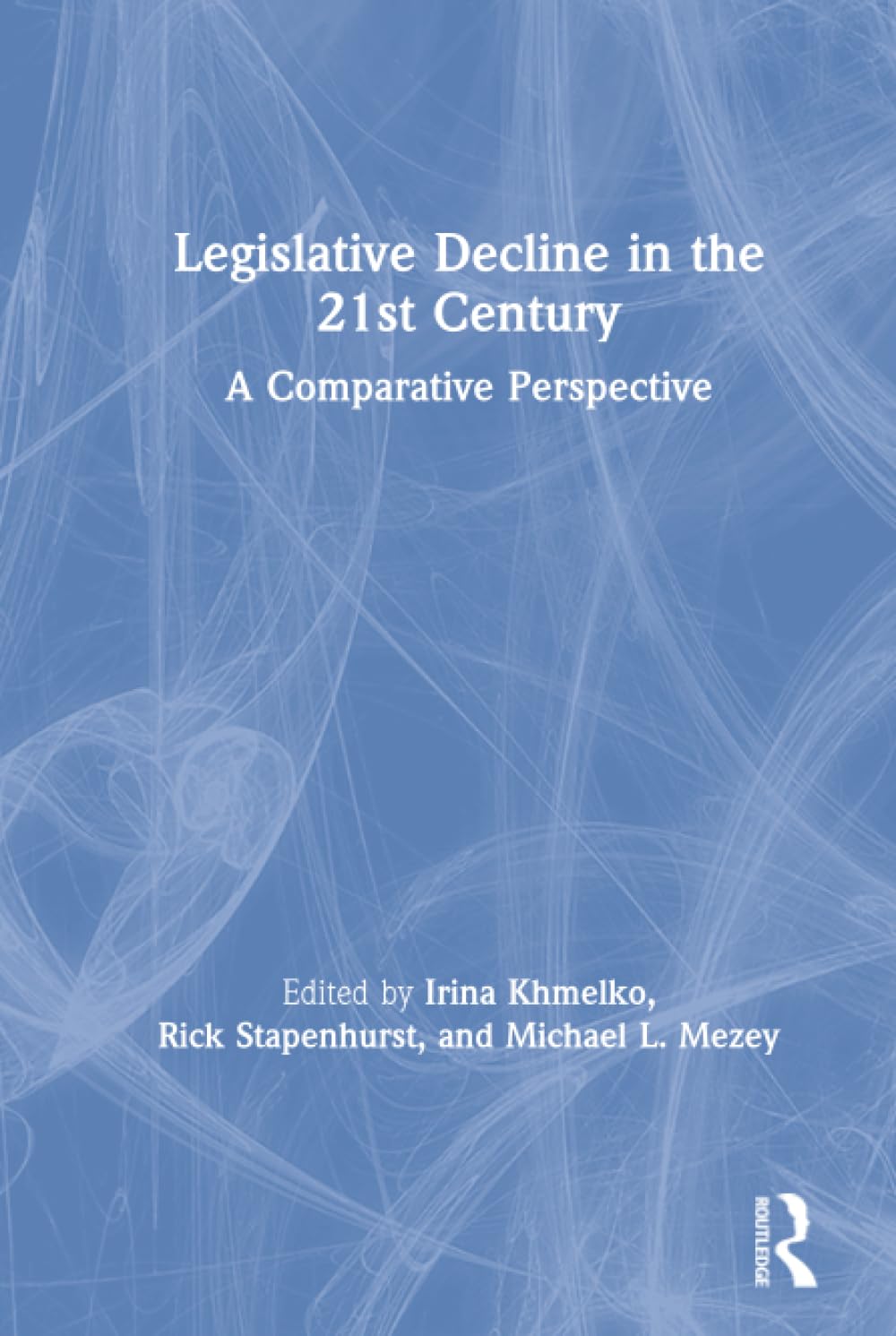
Legislative Decline in the 21st Century: A Comprehensive Analysis
Legislative Decline in the 21st Century: A Comprehensive Analysis
Price subject to change. Tap below for current.
Couldn't load pickup availability
The book Legislative Decline in the 21st Century offers a profound exploration of the challenges faced by modern legislatures. Authored by experts Irina Khmelko, Rick Stapenhurst, and Michael L. Mezey, this work delves into the intricate dynamics that have led to a noticeable decline in legislative effectiveness and public trust.
In recent years, the role of legislatures has been increasingly scrutinized. This book provides a detailed examination of the factors contributing to this decline in legislative power. Through comprehensive research and case studies, the authors highlight how political polarization, public disillusionment, and institutional weaknesses have all played a part in this troubling trend.
One of the key themes of the book is the impact of political polarization on legislative processes. The authors argue that as political parties become more divided, the ability to reach consensus diminishes, leading to gridlock and inefficiency. This polarization not only affects the legislative agenda but also erodes public confidence in the ability of elected officials to govern effectively.
The book also addresses the role of public disillusionment in shaping perceptions of legislative bodies. As citizens grow increasingly skeptical of their representatives, the legitimacy of legislative institutions is called into question. The authors provide insights into how this disillusionment can be countered through reforms aimed at increasing transparency and accountability.
Moreover, the authors explore the institutional weaknesses that contribute to legislative decline. They discuss how outdated structures and processes hinder the ability of legislatures to adapt to contemporary challenges. By analyzing various legislative frameworks, the book proposes innovative solutions to strengthen these institutions and restore their relevance in the modern political landscape.
Another significant aspect covered in the book is the influence of external factors such as media and technology on legislative performance. The authors examine how the rise of social media and 24-hour news cycles has transformed the way legislators communicate with the public, often leading to sensationalism and a focus on image over substance.
In conclusion, Legislative Decline in the 21st Century is an essential read for anyone interested in understanding the complexities of modern governance. It not only identifies the problems but also offers a roadmap for revitalizing legislative institutions. This book is a vital resource for scholars, practitioners, and citizens alike who seek to engage with the pressing issues facing legislatures today.
Share