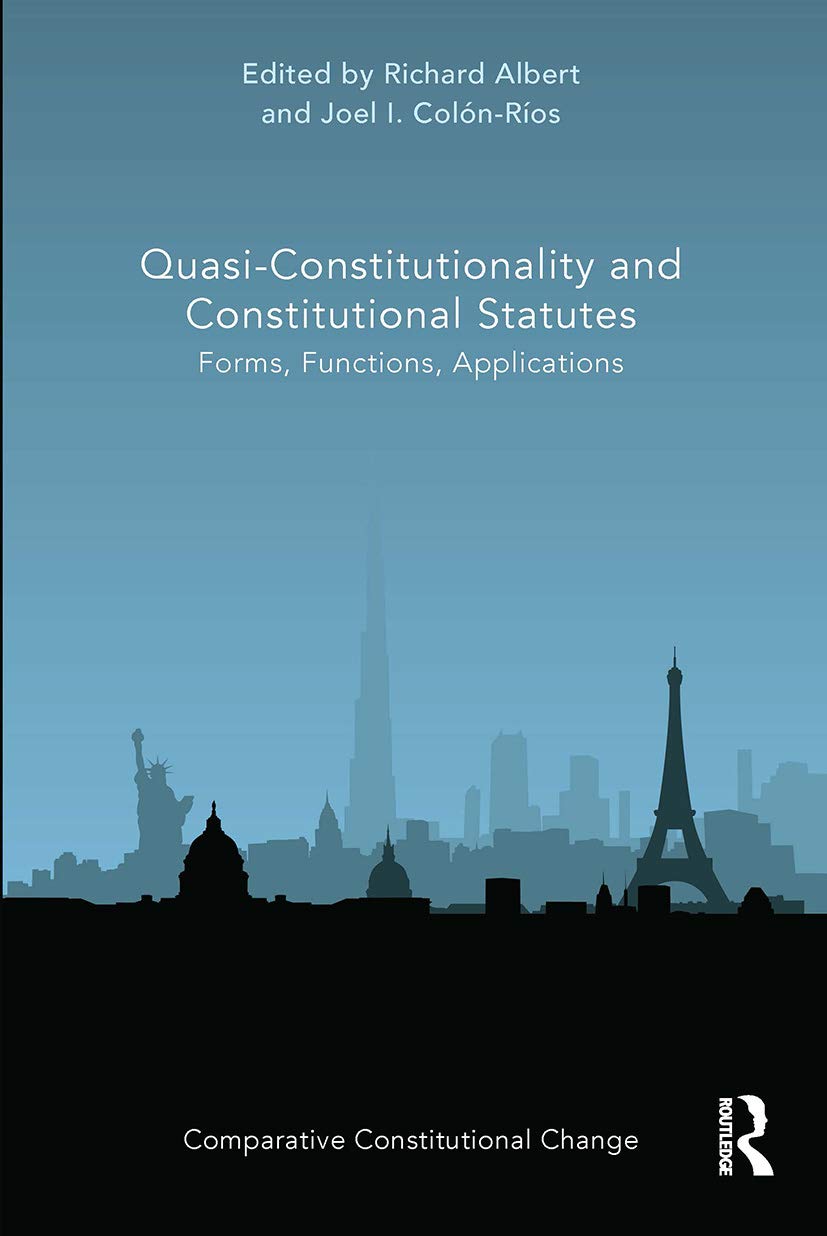
Quasi-Constitutionality and Constitutional Statutes: A Deep Dive
Quasi-Constitutionality and Constitutional Statutes: A Deep Dive
Price subject to change. Tap below for current.
Couldn't load pickup availability
The book Quasi-Constitutionality and Constitutional Statutes offers a profound exploration of the evolving landscape of constitutional law. Authored by Richard Albert and Joel Colon-Rios, this work delves into the intricate relationship between constitutional statutes and the concept of quasi-constitutionality. It is an essential read for anyone interested in comparative constitutional change.
One of the key themes of this book is the impact of constitutional statutes on legal frameworks around the world. The authors meticulously analyze how these statutes function within various jurisdictions, providing readers with a comprehensive understanding of their significance. The comparative approach taken by Albert and Colon-Rios allows for a rich examination of different legal systems.
Throughout the text, the authors emphasize the importance of constitutional change in shaping democratic governance. They argue that understanding the mechanisms of constitutional change is vital for scholars, practitioners, and policymakers alike. This book serves as a critical resource for those who wish to grasp the complexities of constitutional law.
In addition to theoretical insights, the book presents numerous case studies that illustrate the practical implications of quasi-constitutionality. These real-world examples highlight how constitutional statutes can influence judicial decisions and legislative processes. Readers will find these case studies particularly enlightening as they showcase the dynamic nature of constitutional law.
The authors also address the challenges and controversies surrounding the concept of constitutional statutes. They engage with various perspectives and critiques, fostering a nuanced discussion that encourages readers to think critically about the subject. This balanced approach makes the book accessible to both seasoned legal scholars and newcomers to the field.
Moreover, the book is well-structured, with clear headings and subheadings that guide the reader through complex topics. Each chapter builds upon the last, creating a cohesive narrative that enhances the overall reading experience. The inclusion of a comprehensive bibliography further enriches the text, providing readers with additional resources for further study.
In conclusion, Quasi-Constitutionality and Constitutional Statutes is a vital contribution to the field of constitutional law. It not only sheds light on the theoretical underpinnings of constitutional statutes but also offers practical insights that are invaluable for understanding contemporary legal challenges. This book is a must-read for anyone interested in the future of constitutional governance.
Share