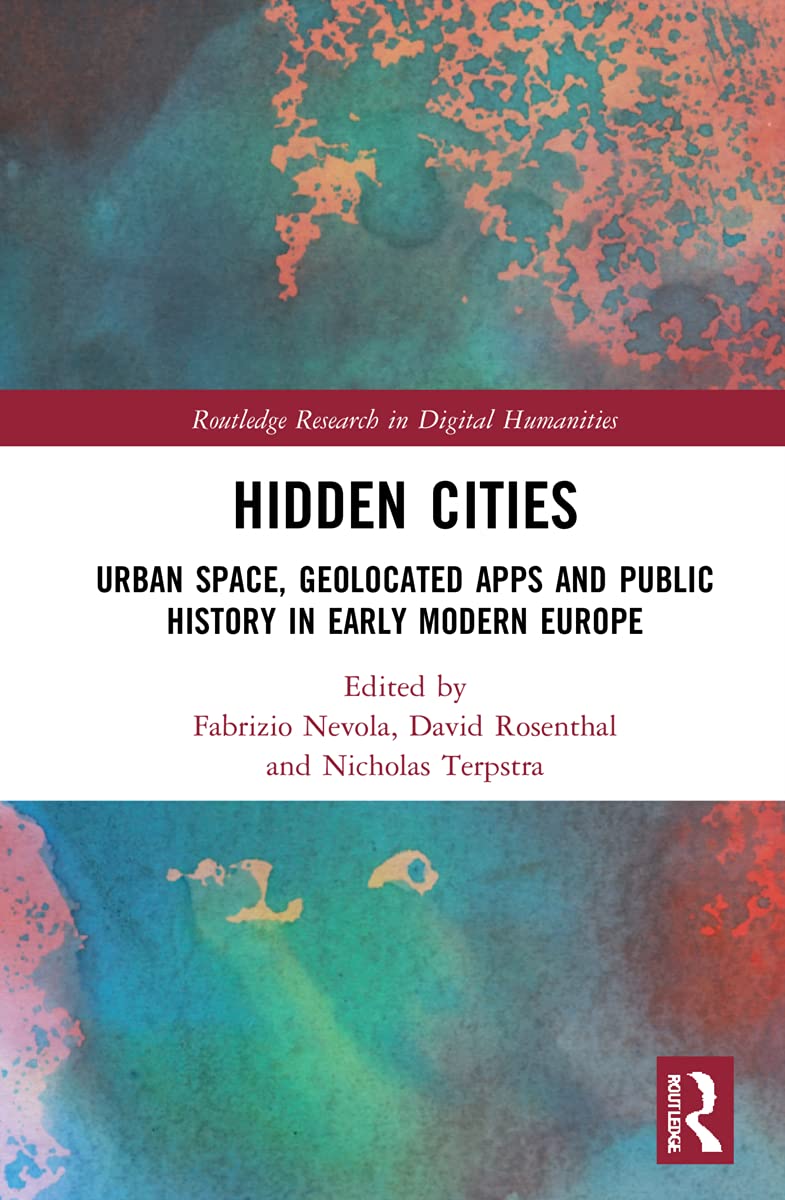
Hidden Cities: Urban Space and Geolocated Apps in History
Hidden Cities: Urban Space and Geolocated Apps in History
Price subject to change. Tap below for current.
Couldn't load pickup availability
The book Hidden Cities explores the intricate relationship between urban spaces and the digital age, focusing on geolocated applications that enhance our understanding of public history. This insightful work, authored by Fabrizio Nevola, David Rosenthal, and Nicholas Terpstra, delves into how technology reshapes our perception of historical cities.
In the first section, the authors discuss the evolution of urban space and its significance in early modern Europe. They highlight how cities served as cultural hubs, influencing social interactions and historical narratives. The integration of geolocated apps allows users to experience these urban environments in a new light, bridging the gap between past and present.
One of the standout features of this book is its examination of public history through the lens of modern technology. The authors argue that geolocation tools not only provide context but also invite users to engage with history actively. This interactive approach transforms passive learning into an immersive experience, making history accessible to a broader audience.
The second section focuses on case studies from various European cities, showcasing how geolocated apps have been implemented to enhance historical understanding. Each case study illustrates the unique challenges and opportunities presented by these technologies, emphasizing the importance of local context in historical interpretation.
Furthermore, the book addresses the ethical implications of using technology in historical research. The authors raise critical questions about digital humanities and the responsibilities of historians in the digital age. They advocate for a balanced approach that respects historical accuracy while embracing innovation.
In addition to its academic rigor, Hidden Cities is written in an engaging style that appeals to both scholars and general readers. The authors successfully blend theory with practical examples, making complex ideas accessible without sacrificing depth.
Overall, Hidden Cities is a must-read for anyone interested in the intersection of technology and history. It offers valuable insights into how urban spaces can be reimagined through digital tools, encouraging readers to rethink their relationship with the past. This book is not just about history; it's about how we can use technology to create a more nuanced understanding of our urban environments.
Share