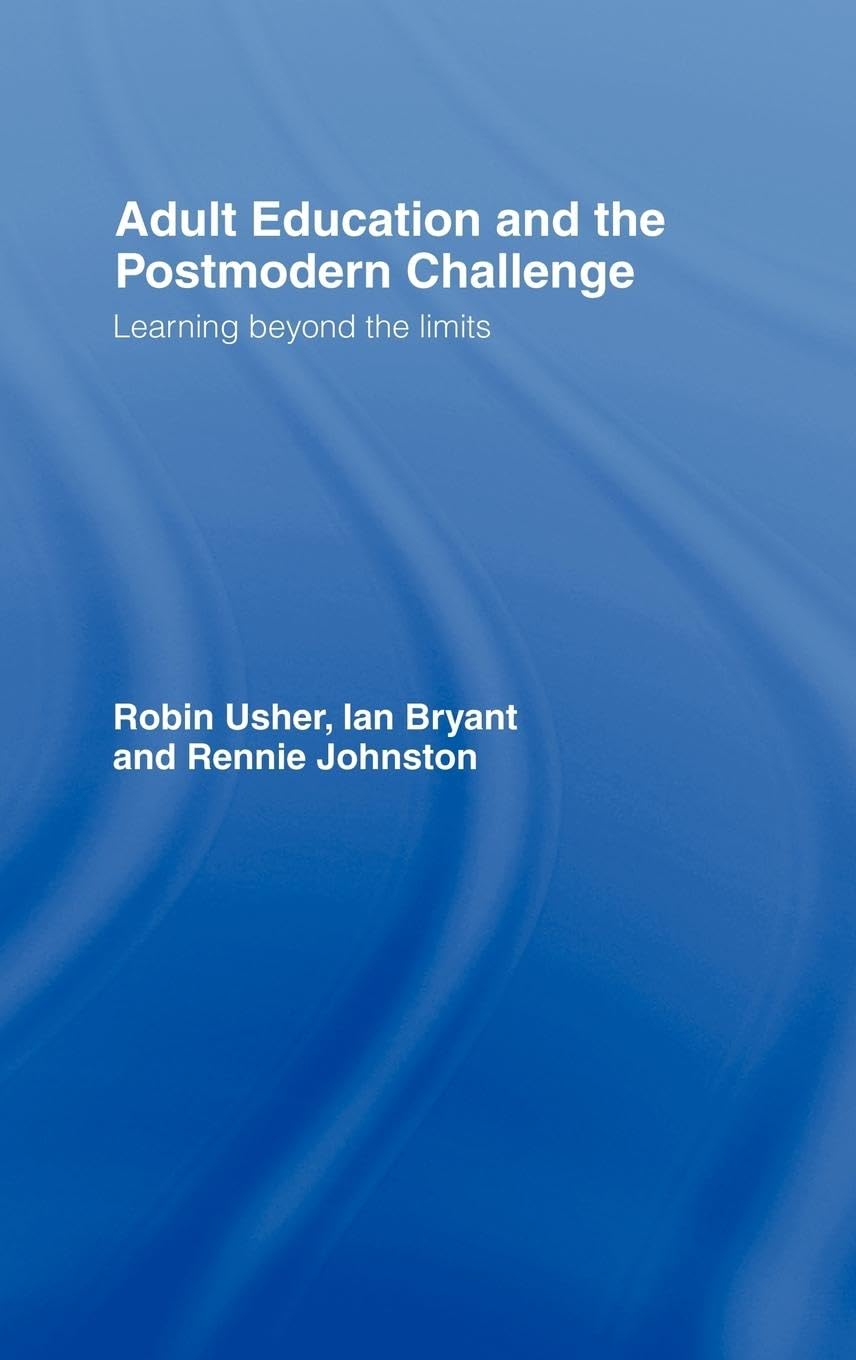
Adult Education and the Postmodern Challenge: Learning Beyond Limits
Adult Education and the Postmodern Challenge: Learning Beyond Limits
Price subject to change. Tap below for current.
Couldn't load pickup availability
The book Adult Education and the Postmodern Challenge offers a profound exploration of contemporary educational practices. It delves into the complexities of learning in a postmodern context, making it essential for educators and learners alike. The authors, Ian Bryant, Rennie Johnston, and Robin Usher, bring a wealth of experience and insight to the table, ensuring that readers are engaged and informed.
One of the standout features of this book is its focus on learning beyond the limits. The authors challenge traditional notions of education, urging readers to reconsider what it means to learn in today's rapidly changing world. This perspective is particularly relevant as we navigate the challenges posed by technology and globalization.
Throughout the text, the authors emphasize the importance of critical thinking and reflection in adult education. They argue that these skills are crucial for individuals to adapt and thrive in a postmodern society. By fostering a culture of inquiry, educators can empower learners to take charge of their own educational journeys.
The book also addresses the role of community and collaboration in adult learning. The authors highlight how social interactions and shared experiences can enhance the learning process. This focus on community is vital, as it encourages learners to engage with one another and build meaningful connections.
Another key theme in the book is the significance of diversity and inclusion in education. The authors advocate for an educational framework that recognizes and values different perspectives and backgrounds. This approach not only enriches the learning experience but also prepares individuals to navigate a diverse world.
In addition to theoretical insights, the book provides practical strategies for educators looking to implement these ideas in their practice. The authors offer a range of innovative teaching methods that can be adapted to various learning environments. This practical guidance makes the book a valuable resource for both seasoned educators and those new to the field.
Overall, Adult Education and the Postmodern Challenge is a thought-provoking and essential read for anyone interested in the future of education. Its insights into the complexities of learning in a postmodern world are both timely and relevant, making it a must-have addition to any educational library.
Share