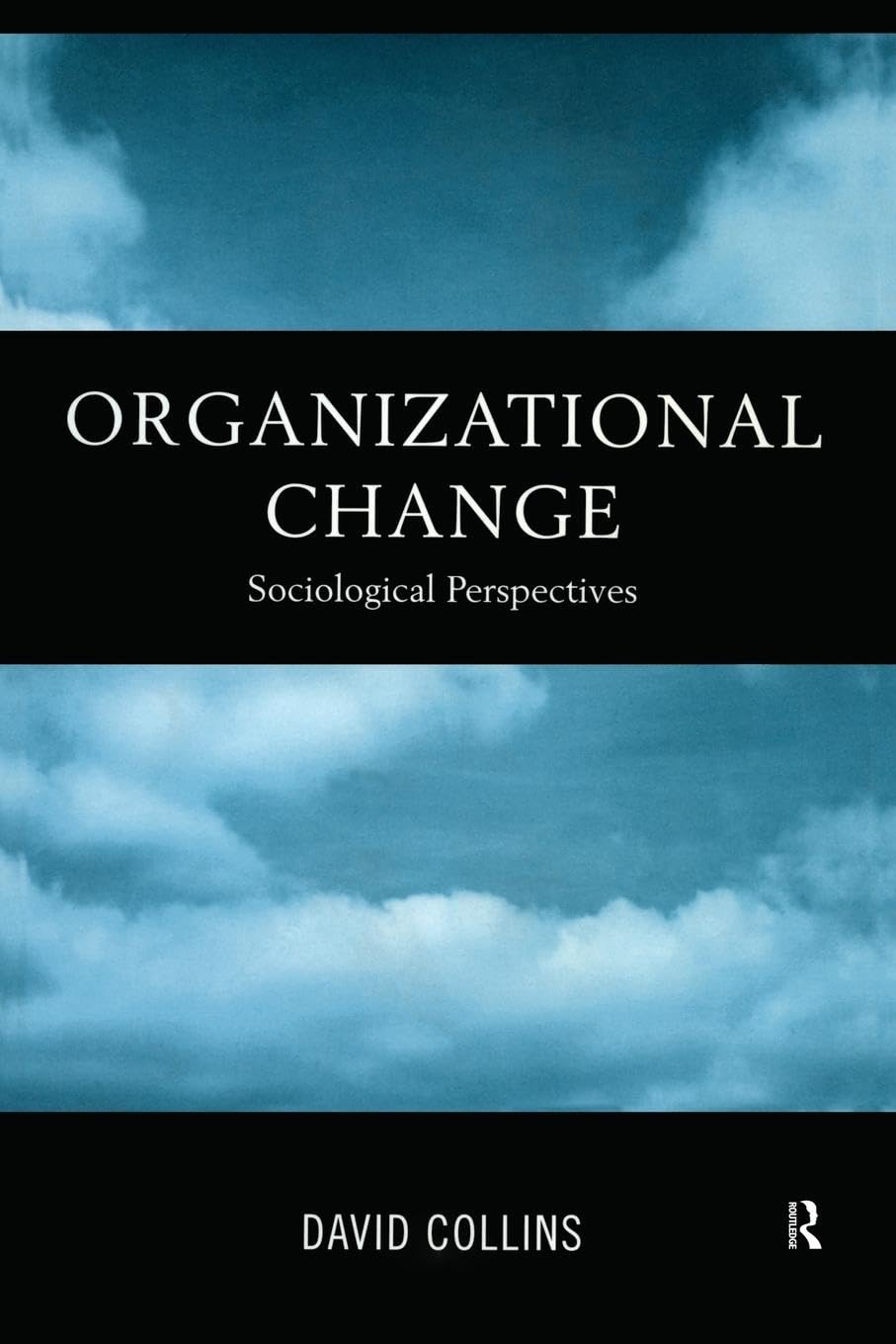
Organizational Change: Sociological Perspectives by David Collins
Organizational Change: Sociological Perspectives by David Collins
Price subject to change. Tap below for current.
Couldn't load pickup availability
The book Organizational Change: Sociological Perspectives by David Collins offers a comprehensive examination of the dynamics involved in organizational transformation. It delves into the sociological aspects that influence how organizations adapt and evolve over time. This insightful text is essential for anyone looking to understand the complexities of change within various organizational contexts.
One of the key features of this book is its focus on the sociological frameworks that underpin organizational change. Collins provides readers with a robust theoretical foundation, making it easier to grasp the intricate relationships between social structures and organizational behavior. This perspective is crucial for leaders and managers who aim to implement effective change strategies.
The author utilizes a variety of case studies to illustrate the practical applications of sociological theories in real-world settings. These examples not only enhance the reader's understanding but also highlight the importance of context in shaping organizational outcomes. By examining different industries and organizational types, Collins demonstrates that there is no one-size-fits-all approach to change.
Moreover, the book emphasizes the role of leadership in facilitating successful organizational change. Collins argues that leaders must be aware of the sociocultural dynamics at play within their organizations. This awareness allows them to navigate challenges and leverage opportunities effectively, ensuring that change initiatives are met with acceptance rather than resistance.
Another significant aspect of the text is its exploration of the impact of employee engagement on the change process. Collins discusses how involving employees in the change journey can lead to better outcomes and a more resilient organizational culture. This participatory approach not only fosters a sense of ownership but also enhances the likelihood of sustainable change.
Collins also addresses the potential pitfalls and challenges organizations may face during periods of change. By identifying common barriers, he equips readers with strategies to overcome these obstacles. This proactive approach is vital for anyone involved in managing change, as it prepares them to anticipate and mitigate risks effectively.
In conclusion, Organizational Change: Sociological Perspectives is a must-read for scholars, practitioners, and students alike. Its blend of theory and practical insights makes it an invaluable resource for understanding the multifaceted nature of organizational change. Whether you are a seasoned professional or new to the field, this book will enhance your knowledge and skills in navigating the complexities of change.
Share