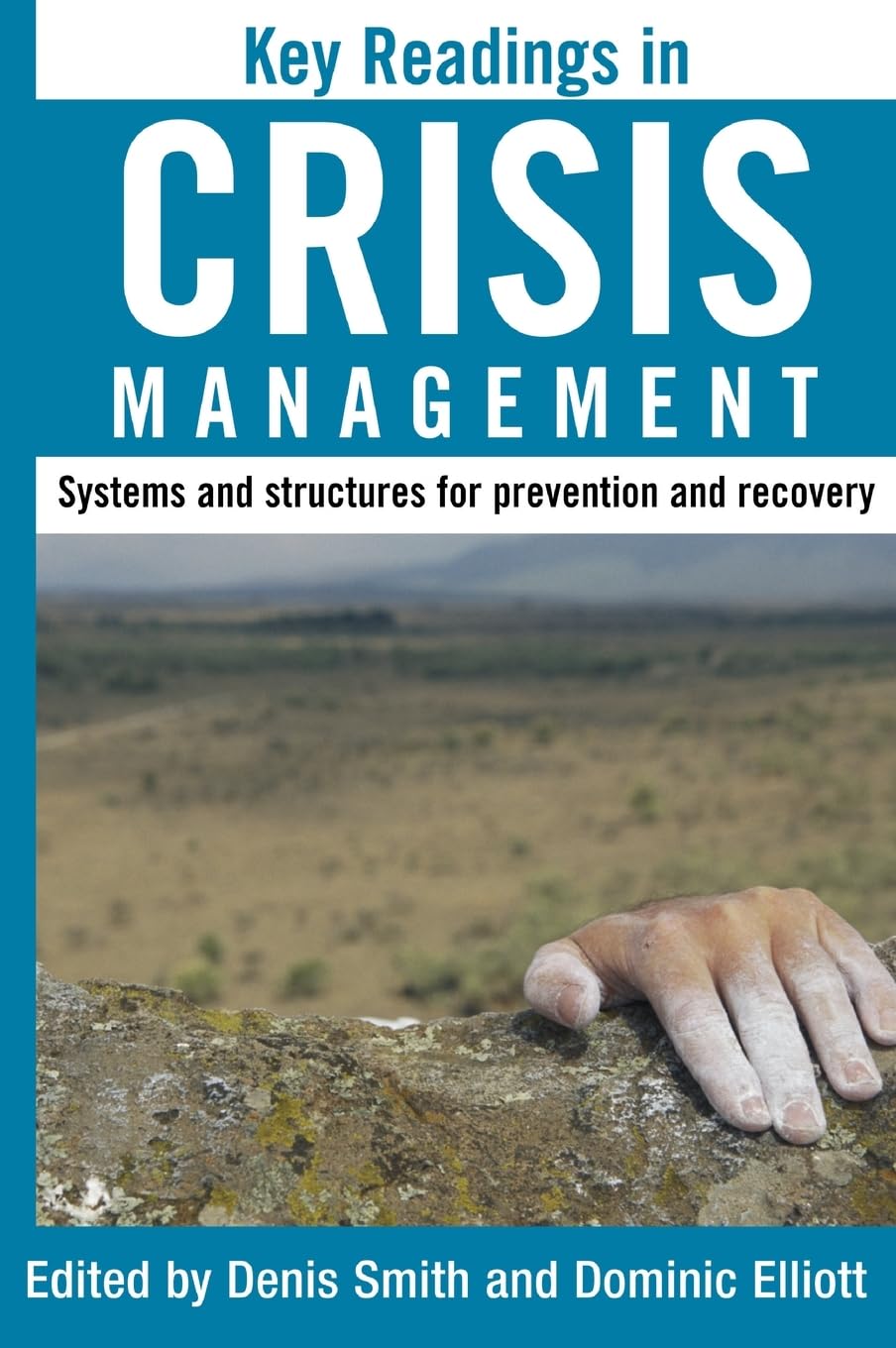
Key Readings in Crisis Management for Effective Leadership
Key Readings in Crisis Management for Effective Leadership
Price subject to change. Tap below for current.
Couldn't load pickup availability
The book Key Readings in Crisis Management is an essential resource for anyone looking to enhance their understanding of crisis leadership. Authored by experts Dominic Elliott and Denis Smith, this compilation offers a comprehensive overview of critical theories and practices in the field.
One of the standout features of this book is its ability to present complex ideas in an accessible manner. Each chapter is meticulously crafted to ensure that readers can grasp the nuances of crisis management strategies without feeling overwhelmed. This makes it an ideal choice for both seasoned professionals and newcomers alike.
The editors have curated a selection of articles that cover a wide range of topics, including risk assessment, communication strategies, and decision-making processes. This diversity ensures that readers can find relevant insights into various aspects of effective crisis response.
Moreover, the book emphasizes the importance of real-world applications. Each reading is accompanied by case studies that illustrate how theoretical concepts can be applied in practical situations. This feature is particularly valuable for those looking to implement crisis management frameworks in their organizations.
In addition to its academic rigor, the book is also designed for ease of use. The layout is user-friendly, with clear headings and summaries that allow readers to quickly locate the information they need. This is especially beneficial for busy professionals who may not have the time to read lengthy texts. The inclusion of key takeaways at the end of each chapter further enhances the learning experience.
Another notable aspect of Key Readings in Crisis Management is its focus on the evolving nature of crises in today's world. The authors address contemporary issues such as cybersecurity threats and environmental disasters, making the content highly relevant. This forward-thinking approach ensures that readers are well-equipped to handle the challenges of modern crisis situations.
Furthermore, the book encourages critical thinking and discussion among readers. Each chapter concludes with thought-provoking questions that prompt readers to reflect on their own experiences and consider how they might apply the lessons learned. This interactive element fosters a deeper understanding of crisis leadership principles.
In conclusion, Key Readings in Crisis Management is a must-have for anyone interested in mastering the art of crisis management. Its blend of theory, practical application, and contemporary relevance makes it an invaluable addition to any professional library. Whether you are a student, a practitioner, or a leader, this book will provide you with the tools you need to navigate crises effectively.
Share