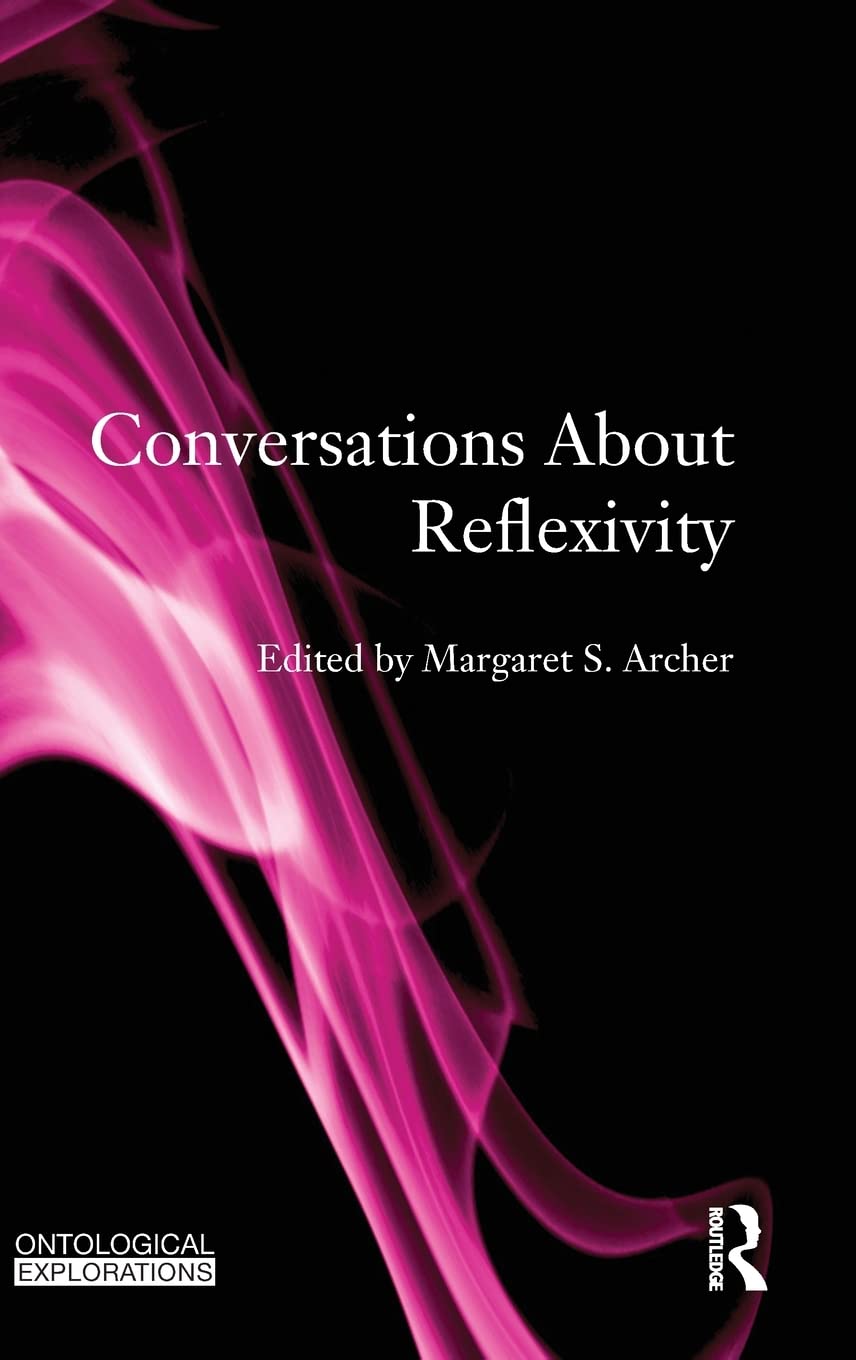
Conversations About Reflexivity: An In-Depth Exploration
Conversations About Reflexivity: An In-Depth Exploration
Price subject to change. Tap below for current.
Couldn't load pickup availability
The book Conversations About Reflexivity offers a profound examination of the concept of reflexivity within the realm of social sciences. Authored by Margaret S. Archer, this work delves into the intricate relationship between individuals and their social contexts, providing readers with a comprehensive understanding of how reflexivity shapes human behavior.
In this insightful text, Archer articulates the significance of ontological explorations in understanding reflexivity. The author emphasizes that reflexivity is not merely a theoretical concept but a practical tool for individuals to navigate their social realities. This book serves as a crucial resource for scholars and students alike, aiming to deepen their grasp of social theory.
One of the standout features of this book is its engaging dialogue format, which facilitates a dynamic exploration of ideas. Through conversations, Archer presents various perspectives on reflexivity, allowing readers to engage critically with the material. This approach makes the book not only informative but also accessible to a wider audience.
Moreover, the text addresses the implications of reflexivity in contemporary society. Archer discusses how understanding reflexivity can lead to better social practices and policies. By highlighting the importance of critical realism, the author urges readers to consider the real-world applications of reflexive thinking.
Throughout the book, readers will encounter a rich tapestry of examples and case studies that illustrate the practical implications of reflexivity. These examples serve to ground theoretical discussions in real-life scenarios, making the content relatable and applicable. The inclusion of case studies enhances the reader's ability to connect theory with practice.
In addition to its theoretical contributions, Conversations About Reflexivity also invites readers to reflect on their own experiences and practices. Archer encourages a personal engagement with the material, prompting readers to consider how reflexivity plays a role in their own lives. This reflective aspect adds depth to the reading experience and fosters a greater understanding of the subject matter.
Overall, this book is an essential addition to the library of anyone interested in social theory, reflexivity, and critical realism. With its engaging format, practical insights, and thought-provoking discussions, Conversations About Reflexivity stands out as a significant contribution to the field. Whether you are a seasoned scholar or a curious newcomer, this book will enrich your understanding of the complexities of human behavior and social interaction.
Share