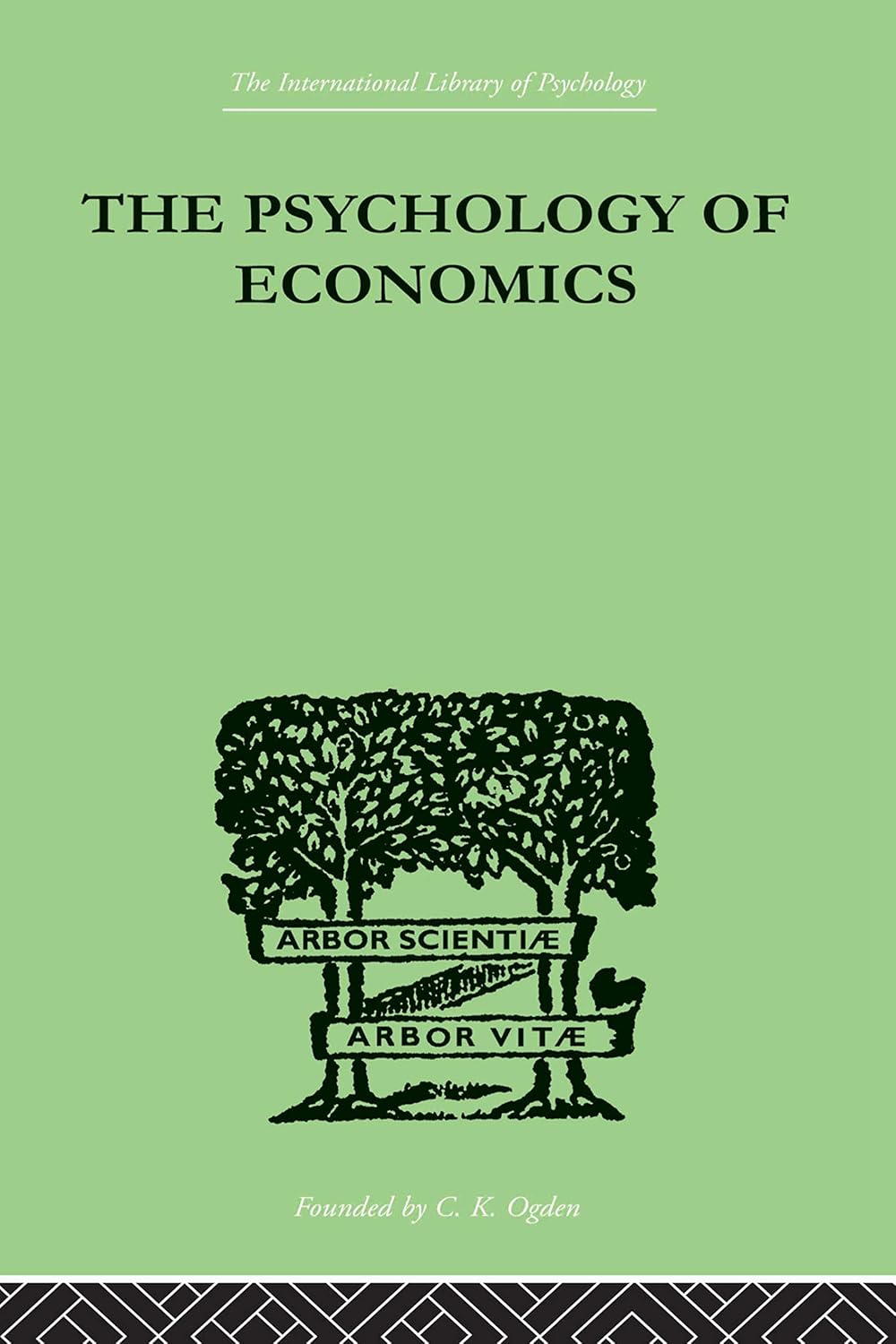
The Psychology of Economics: Insights from Walter A Weisskopf
The Psychology of Economics: Insights from Walter A Weisskopf
Price subject to change. Tap below for current.
Couldn't load pickup availability
The Psychology of Economics by Walter A Weisskopf offers a profound exploration into the intricate relationship between economic behavior and psychological principles. This book delves into how human emotions and cognitive biases influence economic decisions, making it a vital read for anyone interested in the intersection of psychology and economics.
In this comprehensive work, Weisskopf examines various economic theories through a psychological lens, providing readers with a unique perspective on traditional economic models. The author argues that understanding human behavior is essential for grasping economic phenomena, which is a theme that resonates throughout the text.
One of the key features of this book is its ability to bridge the gap between economic theory and real-world applications. Weisskopf uses case studies and empirical research to illustrate how psychological factors can lead to irrational economic choices, thus challenging the assumption of rationality in economic agents.
Readers will appreciate the clear and engaging writing style that makes complex concepts accessible. The book is structured in a way that gradually builds on ideas, allowing readers to develop a solid understanding of how psychological insights can enhance economic analysis.
Moreover, the inclusion of various psychological experiments and their implications for economic behavior adds depth to the discussion. Weisskopf highlights how factors such as cognitive dissonance and social influences can significantly alter economic outcomes, making this book a crucial resource for economists and psychologists alike.
As the field of behavioral economics continues to grow, the insights provided in The Psychology of Economics remain relevant and thought-provoking. This book not only challenges conventional economic wisdom but also encourages readers to think critically about the decision-making processes that underpin economic activity.
In conclusion, The Psychology of Economics is an essential addition to the library of anyone interested in understanding the psychological dimensions of economic behavior. Weisskopf's work is a testament to the importance of integrating psychological principles into economic theory, making it a must-read for students, professionals, and enthusiasts in both fields.
Share