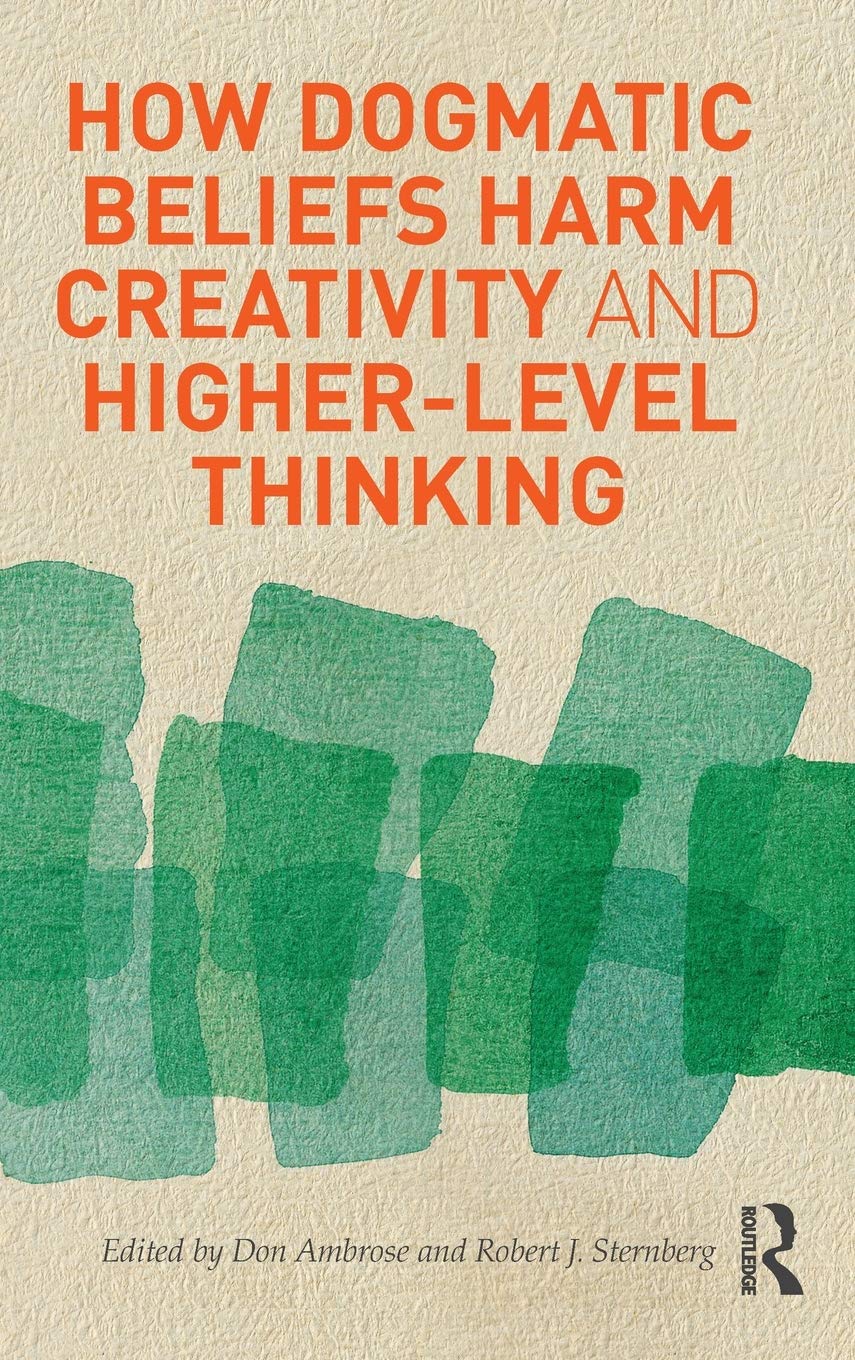
How Dogmatic Beliefs Harm Creativity and Higher-level Thinking
How Dogmatic Beliefs Harm Creativity and Higher-level Thinking
Price subject to change. Tap below for current.
Couldn't load pickup availability
The book How Dogmatic Beliefs Harm Creativity offers a profound exploration into the detrimental effects of rigid thinking on our cognitive processes. In today's fast-paced world, the ability to think creatively is more crucial than ever, and this insightful text delves into how dogmatic beliefs can stifle innovation and originality.
Written by renowned authors Don Ambrose and Robert Sternberg, this work is part of the Educational Psychology Series, which aims to bridge the gap between psychological theory and practical application. The authors argue that dogmatic beliefs create mental barriers that prevent individuals from exploring new ideas and perspectives. This book is essential for educators, psychologists, and anyone interested in fostering a more open-minded approach to learning.
One of the key themes of the book is the relationship between creativity and critical thinking. Ambrose and Sternberg emphasize that to cultivate creativity, it is vital to challenge existing beliefs and encourage a mindset that embraces uncertainty and ambiguity. The authors provide numerous examples and case studies that illustrate how dogmatic thinking can lead to a decline in innovative problem-solving.
Moreover, the book discusses the implications of dogmatic beliefs in various fields, including education, business, and social interactions. By highlighting the importance of flexible thinking, the authors encourage readers to adopt a more adaptable approach to challenges. This shift in perspective can lead to enhanced collaboration and a richer exchange of ideas.
Throughout the text, readers will find practical strategies for overcoming dogmatic beliefs. The authors suggest techniques for fostering an environment that promotes open dialogue and creativity. By implementing these strategies, individuals and organizations can unlock their full potential and drive innovation.
In addition to its theoretical insights, the book is rich with actionable advice. Each chapter concludes with thought-provoking questions and exercises designed to help readers reflect on their own beliefs and practices. This interactive approach makes the book not only informative but also engaging, encouraging readers to actively participate in their learning journey.
Ultimately, How Dogmatic Beliefs Harm Creativity serves as a wake-up call for those who may unknowingly limit their creative capacities. It challenges us to reconsider our assumptions and embrace a more dynamic way of thinking. Whether you are a student, educator, or professional, this book will inspire you to break free from the constraints of dogma and explore the limitless possibilities of creative thought.
Share