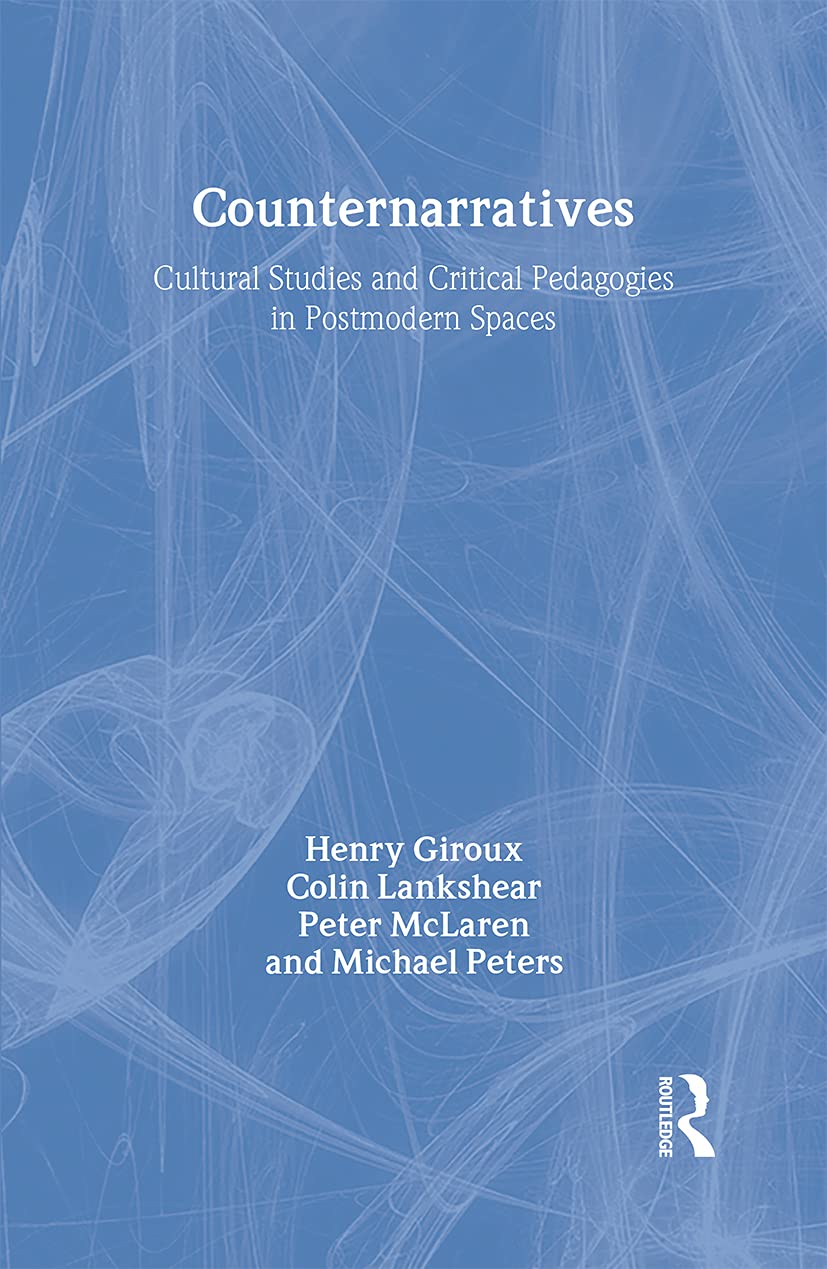
Counternarratives: Cultural Studies and Critical Pedagogies Explored
Counternarratives: Cultural Studies and Critical Pedagogies Explored
Price subject to change. Tap below for current.
Couldn't load pickup availability
Counternarratives is a groundbreaking collection that delves into the intersections of cultural studies and critical pedagogies within the context of postmodern spaces. This book, edited by prominent scholars Henry A. Giroux, Colin Lankshear, Peter McLaren, and Michael Peters, offers a rich tapestry of insights that challenge conventional educational paradigms.
In this compelling volume, the authors present a series of essays that explore the role of critical pedagogies in shaping contemporary educational practices. Each chapter provides a unique perspective on how cultural narratives influence learning environments and the importance of fostering critical thinking among students.
The contributors to this collection emphasize the necessity of cultural studies as a vital component of education. They argue that understanding cultural contexts is essential for educators to effectively engage with diverse student populations. This book serves as a call to action for educators to rethink their approaches and embrace a more inclusive and reflective practice.
One of the standout features of this book is its focus on postmodern spaces, which are characterized by fluidity and complexity. The authors examine how these spaces impact educational experiences and the ways in which students navigate their identities within them. This exploration is particularly relevant in today's rapidly changing world.
Throughout the text, readers will find a wealth of examples that illustrate the application of critical pedagogies in various educational settings. From K-12 classrooms to higher education institutions, the insights provided are both practical and theoretical, making this book a valuable resource for educators at all levels.
Moreover, the essays in this collection highlight the importance of social justice in education. The authors advocate for a pedagogical approach that not only acknowledges but actively addresses issues of inequality and oppression. This commitment to social justice is a recurring theme that resonates throughout the book.
In conclusion, Counternarratives: Cultural Studies and Critical Pedagogies in Postmodern Spaces is an essential read for anyone interested in the future of education. It challenges readers to critically engage with their practices and consider the broader cultural implications of their work. This book is a testament to the transformative power of education when it is rooted in critical inquiry and cultural awareness.
Share