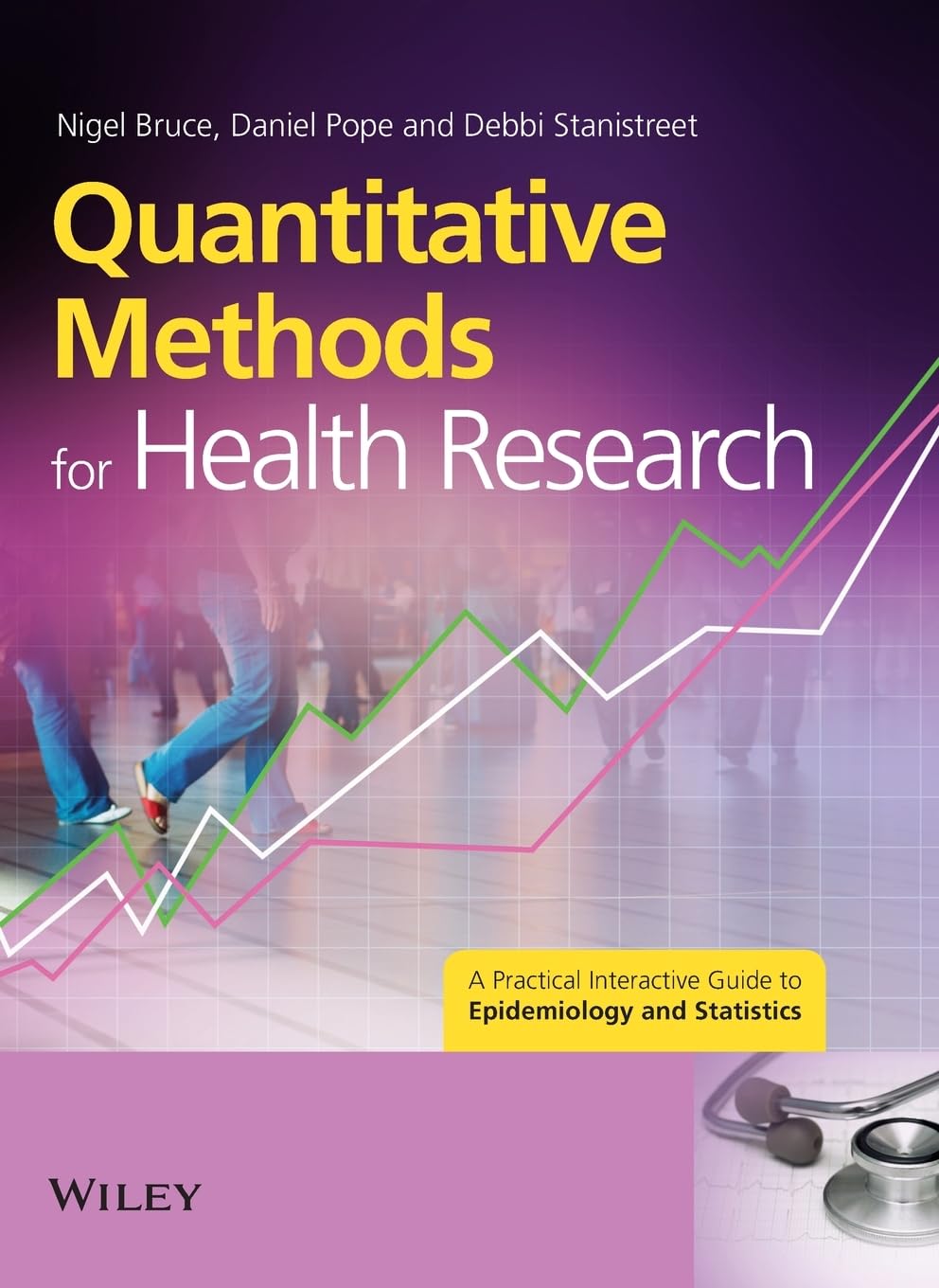
Quantitative Methods for Health Research: A Practical Guide
Quantitative Methods for Health Research: A Practical Guide
Price subject to change. Tap below for current.
Couldn't load pickup availability
In the realm of health research, quantitative methods play a crucial role in understanding complex epidemiological data. The book titled Quantitative Methods for Health Research serves as an essential resource for students and professionals alike. It provides a comprehensive overview of the statistical techniques necessary for effective health research.
This guide is particularly valuable for those who may not have a strong background in statistics. The authors, Nigel Bruce, Daniel Pope, and Debbi Stanistreet, have crafted a text that is both accessible and informative. Each chapter is designed to build upon the previous one, ensuring a smooth learning curve for readers.
One of the standout features of this book is its interactive approach. The authors incorporate practical examples and exercises that allow readers to apply epidemiological concepts in real-world scenarios. This hands-on methodology not only enhances understanding but also fosters critical thinking skills essential for health research.
Moreover, the book covers a wide range of topics, from basic statistical principles to more advanced techniques. Readers will find discussions on data collection methods, sampling strategies, and the interpretation of results. The inclusion of statistical software guidance further equips readers with the tools needed to analyze data effectively.
Another significant aspect of this guide is its emphasis on the importance of ethical considerations in health research. The authors stress the need for integrity and transparency when conducting studies, which is vital for maintaining public trust in health research outcomes. This focus on ethics is complemented by practical tips on how to navigate common challenges faced in the field.
For those looking to enhance their research skills, the book also includes a variety of resources such as checklists and templates. These tools are designed to streamline the research process and ensure that all necessary steps are taken when conducting studies. The inclusion of checklists for data analysis is particularly helpful for novice researchers.
In conclusion, Quantitative Methods for Health Research is an invaluable resource for anyone involved in health research. Its practical approach, combined with a thorough exploration of statistical techniques, makes it a must-have for students and professionals. Whether you are just starting out or looking to refine your skills, this guide will provide the knowledge and tools necessary to succeed in the field of health research.
Share