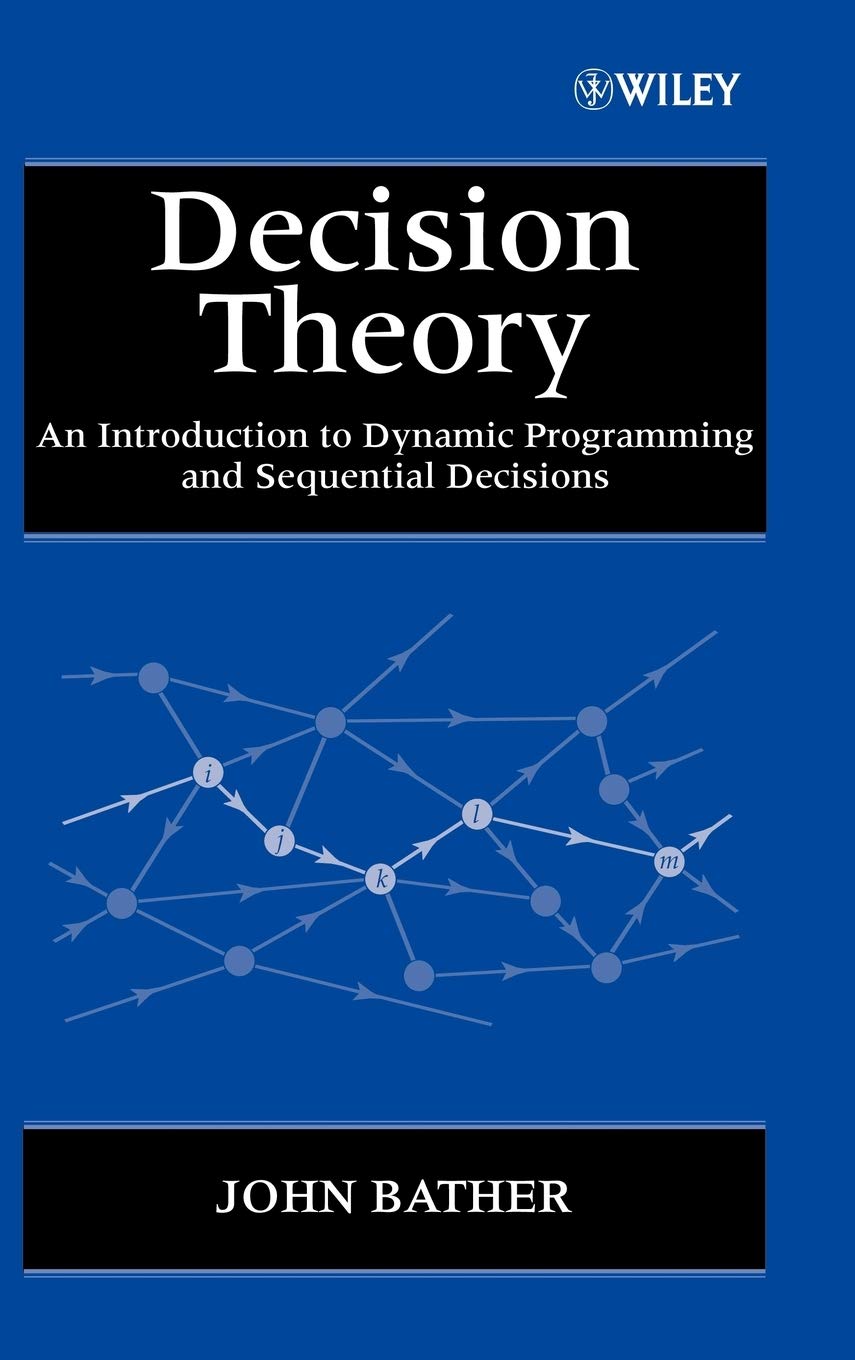
Decision Theory: An Introduction to Dynamic Programming Concepts
Decision Theory: An Introduction to Dynamic Programming Concepts
Price subject to change. Tap below for current.
Couldn't load pickup availability
In the realm of decision-making, Decision Theory stands out as a crucial framework for understanding how to approach complex problems. This book, Decision Theory: An Introduction to Dynamic Programming, offers a comprehensive guide to the principles of dynamic programming and sequential decisions.
Written by experts in the field, this text delves into the intricacies of dynamic programming, providing readers with a solid foundation in the subject. It covers essential concepts and methodologies that are vital for anyone looking to enhance their decision-making skills.
The book is structured to facilitate learning, with clear explanations and practical examples that illustrate the application of sequential decision-making in real-world scenarios. This makes it an invaluable resource for students and professionals alike.
One of the standout features of this book is its focus on dynamic programming techniques. These techniques are essential for solving complex problems that involve making a series of interrelated decisions. The author meticulously breaks down these techniques, making them accessible to readers with varying levels of expertise.
Additionally, the text includes numerous case studies that demonstrate the effectiveness of decision theory in various fields, including economics, engineering, and operations research. These case studies not only enhance understanding but also inspire readers to apply these concepts in their own work.
Furthermore, the book emphasizes the importance of modeling in decision-making processes. By understanding how to create and analyze models, readers can significantly improve their ability to make informed decisions. The integration of modeling strategies throughout the text reinforces this critical aspect of decision theory.
Readers will also appreciate the practical exercises included at the end of each chapter. These exercises encourage active engagement with the material and help solidify the concepts learned. By working through these problems, readers can gain confidence in their ability to apply dynamic programming principles to real-life situations.
In conclusion, Decision Theory: An Introduction to Dynamic Programming and Sequential Decisions is a must-read for anyone interested in enhancing their decision-making capabilities. With its clear explanations, practical examples, and emphasis on real-world applications, this book serves as an essential guide for mastering the art of decision-making.
Share