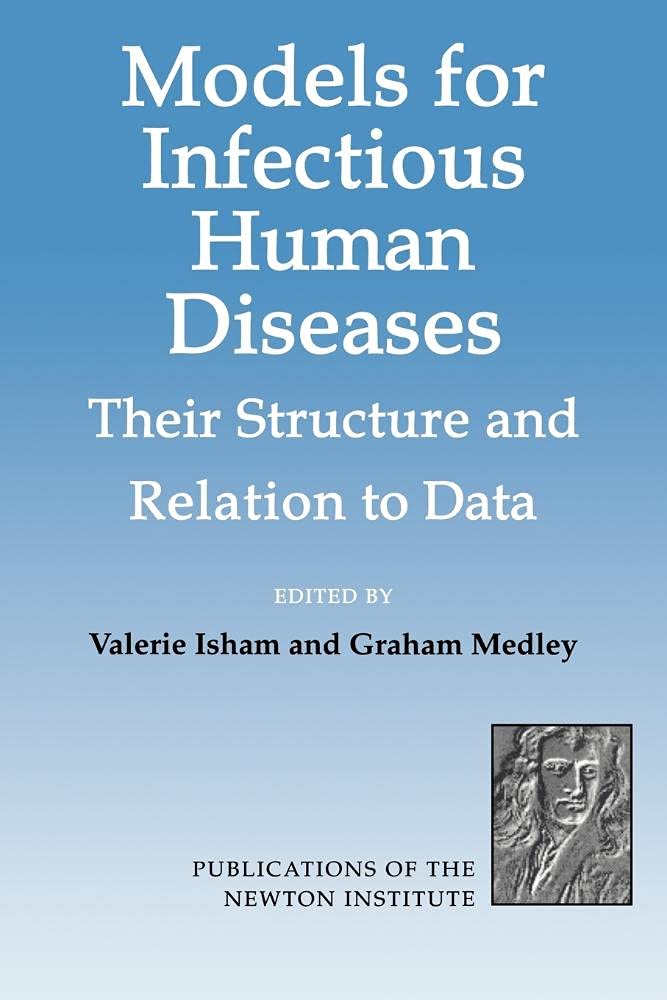
Models for Infectious Human Diseases: Structure and Data Relations
Models for Infectious Human Diseases: Structure and Data Relations
Price subject to change. Tap below for current.
Couldn't load pickup availability
The book Models for Infectious Human Diseases offers a comprehensive exploration of the intricate relationship between disease models and real-world data. Authored by Valerie Isham and Graham Medley, this publication is part of the esteemed Publications of the Newton Institute series. It delves into the mathematical frameworks that underpin our understanding of infectious diseases, making it an essential read for researchers and practitioners alike.
One of the standout features of this book is its detailed examination of various infectious disease models. The authors meticulously discuss how these models are constructed and validated against empirical data, providing readers with a clear understanding of their applicability in real-world scenarios. This is particularly crucial for those involved in public health and epidemiology.
The text is structured to facilitate learning, with each chapter building upon the previous one. Readers will appreciate the logical flow that guides them through complex concepts, making the material accessible even to those who may not have a strong background in mathematics. The use of real-world examples throughout the book enhances comprehension and illustrates the practical implications of theoretical models.
Another significant aspect of the book is its focus on the relation to data. The authors emphasize the importance of data in shaping and refining models, highlighting how accurate data collection and analysis can lead to better predictions and interventions in disease control. This focus is particularly relevant in today's context, where data-driven decision-making is paramount in managing public health crises.
In addition to theoretical discussions, the book includes practical applications of the models presented. This section is invaluable for professionals who are looking to implement these models in their work. The authors provide insights into the challenges faced when applying theoretical models to real-life situations, as well as strategies to overcome these obstacles.
The illustrations and diagrams included in the book serve to clarify complex ideas, making it easier for readers to grasp the nuances of infectious disease modeling. These visual aids complement the text and provide a more engaging learning experience. Furthermore, the inclusion of case studies allows readers to see the models in action, reinforcing the concepts discussed.
Overall, Models for Infectious Human Diseases is a vital resource for anyone involved in the study or management of infectious diseases. Its thorough approach to modeling, combined with a strong emphasis on data relations, makes it a must-have for libraries, academic institutions, and professionals in the field. Whether you are a seasoned researcher or a newcomer to the field, this book will enhance your understanding and provide you with the tools necessary to contribute to the ongoing fight against infectious diseases.
Share