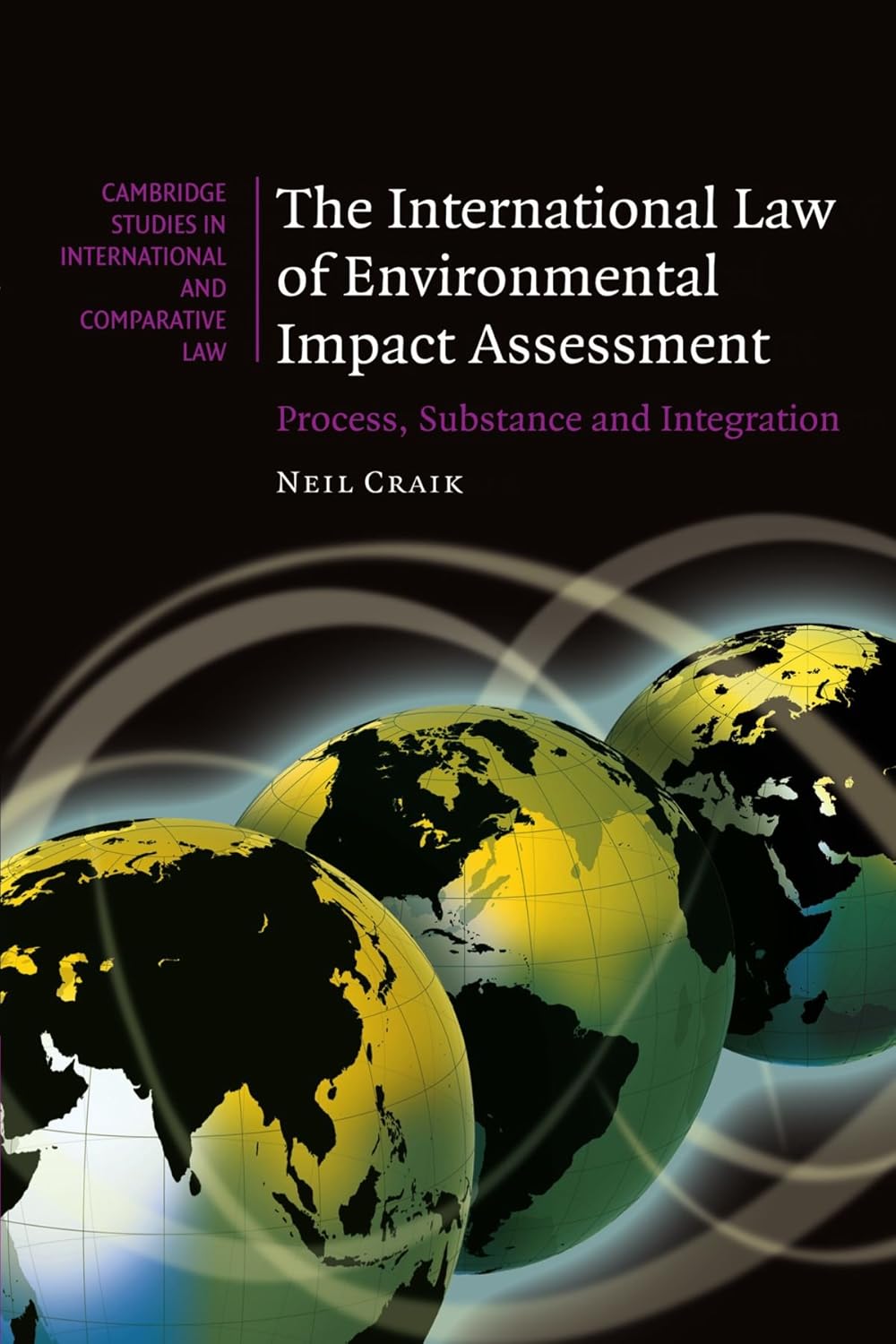
The International Law of Environmental Impact Assessment Explained
The International Law of Environmental Impact Assessment Explained
Price subject to change. Tap below for current.
Couldn't load pickup availability
The International Law of Environmental Impact Assessment is a comprehensive guide that delves into the intricacies of environmental law and its implications for global governance. This book, part of the Cambridge Studies in International and Comparative Law series, offers a detailed examination of the processes involved in environmental impact assessments (EIAs) and their significance in international law.
Written by Neil Craik, this essential text explores the substance of environmental law and how it integrates with various legal frameworks. It provides readers with a thorough understanding of the legal obligations that countries face when conducting EIAs, ensuring that environmental considerations are at the forefront of development projects.
One of the key features of this book is its focus on the process of environmental impact assessments. Craik outlines the steps involved in conducting an EIA, from initial screening to the final decision-making process. This structured approach helps readers grasp the complexities of EIAs and their role in promoting sustainable development.
The author also discusses the challenges and opportunities presented by the integration of environmental considerations into national and international legal frameworks. By highlighting case studies and real-world examples, Craik illustrates how effective EIAs can lead to better environmental outcomes and informed decision-making.
Furthermore, the book addresses the evolving nature of environmental law and the need for continuous adaptation to emerging global challenges. The importance of stakeholder engagement in the EIA process is emphasized, showcasing how public participation can enhance the effectiveness of environmental assessments.
Readers will appreciate the clarity and depth of analysis provided in this text, making it an invaluable resource for students, practitioners, and policymakers alike. The Cambridge Studies in International and Comparative Law series is known for its rigorous scholarship, and this book is no exception, offering insights that are both academically robust and practically relevant.
In conclusion, The International Law of Environmental Impact Assessment is a must-read for anyone interested in the intersection of law and environmental policy. It equips readers with the knowledge needed to navigate the complexities of EIAs and understand their critical role in fostering sustainable development on a global scale.
Share