Property, Production, and Family in Neckarhausen: A Deep Dive
Property, Production, and Family in Neckarhausen: A Deep Dive
Price subject to change. Tap below for current.
Couldn't load pickup availability
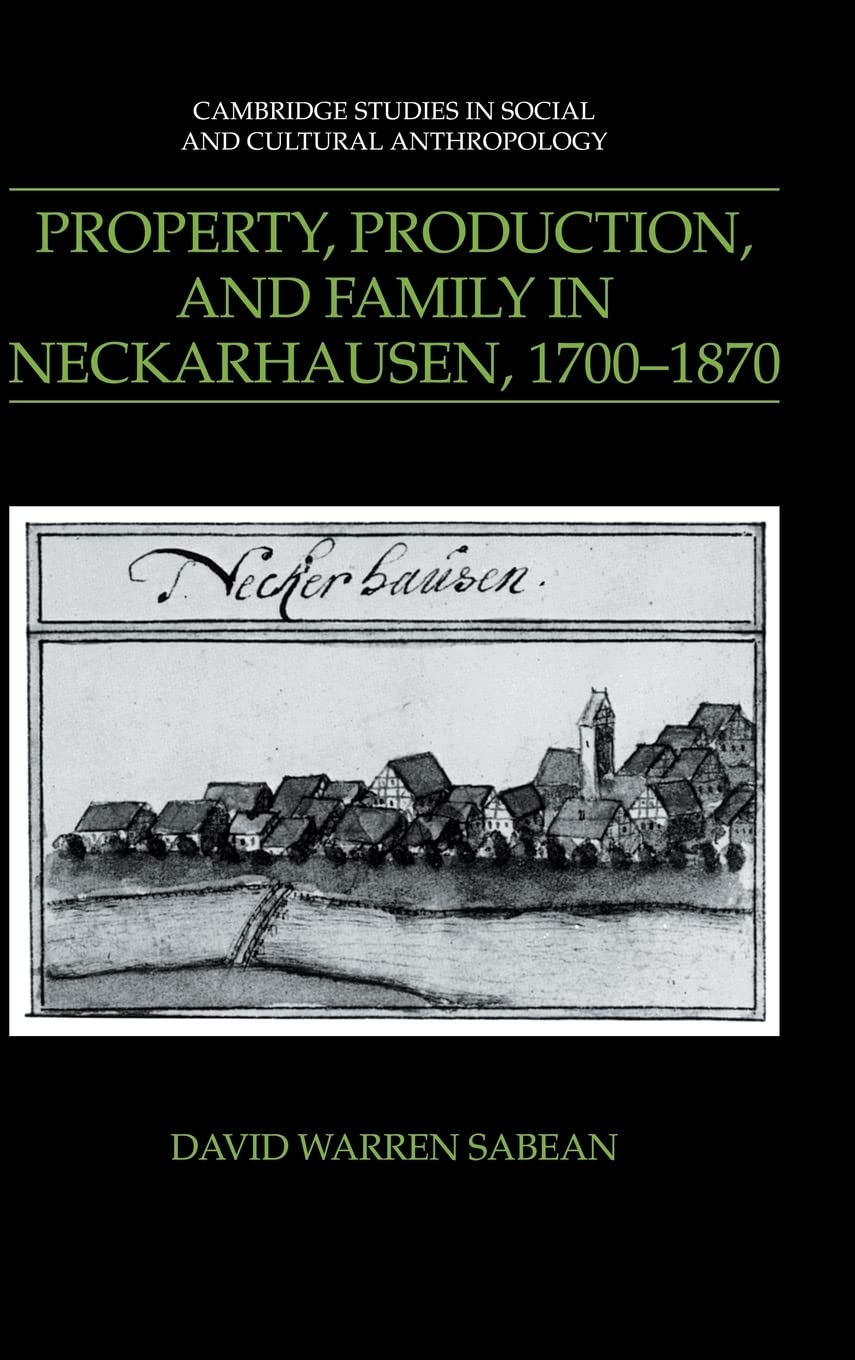
The book Property, Production, and Family in Neckarhausen by David Warren Sabean offers a comprehensive analysis of the social and economic structures in a small German community during the 18th and 19th centuries. This scholarly work is part of the Cambridge Studies in Social and Cultural Anthropology series, specifically Series Number 73, and it delves into the intricate relationships between property ownership, production methods, and family dynamics.
One of the key themes explored in this book is the concept of property rights and how they shaped the lives of individuals and families in Neckarhausen. Sabean meticulously examines historical records and personal accounts to illustrate how property was not just a means of economic stability but also a source of social identity and power.
Furthermore, the author discusses the evolution of production techniques in the region, highlighting how advancements in agriculture and craftsmanship influenced community relationships. The book provides a detailed look at how these changes affected family structures and the roles of men and women within them.
In addition to economic factors, Sabean also addresses the cultural aspects of life in Neckarhausen. The interplay between family traditions and economic practices is a recurring theme, showcasing how cultural heritage influenced the community's approach to property and production.
The research presented in this book is not only valuable for historians but also for anthropologists and sociologists interested in the dynamics of rural communities. Sabean's work is a testament to the importance of understanding social structures in historical contexts, making it a significant contribution to the field.
Readers will appreciate the depth of analysis and the rich historical context provided throughout the chapters. The book is well-organized, with each section building upon the last, allowing for a coherent understanding of the complex interactions between property, production, and family life.
Overall, Property, Production, and Family in Neckarhausen is an essential read for anyone interested in the social and cultural anthropology of rural Germany. Sabean's insightful observations and thorough research make this book a valuable resource for both academic and general audiences.
Share