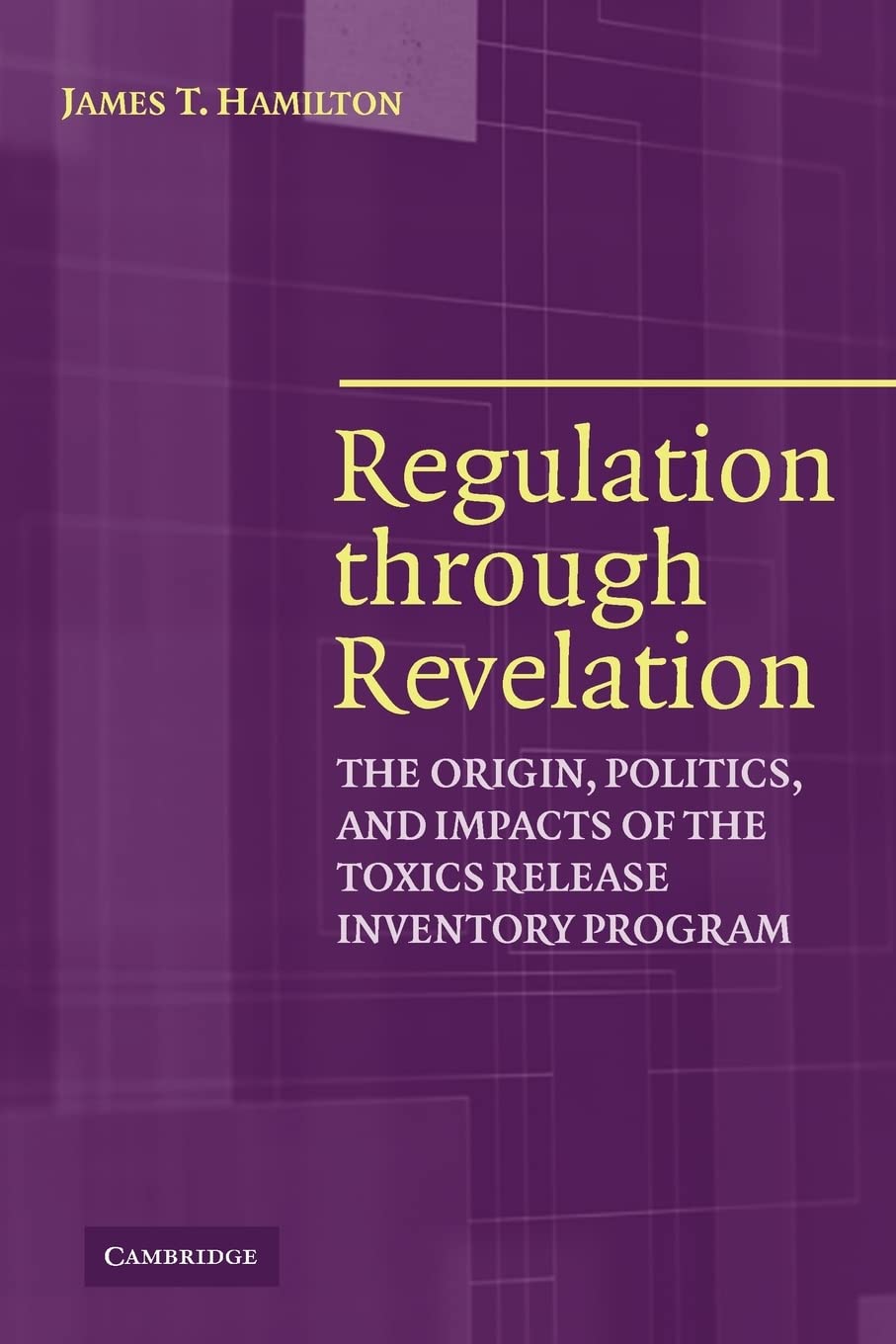
Regulation through Revelation: Understanding Toxics Release Inventory
Regulation through Revelation: Understanding Toxics Release Inventory
Price subject to change. Tap below for current.
Couldn't load pickup availability
The book Regulation through Revelation by James T. Hamilton provides an in-depth analysis of the Toxics Release Inventory (TRI) Program. This program has been a cornerstone in environmental regulation, aiming to inform the public about toxic chemical releases. Hamilton meticulously explores the origins of the TRI, detailing how it was established to promote transparency and accountability among industries.
One of the key aspects of the TRI is its impact on public health and safety. By making information about toxic releases available, the program empowers communities to advocate for their own health. Hamilton emphasizes the importance of this public health initiative, illustrating how access to information can lead to significant changes in local environments.
In addition to its health implications, the book delves into the political dynamics surrounding the TRI. Hamilton discusses how various stakeholders, including government agencies and corporations, have influenced the program's evolution. The interplay between regulation and industry response is a recurring theme, showcasing the complexities of environmental policy in the United States.
Hamilton also highlights the economic implications of the TRI. By requiring companies to disclose their toxic releases, the program has inadvertently encouraged industries to adopt cleaner practices. This shift not only benefits the environment but also enhances corporate responsibility. The author presents compelling evidence that supports the notion that economic incentives can drive positive change in industrial practices.
Throughout the book, Hamilton uses case studies to illustrate the real-world effects of the TRI. These examples serve to reinforce the argument that informed communities can lead to better environmental outcomes. The narrative is enriched with data and statistics, making it a valuable resource for anyone interested in environmental science and policy.
Furthermore, the book addresses criticisms of the TRI, acknowledging that while it has made strides in transparency, there are still gaps in data and reporting. Hamilton argues for continuous improvement and adaptation of the program to meet the evolving challenges of environmental regulation. This critical perspective adds depth to the discussion, making it clear that the journey towards effective regulation is ongoing.
In conclusion, Regulation through Revelation is a comprehensive examination of the Toxics Release Inventory Program. It is a must-read for policymakers, environmental advocates, and anyone interested in the intersection of regulation and public health. Hamilton's thorough research and engaging writing style make this book an essential addition to the literature on environmental regulation.
Share