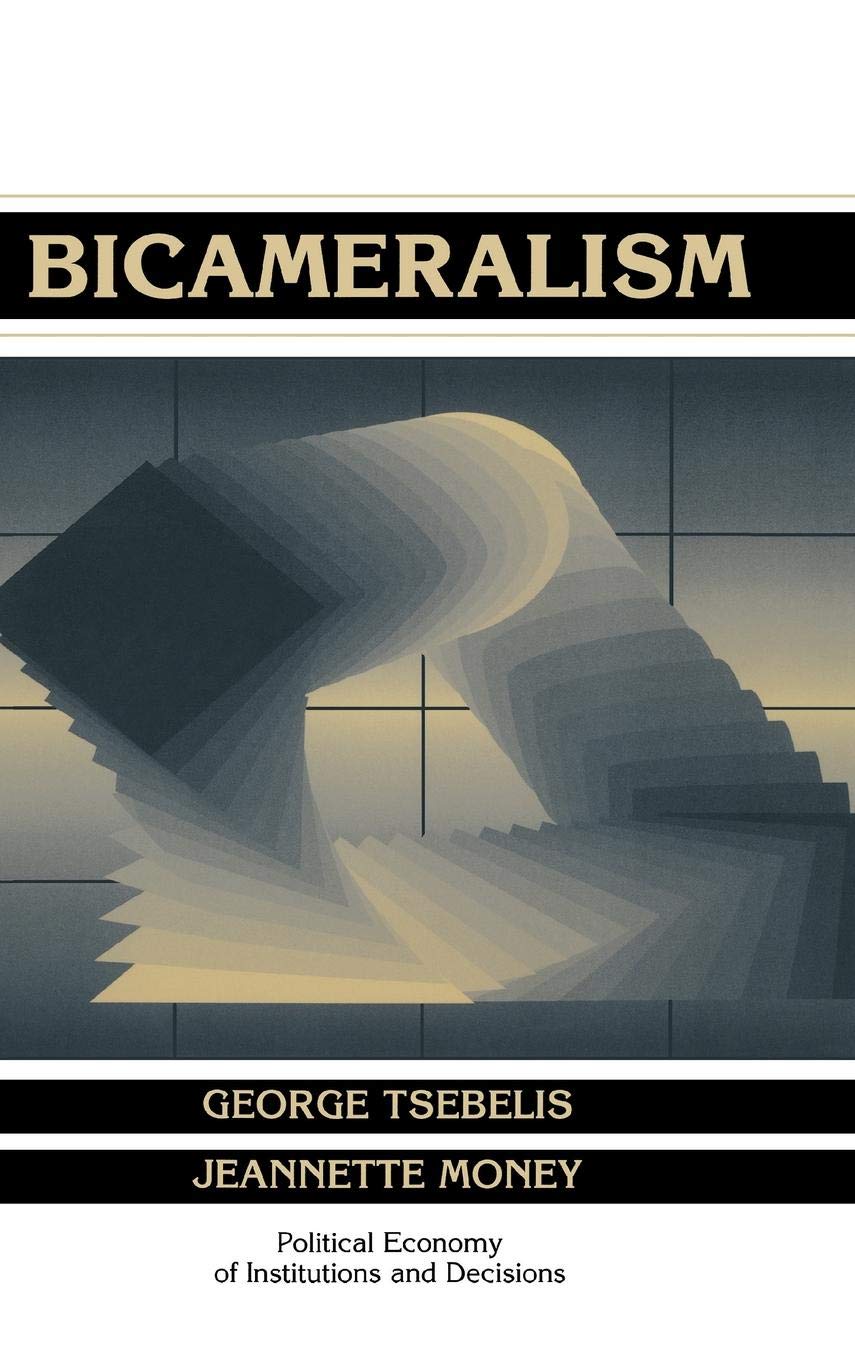
Bicameralism in Political Economy of Institutions and Decisions
Bicameralism in Political Economy of Institutions and Decisions
Price subject to change. Tap below for current.
Couldn't load pickup availability
The book Bicameralism by George Tsebelis and Jeannette Money provides an in-depth analysis of the political structures that govern decision-making processes. This comprehensive work explores how bicameral systems function and their implications for political economy.
One of the key features of this book is its focus on the political economy of institutions. The authors delve into the intricacies of how institutions shape political behavior and outcomes. Through rigorous analysis, they illustrate the importance of understanding these dynamics in the context of bicameralism.
Additionally, the book examines the decision-making processes within bicameral legislatures. Tsebelis and Money provide a detailed exploration of how different chambers interact and influence policy outcomes. This insight is crucial for anyone looking to grasp the complexities of legislative behavior.
The authors also highlight the role of institutional design in shaping political outcomes. By analyzing various case studies, they demonstrate how different configurations of bicameralism can lead to varying degrees of efficiency and effectiveness in governance.
Furthermore, the book addresses the impact of bicameralism on democracy. Tsebelis and Money argue that bicameral systems can enhance democratic accountability by providing multiple layers of scrutiny. This perspective is vital for understanding the broader implications of legislative structures on democratic governance.
In addition to theoretical insights, the book offers practical implications for policymakers and scholars alike. The authors provide a framework for evaluating the effectiveness of bicameral systems, making it a valuable resource for those engaged in political science research.
Overall, Bicameralism is an essential read for anyone interested in the intersection of political institutions and economic decision-making. With its thorough analysis and clear writing, this book stands out as a significant contribution to the field of political economy.
Share