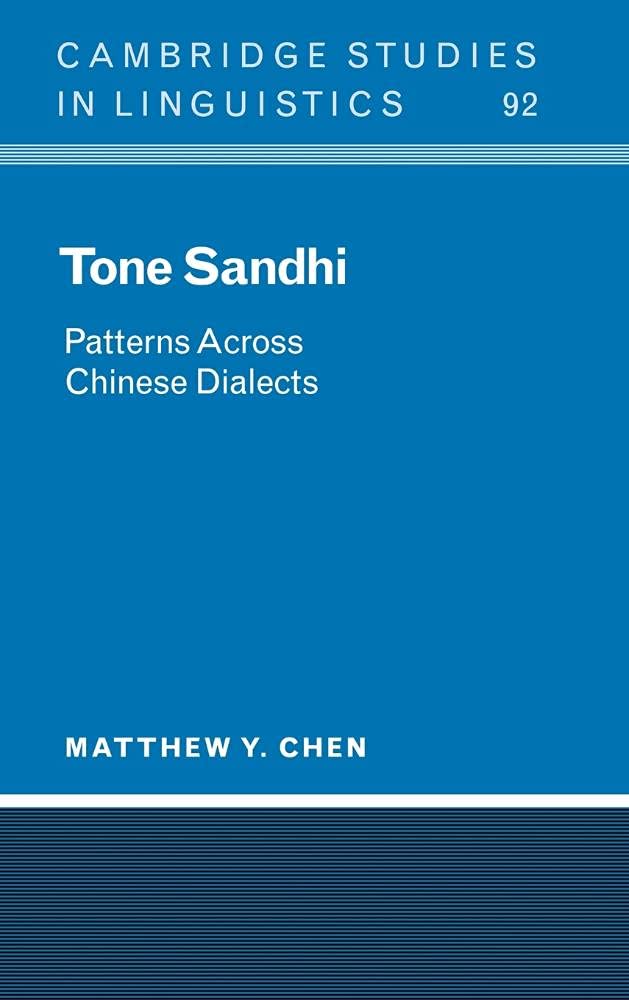
Tone Sandhi Patterns across Chinese Dialects for Linguistics Study
Tone Sandhi Patterns across Chinese Dialects for Linguistics Study
Price subject to change. Tap below for current.
Couldn't load pickup availability
The book Tone Sandhi: Patterns across Chinese Dialects is an essential resource for anyone interested in the intricate world of Chinese linguistics. Authored by Matthew Y. Chen, this comprehensive study delves into the fascinating phenomenon of tone sandhi, which refers to the changes in tone that occur in connected speech. This book is a part of the esteemed Cambridge Studies in Linguistics series, specifically series number 92, making it a credible addition to any linguist's library.
In this work, Chen meticulously examines various Chinese dialects, highlighting the patterns of tone sandhi that emerge across different regions. The author provides a thorough analysis of how these tonal changes affect meaning and communication, making it a vital read for linguists, language students, and anyone with a keen interest in phonetics. The book is structured to guide readers through complex concepts with clarity and precision.
One of the standout features of this book is its detailed exploration of the linguistic implications of tone sandhi. Chen presents a wealth of data and examples from a range of dialects, illustrating how tone sandhi operates in real-world contexts. This empirical approach not only enriches the reader's understanding but also serves as a valuable reference for future research in the field.
The author also discusses the theoretical frameworks that underpin tone sandhi phenomena, making connections to broader linguistic theories. This aspect of the book is particularly beneficial for advanced students and researchers who are looking to deepen their understanding of Chinese phonology and its unique characteristics.
Moreover, the book is well-organized, with each chapter building upon the last, allowing readers to gradually develop their knowledge of tone sandhi. The inclusion of diagrams and tables further enhances comprehension, making complex information more accessible. Readers will appreciate the clear explanations and the logical flow of ideas throughout the text.
For those interested in the practical applications of tone sandhi, Chen also addresses its relevance in language teaching and learning. The insights provided can help educators develop more effective teaching strategies for students of Chinese, emphasizing the importance of tone in communication. This makes the book not only a scholarly resource but also a practical guide for language instructors.
In conclusion, Tone Sandhi: Patterns across Chinese Dialects is a must-have for anyone serious about studying Chinese linguistics. Its thorough research, clear presentation, and practical insights make it an invaluable addition to the field. Whether you are a student, educator, or researcher, this book will enhance your understanding of Chinese dialects and the complexities of tone sandhi.
Share