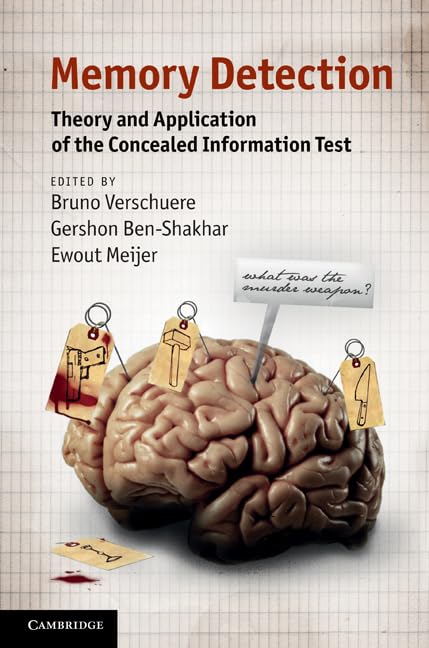
Memory Detection Theory and Application of Concealed Info Test
Memory Detection Theory and Application of Concealed Info Test
Price subject to change. Tap below for current.
Couldn't load pickup availability
The Memory Detection book offers a comprehensive exploration of the Concealed Information Test, a pivotal tool in psychological assessment and criminal investigations. Authored by experts Bruno Verschuere, Gershon Ben-Shakhar, and Ewout Meijer, this text delves into the theoretical underpinnings and practical applications of memory detection techniques.
In the realm of forensic psychology, understanding how to accurately assess concealed information is crucial. This book provides an in-depth analysis of the theory behind memory detection, making it an essential resource for both students and professionals in the field. The authors meticulously outline the methodologies employed in the Concealed Information Test, offering insights into its effectiveness and reliability.
One of the standout features of this book is its focus on empirical research. The authors present a wealth of data supporting the efficacy of the Concealed Information Test in various contexts, including criminal investigations and security screenings. Readers will appreciate the detailed case studies that illustrate the practical implications of these findings.
Furthermore, the book addresses the ethical considerations surrounding the use of memory detection techniques. It emphasizes the importance of conducting assessments responsibly and highlights the potential consequences of misinterpretation. This aspect makes it a valuable resource for practitioners who must navigate the complexities of psychological testing.
In addition to theoretical discussions, the authors provide practical guidance on implementing the Concealed Information Test. This includes step-by-step instructions for conducting assessments, interpreting results, and presenting findings in a clear and concise manner. The book is designed to be accessible, ensuring that readers can apply the concepts learned in real-world scenarios.
For those interested in the future of memory detection, the authors explore emerging trends and technologies that may shape the field. This forward-looking perspective encourages readers to consider how advancements in neuroscience and psychology could enhance the accuracy and applicability of the Concealed Information Test.
Overall, this book is an indispensable addition to the library of anyone involved in forensic psychology, law enforcement, or related fields. Its blend of theoretical insights, empirical research, and practical applications makes it a comprehensive guide to understanding and utilizing the Memory Detection techniques effectively.
Share