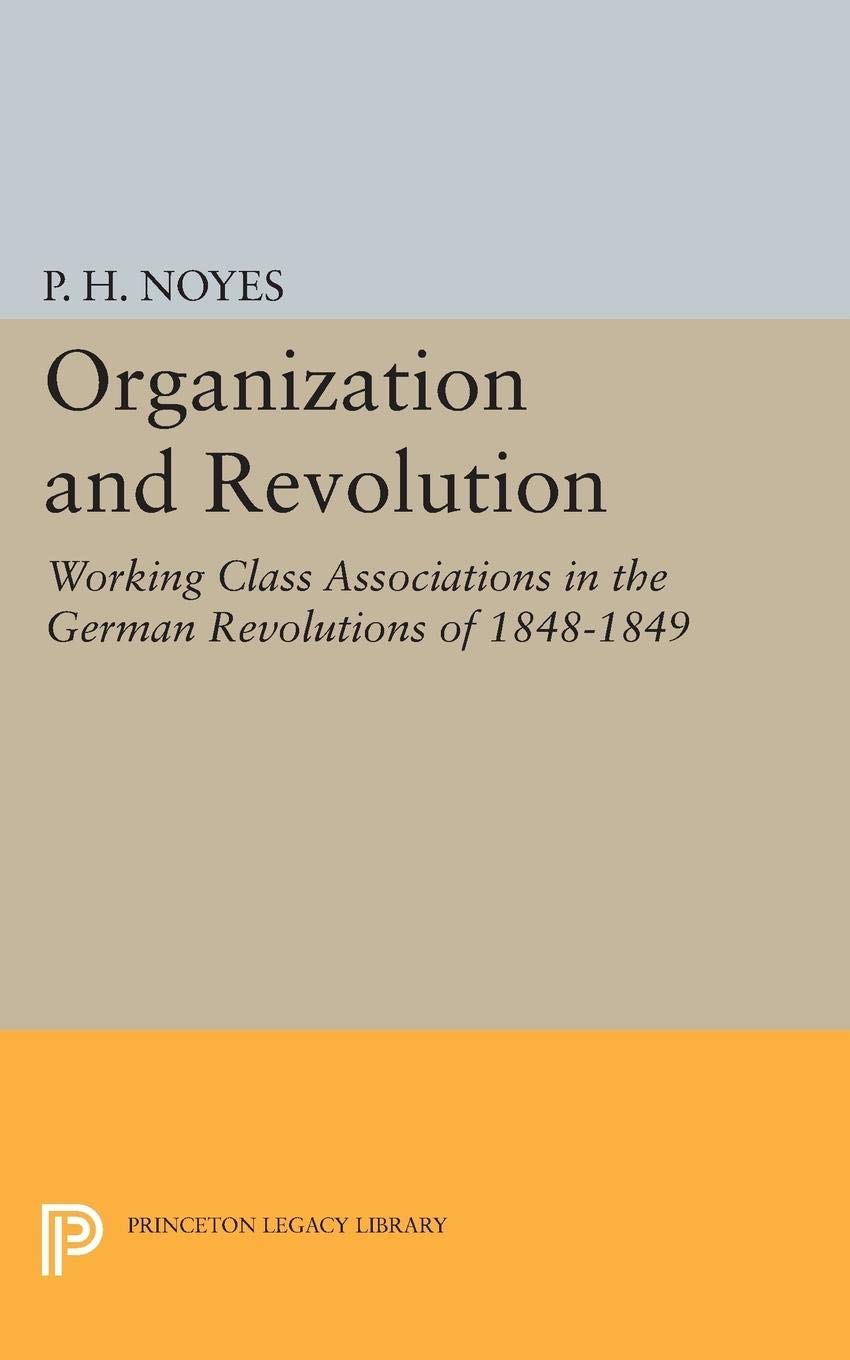
Organization and Revolution: Working Class Associations in 1848-1849
Organization and Revolution: Working Class Associations in 1848-1849
Price subject to change. Tap below for current.
Couldn't load pickup availability
The book Organization and Revolution delves into the pivotal role of working class associations during the German Revolutions of 1848-1849. Authored by P. H. Noyes, this insightful work provides a comprehensive analysis of how these associations influenced the political landscape of the time. It examines the dynamics of class struggle and the emergence of collective action among the working class, making it a crucial read for anyone interested in social movements.
In this detailed study, Noyes explores the various working class associations that emerged as a response to the socio-political upheaval. He highlights the significance of these groups in advocating for workers' rights and their contributions to the revolutionary fervor that swept across Germany. The book is not just a historical account; it also offers a critical perspective on the effectiveness of these associations in achieving their goals.
One of the key themes in Organization and Revolution is the interplay between organization and political change. Noyes argues that the success of the revolutions was heavily dependent on the ability of these associations to mobilize the working class. He provides a thorough examination of the strategies employed by these groups, shedding light on their successes and failures.
The author meticulously documents the events of the revolutions, providing readers with a vivid picture of the struggles faced by the working class. Through a combination of primary sources and scholarly analysis, Noyes brings to life the challenges and triumphs of the time. This book serves as an essential resource for understanding the complexities of the German Revolutions.
Moreover, Organization and Revolution addresses the broader implications of these historical events for contemporary social movements. Noyes draws parallels between the past and present, encouraging readers to reflect on the lessons learned from the working class associations of the 19th century. This aspect of the book makes it relevant not only for historians but also for activists and scholars interested in labor movements.
In conclusion, P. H. Noyes' Organization and Revolution is a meticulously researched and thought-provoking examination of the working class associations during a critical period in German history. It is a must-read for anyone seeking to understand the roots of modern labor movements and the ongoing struggle for workers' rights. With its rich historical context and insightful analysis, this book is sure to engage and inform readers from various backgrounds.
Share