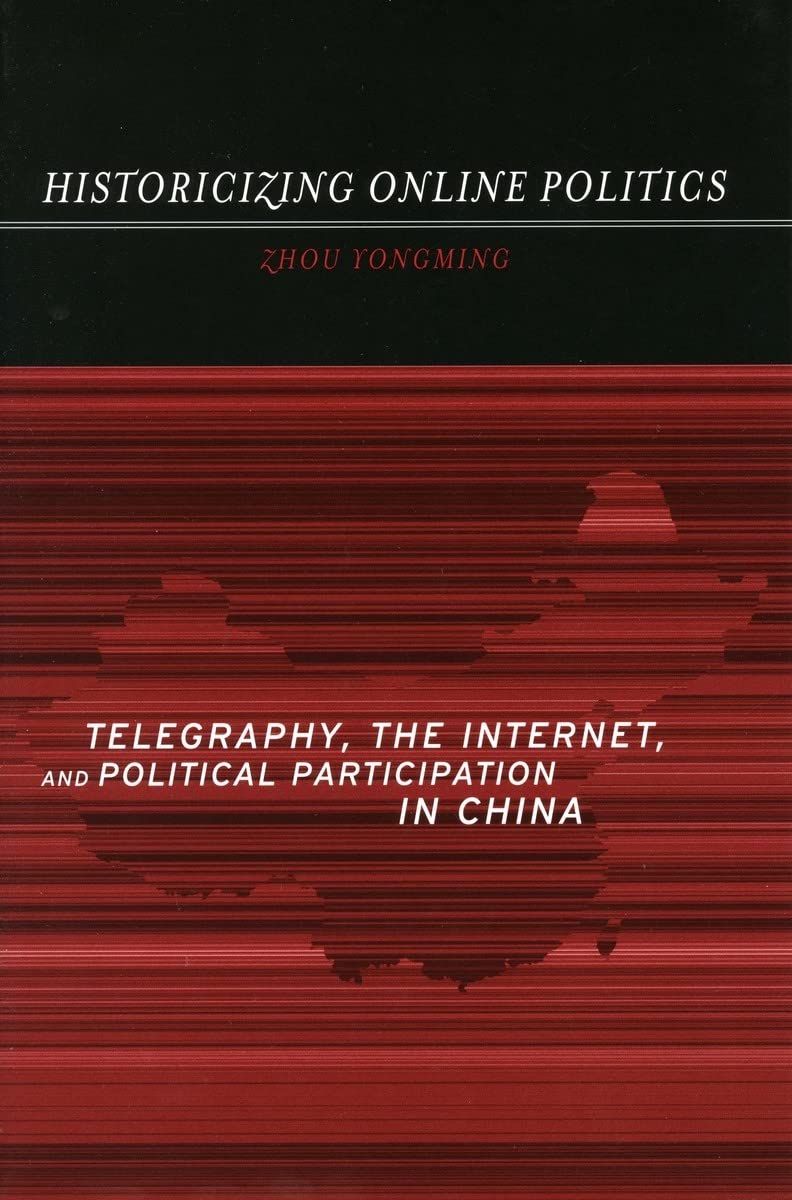
Historicizing Online Politics: Telegraphy and Internet in China
Historicizing Online Politics: Telegraphy and Internet in China
Price subject to change. Tap below for current.
Couldn't load pickup availability
The book Historicizing Online Politics by Yongming Zhou offers a profound exploration of the evolution of political participation in China through the lens of telegraphy and the Internet. This insightful work delves into how these communication technologies have shaped the political landscape, providing readers with a comprehensive understanding of their impact.
In the first section, Zhou examines the historical context of telegraphy in China, tracing its origins and the role it played in facilitating communication during critical political moments. The author argues that telegraphy was not merely a technological advancement but a catalyst for political change, influencing how information was disseminated and consumed.
As the narrative progresses, the book transitions to the digital age, highlighting the emergence of the Internet as a political tool. Zhou meticulously analyzes how online platforms have transformed political engagement, enabling citizens to participate in discussions and mobilize for social causes. This section is particularly relevant in understanding the current dynamics of political activism in China.
One of the standout features of this book is its in-depth case studies that illustrate the practical implications of online political participation. Zhou provides compelling examples of how individuals and groups have utilized the Internet to challenge authority and advocate for change, showcasing the power of digital communication in contemporary society.
The author also addresses the challenges and limitations faced by online political movements in China. Through a critical lens, Zhou discusses issues such as censorship and surveillance, emphasizing the ongoing struggle for freedom of expression in the digital realm. This analysis is crucial for anyone interested in the intersection of technology and politics.
Furthermore, Historicizing Online Politics does not shy away from exploring the future of political participation in China. Zhou speculates on the potential developments in communication technologies and their implications for civic engagement. This forward-thinking perspective encourages readers to consider how emerging technologies might further reshape the political landscape.
In conclusion, this book is an essential read for scholars, students, and anyone interested in the intricate relationship between technology and politics in China. Zhou's thorough research and engaging writing style make complex concepts accessible, ensuring that readers come away with a richer understanding of the historical and contemporary significance of political participation in the digital age.
Share