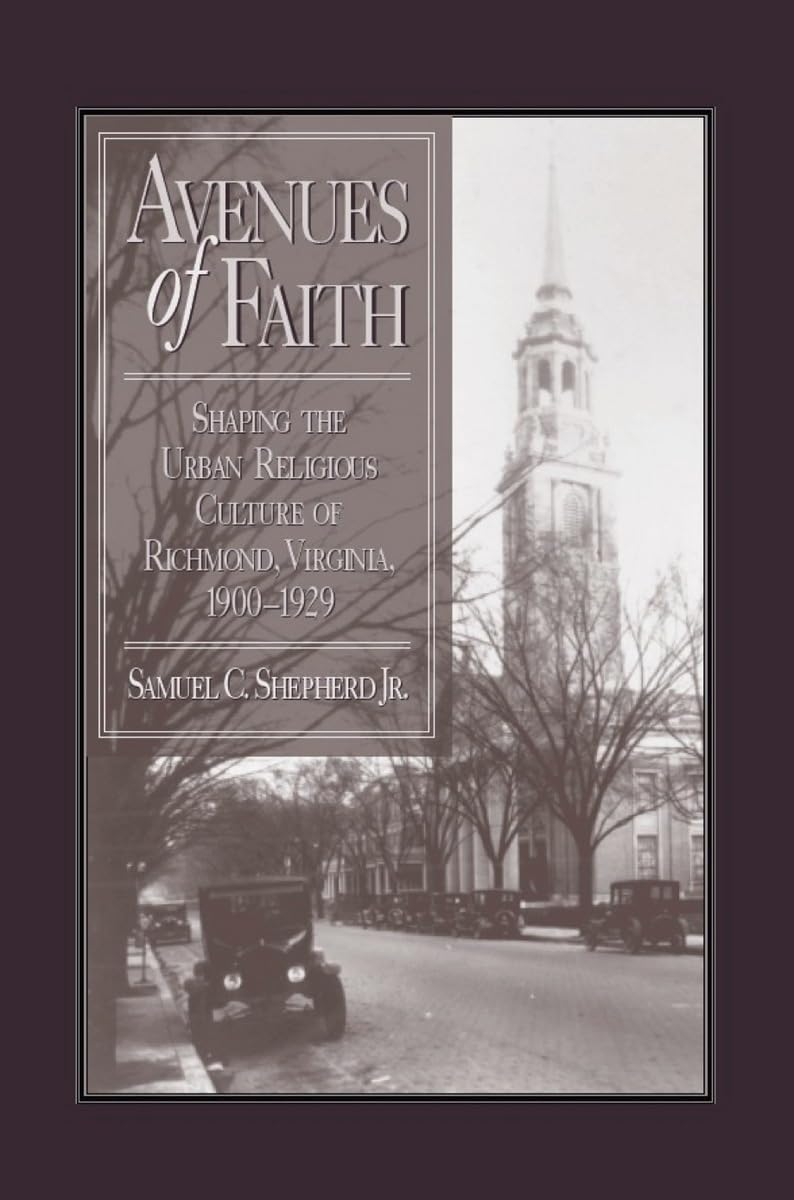
Avenues of Faith: Shaping Urban Religious Culture in Richmond
Avenues of Faith: Shaping Urban Religious Culture in Richmond
Price subject to change. Tap below for current.
Couldn't load pickup availability
The book Avenues of Faith offers a profound exploration of the religious landscape in Richmond, Virginia, during the transformative years of 1900 to 1929. Authored by Samuel C. Shepherd Jr, this insightful work delves into how various faiths shaped the urban culture of this historic city. Through meticulous research, the author presents a vivid portrayal of the interplay between religion and the evolving social dynamics of the time.
In Avenues of Faith, readers will discover the significant role that religious institutions played in the daily lives of Richmond's citizens. The book highlights how churches, synagogues, and other places of worship became central to community life, fostering a sense of belonging and identity among diverse populations. This aspect of urban religious culture is crucial for understanding the broader implications of faith in shaping societal norms.
One of the standout features of this work is its detailed examination of the various religious movements that emerged during this period. The author skillfully outlines how these movements not only influenced individual beliefs but also contributed to the collective consciousness of the city. The narrative is enriched with anecdotes and historical context, making it an engaging read for both scholars and general readers interested in American religious history.
Moreover, Avenues of Faith addresses the challenges faced by religious communities in adapting to the rapid changes brought about by urbanization and modernization. The book discusses how these communities navigated issues such as immigration, social justice, and economic disparity, showcasing their resilience and adaptability. This exploration is particularly relevant in today's context, where similar challenges persist in urban settings across the nation.
The author's thorough research is complemented by a rich array of primary sources, including archival materials and personal testimonies. This depth of information provides readers with a comprehensive understanding of the religious culture in Richmond during the early 20th century. The inclusion of historical photographs and documents adds a visual dimension to the narrative, enhancing the overall reading experience.
In conclusion, Avenues of Faith is not just a historical account; it is a reflection on the enduring impact of religion in urban environments. Samuel C. Shepherd Jr has crafted a compelling narrative that invites readers to consider the ways in which faith continues to shape our communities today. This book is an essential addition to the library of anyone interested in the intersections of religion, culture, and history.
Share