

12V 300Ah LiFePO4 Battery 2-Pack - High-Capacity, Lightweight
12V 300Ah LiFePO4 Battery 2-Pack - High-Capacity, Lightweight
Price subject to change. Tap below for current.
Couldn't load pickup availability
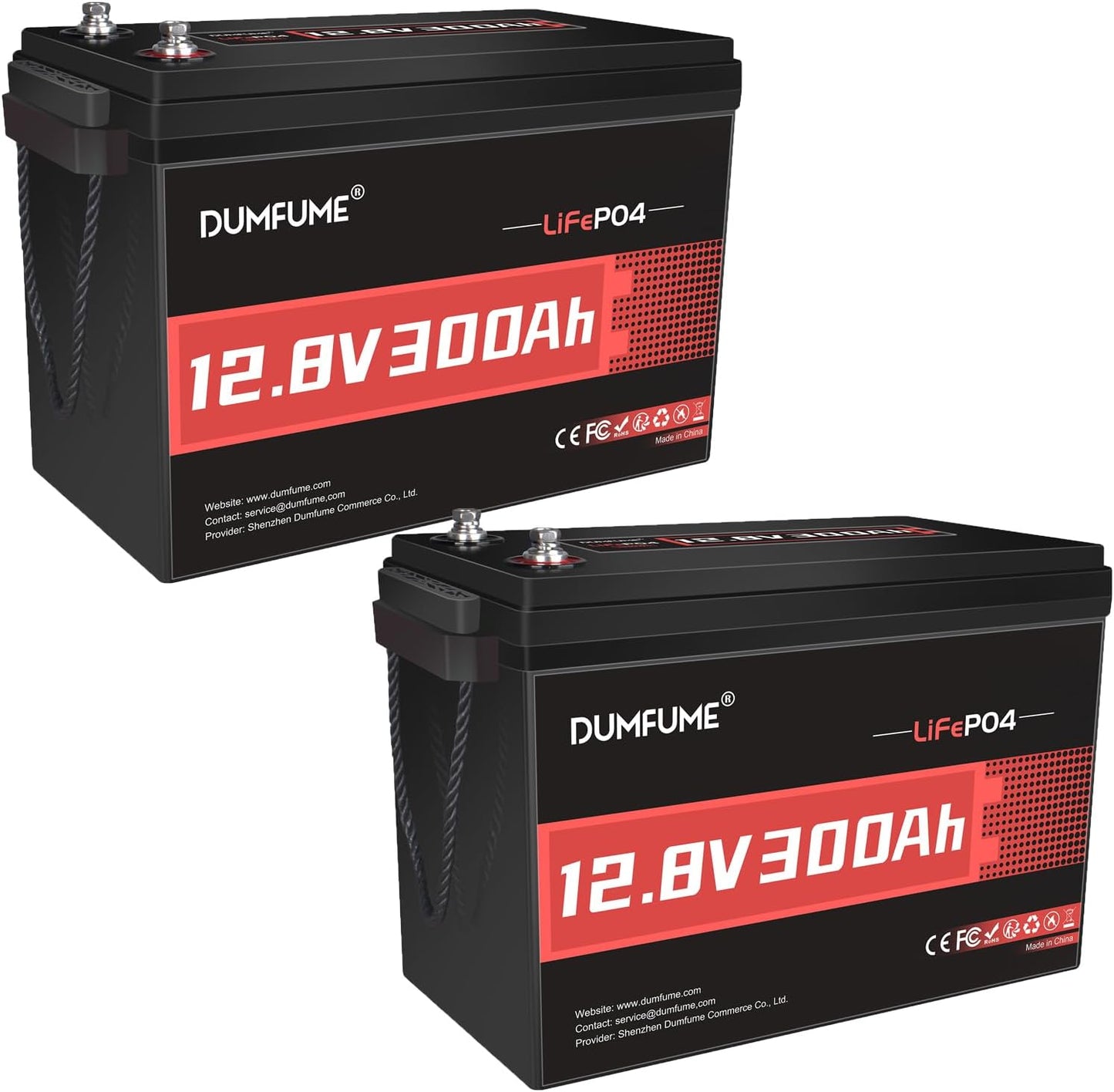
In this review of the 12V 300Ah LiFePO4 battery 2-pack, the bottom line is practical: this kit is for users who need large reliable storage with far less weight than lead-acid. The reviewer found the two-pack delivers a combined energy capacity of about 3,840Wh while weighing roughly 57 lbs per unit, making it a strong choice for RV owners, off-grid solar systems, and campers who prioritize long cycle life and easy installation. The main reason to buy is the combination of high usable capacity and a long service life backed by a built-in protection system.
Key Features
- Compact and powerful: Two 12V 300Ah packs provide substantial energy in a design that is noticeably lighter than equivalent lead-acid batteries, easing installation and transport.
- High usable energy: The combined capacity is about 3,840Wh, supporting longer runs between charges for RV appliances, trolling motors under 2 kW, or off-grid loads.
- Extra long cycle life: The LiFePO4 chemistry supports thousands of cycles, with the manufacturer stating up to 4,000 cycles at full depth and up to 15,000 cycles at 60% DOD, reducing replacement frequency.
- Built-in safety: An integrated BMS protects against overcharge, overdischarge, overcurrent, overheating and short circuit, and includes automatic high/low temperature cut-off.
- Durable casing: A high-strength, impact-resistant ABS shell improves heat, weather and flame resistance for demanding environments like marine and outdoor use.
- Expandable configuration: Units can be connected in series or parallel to scale voltage or capacity for home energy walls or larger RV systems.
Who It's For
The 12V 300Ah LiFePO4 two-pack is best for RV owners, small off-grid solar installations, boaters, and campers who need a high-capacity, lightweight solution with long cycle life and built-in protections. It suits anyone replacing multiple heavy lead-acid batteries to reduce weight and increase usable capacity.
Those who should look elsewhere include users who cannot accommodate the initial cost of large LiFePO4 packs, or installations where charging system compatibility is uncertain; some customers reported mixed experiences when engines or legacy chargers did not charge the battery properly, so verify charger compatibility first.
Pros & Cons
Pros
- High energy density and much lower weight than lead-acid, making handling and installation easier.
- Long advertised cycle life that can deliver better lifetime value versus lead-acid replacements.
- Comprehensive BMS and robust ABS casing add safety and durability for mobile and outdoor use.
Cons
- Some users report mixed charging behavior with engine alternators or older chargers, so compatibility checks are advisable.
- Requires periodic charging every six months in storage to avoid damage, which is an extra maintenance step for infrequent users.
Specifications
| Nominal voltage | 12.8V |
| Capacity | 300Ah per pack |
| Energy | Approximately 3,840Wh (two packs combined) |
| Weight | About 57 lbs per pack |
| BMS protections | Overcharge, overdischarge, overcurrent, overheat, short circuit, temp cut-off |
| Cycle life | Up to 4,000 cycles at 100% DOD; up to 15,000 cycles at 60% DOD |
Our Verdict
The 12V 300Ah LiFePO4 two-pack is a strong value for RV and off-grid users who want high usable capacity, much lower weight than lead-acid, and long service life backed by an internal BMS. While buyers should confirm charger and alternator compatibility and commit to occasional maintenance charging in storage, the combination of durability and energy density makes this a practical long-term investment for mobile and small home energy systems.
Frequently Asked Questions
Can these batteries be paralleled or put in series?
Yes, the design supports parallel and series connections to increase capacity or voltage for larger systems.
Is the battery safe for marine and RV use?
Yes, the ABS casing and built-in BMS provide impact, heat and short-circuit protection suitable for marine and RV environments.
How often should they be charged if stored?
Charge or cycle the battery at least once every six months to prevent degradation from disuse.
Editor's Take
The 12V 300Ah LiFePO4 two-pack delivers high usable capacity with much lower weight and long cycle life, making it a practical choice for RV, marine and off-grid users who confirm charger compatibility and follow storage charging guidance.

Recently viewed
Recently viewed products will appear here as customers browse the store.