

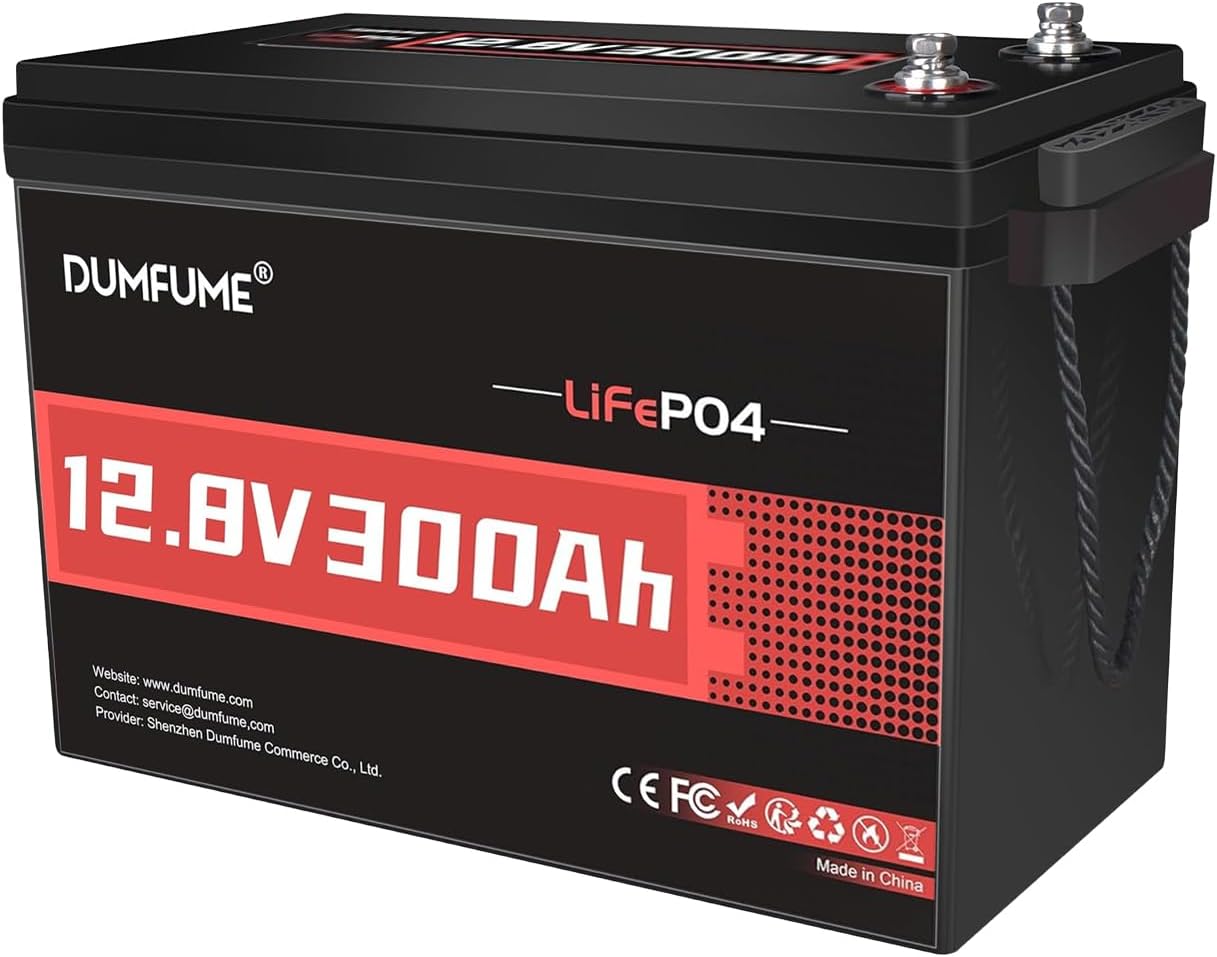
12V 300Ah Lithium LiFePO4 Battery - Compact 3840Wh Energy Storage
12V 300Ah Lithium LiFePO4 Battery - Compact 3840Wh Energy Storage
Price subject to change. Tap below for current.
Couldn't load pickup availability
In this review the 12V 300Ah Lithium LiFePO4 Battery is evaluated as a compact, high-capacity option for home energy storage, RV and camping use. The bottom line: this battery is for anyone who needs a durable, lightweight replacement for heavy lead-acid banks and wants up to 3840Wh of usable energy in a single 12V unit. The review highlights the battery's combination of high energy density, long cycle life, and built-in safety systems, which make it particularly attractive for off-grid systems and portable power applications.
Key Features
- High energy density: The battery delivers up to 3840Wh in a compact 12V package, providing nearly double the energy density of an equivalent lead-acid unit for the same footprint.
- Lightweight design: At about 57 lbs, it is roughly one third the weight of comparable lead-acid batteries, making installation and transport far easier.
- Long cycle life: Built with lithium iron phosphate cells that support up to 4,000 cycles at 100% DOD and up to 15,000 cycles at 60% DOD, reducing replacement frequency and total cost of ownership.
- Integrated safety: A built-in BMS provides overcharge, overdischarge, overcurrent, overheat and short-circuit protection for more reliable day-to-day operation.
- Rugged enclosure: The high-strength ABS case is impact- and flame-resistant and the IP67 waterproof design helps the battery tolerate harsh outdoor environments.
- Expandable system: Batteries can be connected in parallel or series to scale capacity or voltage for RVs, power walls and off-grid systems.
Who It's For
This battery is best for homeowners building small power walls, RV and camper owners who need a lightweight, high-capacity bank, and off-grid hobbyists who want a long-lived, low-maintenance energy store. Its compact size and IP67 rating suit outdoor or semi-exposed installations where weather resistance matters.
Those who need extremely high short-term discharge bursts beyond the 200A BMS limit or who require a tiny form factor for tight equipment bays should look elsewhere; similarly, if cost is the top criterion and frequent replacement is acceptable, lead-acid options remain cheaper up front.
Pros & Cons
Pros
- High usable capacity in a compact, lightweight package that simplifies installation.
- Very long cycle life that lowers lifetime replacement and maintenance needs.
- Built-in BMS and multiple safety certifications enhance reliability and safe operation.
- IP67 and sturdy ABS housing make it suitable for outdoor and mobile use.
Cons
- Maximum BMS current of 200A may limit suitability for applications requiring higher continuous discharge peaks.
- Periodic charging every six months is recommended to avoid damage if the battery is left unused.
Specifications
| Nominal Voltage | 12V |
| Capacity | 300Ah (approx. 3840Wh) |
| Weight | About 57 lbs |
| Maximum BMS Current | 200A |
| Cycle Life | Up to 4,000 cycles @100% DOD; up to 15,000 cycles @60% DOD |
| Protection & Certification | BMS with O/C/O/D/short protect; CE, RoHS, UN38.3, UL1642, UL2580 |
| Enclosure & IP Rating | Impact-resistant ABS; IP67 waterproof |
Our Verdict
The 12V 300Ah LiFePO4 battery is a sensible long-term investment for anyone needing a robust, portable 12V energy store with high usable capacity and excellent cycle life. Its safety features, rugged case and relative light weight deliver clear practical advantages over lead-acid alternatives, making it good value for RVs, small home storage and off-grid setups when the 200A BMS limit fits the load profile.
Frequently Asked Questions
Can multiple units be connected for more capacity?
Yes, the battery supports series and parallel connections to expand voltage or capacity for larger systems.
What protections does the battery include?
It includes a built-in BMS offering overcharge, overdischarge, overcurrent, overheat and short-circuit protection plus high/low temperature cut-off.
How often should the battery be charged if not in use?
Charge or discharge the battery at least once every six months to prevent damage from long-term storage.
Editor's Take
The 12V 300Ah LiFePO4 battery is a compact, durable choice for RVs, small power walls and off-grid use, offering high usable capacity, long cycle life and strong safety features for good lifetime value.

Recently viewed
Recently viewed products will appear here as customers browse the store.