

A Course in Mathematical and Statistical Ecology - Theory and Decision
A Course in Mathematical and Statistical Ecology - Theory and Decision
Price subject to change. Tap below for current.
Couldn't load pickup availability
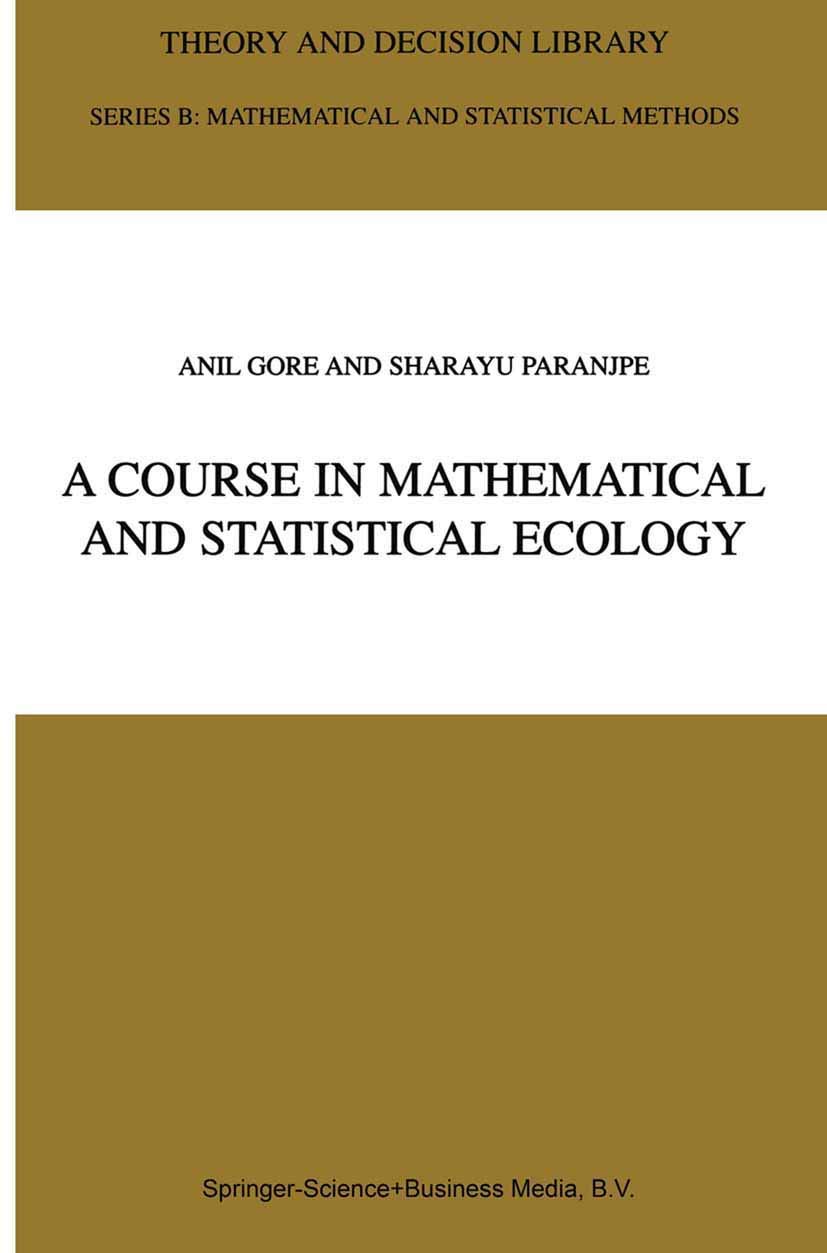
In this review of A Course in Mathematical and Statistical Ecology the book is judged as a focused academic text for readers who want a mathematically grounded introduction to ecological problems. It targets graduate students, researchers and advanced undergraduates seeking a systematic treatment of ecological issues using quantitative methods. The single biggest reason to buy is its concentration on linking ecological concerns such as biodiversity loss and resource depletion to rigorous mathematical and statistical approaches, presented in a compact, scholarly format.
Key Features
- Thematic focus: The book frames modern environmental challenges like pollution, global warming and biodiversity loss in a quantitative context, helping readers see how math applies to real ecological problems.
- Mathematical emphasis: It provides theory and statistical tools that support rigorous analysis of population, species extinction and resource dynamics for researchers and advanced students.
- Interdisciplinary perspective: By addressing both ecological concepts and statistical methods, it benefits readers coming from biology, mathematics or environmental science who want a bridge between disciplines.
- Academic orientation: The text reads as a library-style treatment suitable for course adoption or independent study in a graduate-level setting.
- Historical context: The introduction situates modern ecological concerns within a historical shift in public and scientific attention to conservation and resource depletion.
Who It's For
Readers with a solid background in calculus, linear algebra or introductory statistics will get the most from this book, as it expects familiarity with quantitative methods and an interest in applying them to ecology. It is well suited for graduate students, researchers and instructors assembling course material on mathematical ecology or ecological modelling.
Those seeking a popular overview of environmental issues, a pictorial field guide, or an introductory biology text with minimal mathematics should look elsewhere; the book is oriented toward theory and statistical treatment rather than general-audience narrative or field identification.
Pros & Cons
Pros
- Concentrates on rigorous links between ecological problems and quantitative methods, which benefits analytical readers.
- Suitable as a course text or reference in graduate-level ecological modelling and statistical ecology.
- Addresses contemporary environmental themes such as species extinction and resource depletion in a scholarly way.
Cons
- Its academic, theory-heavy approach may be dense for casual readers or those without mathematical background.
Specifications
| Title | A Course in Mathematical and Statistical Ecology |
| Series | Theory and Decision Library B |
| Authors | Anil Gore, S.A. Paranjpe |
| Subject focus | Mathematical and statistical approaches to ecology |
| Intended audience | Graduate students, researchers, instructors |
| Themes covered | Biodiversity, species extinction, resource depletion, pollution |
Our Verdict
For readers who need a compact, rigorous treatment of ecological issues through mathematics and statistics, this volume is a worthwhile academic purchase and a good value for course use. It excels as a bridge between environmental concerns and quantitative analysis, though less suitable for nontechnical audiences.
Frequently Asked Questions
Is this book suitable for undergraduate study?
The book is best for advanced undergraduates with strong quantitative preparation or for graduate courses; introductory students without math background may struggle.
Does it cover modern environmental issues?
Yes, the text explicitly links topics like pollution, global warming and biodiversity loss to mathematical and statistical frameworks.
Can it be used as a reference for research?
Its theoretical and statistical emphasis makes it appropriate as a reference for researchers and instructors in mathematical ecology.
Editor's Take
A compact, rigorous academic text that links ecological problems like biodiversity loss and pollution to mathematical and statistical methods, ideal for graduate students, researchers and instructors.

Recently viewed
Recently viewed products will appear here as customers browse the store.