Regular price
$232.30 USD
Price subject to change. Tap below for current.
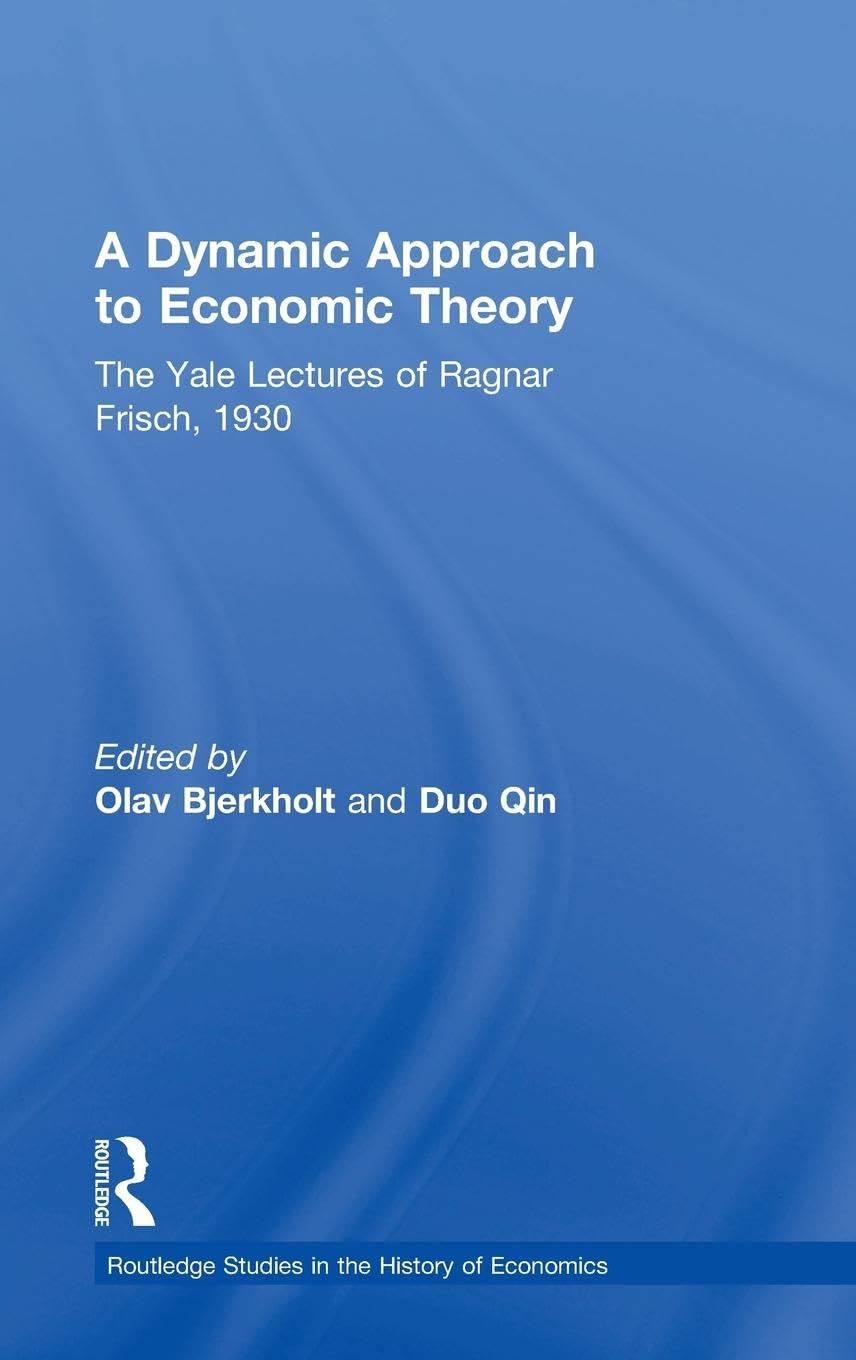
The book A Dynamic Approach to Economic Theory presents a comprehensive collection of the Yale lectures delivered by Ragnar Frisch in 1930. This work is pivotal for anyone interested in the evolution of economic thought and the foundations of modern economic theory.
Frisch, a Nobel laureate, is renowned for his contributions to the field of economics, particularly in the areas of econometrics and dynamic modeling. In this collection, he articulates his vision of economics as a dynamic science, emphasizing the importance of time and change in economic analysis. The lectures are not only a reflection of his innovative ideas but also serve as a historical document that captures the intellectual climate of the early 20th century.
One of the key themes in this book is the concept of dynamics in economic theory. Frisch argues that traditional static models fail to account for the complexities of real-world economies. By introducing dynamic elements, he lays the groundwork for future economists to explore how economies evolve over time, making this work essential for understanding contemporary economic models.
The book also delves into the methodological approaches that Frisch advocated. His emphasis on quantitative analysis and the use of statistical methods in economics was groundbreaking at the time. This approach has since become a cornerstone of modern economic research, underscoring the relevance of Frisch's lectures even today.
Readers will appreciate the clarity and depth of Frisch's arguments, as well as the insightful commentary provided by editors Olav Bjerkholt and Duo Qin. They contextualize Frisch's work within the broader landscape of economic thought, making it accessible to both scholars and students alike. The editors' contributions enhance the reader's understanding of the significance of these lectures in the history of economics.
In addition to its academic value, A Dynamic Approach to Economic Theory is also a fascinating read for anyone interested in the historical development of economic ideas. Frisch's engaging style and thought-provoking insights make this book a compelling addition to the library of any economics enthusiast.
Overall, this collection is a must-read for those who wish to grasp the evolution of economic theory and appreciate the pioneering work of Ragnar Frisch. It serves as a reminder of the importance of dynamic analysis in economics and the need for continuous adaptation of economic models to reflect the realities of changing economies.