

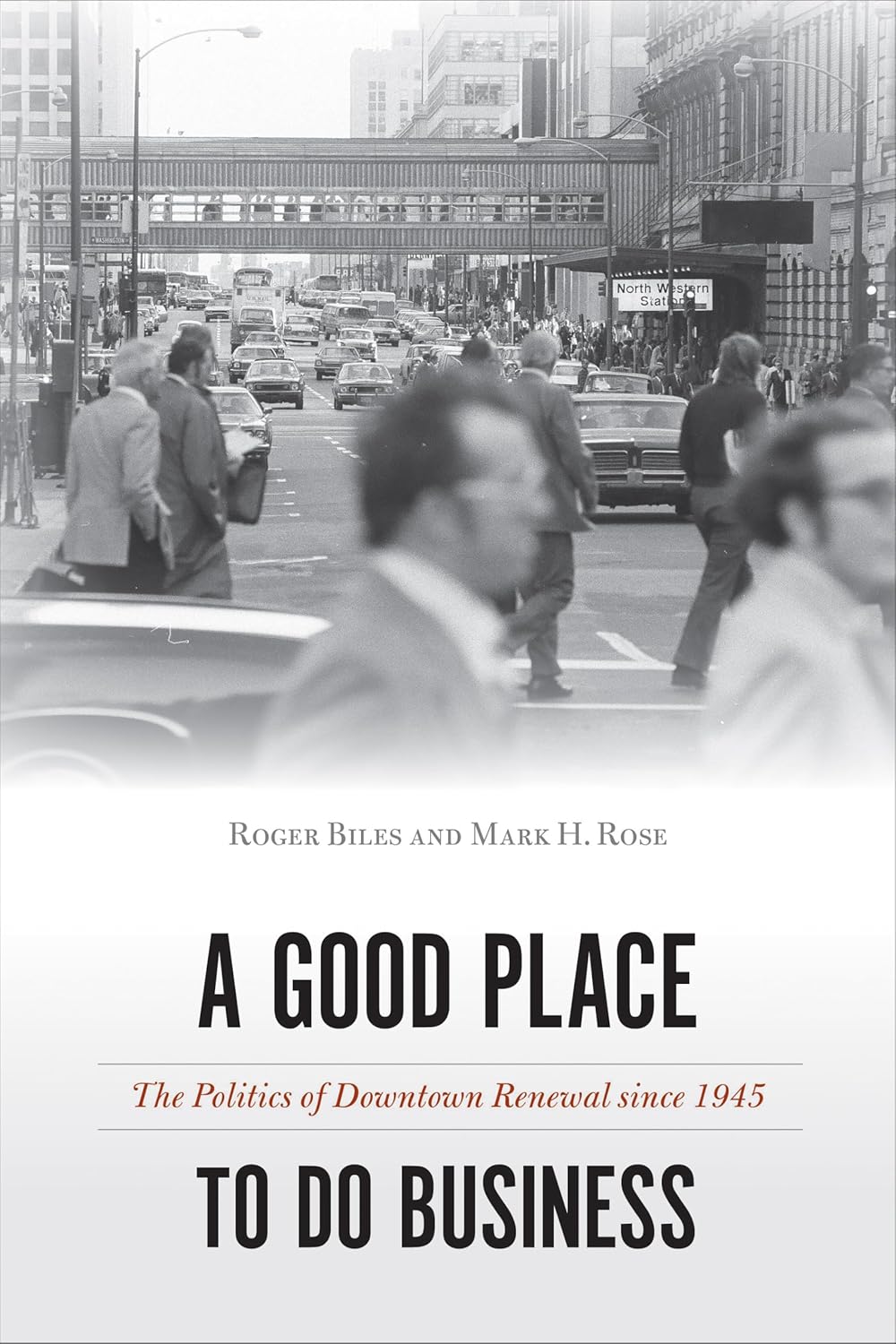
A Good Place to Do Business: The Politics of Downtown Renewal
A Good Place to Do Business: The Politics of Downtown Renewal
Price subject to change. Tap below for current.
Couldn't load pickup availability
In this review Roger Biles and Mark H. Roses A Good Place to Do Business is presented as a thoughtful historical study of mid-century urban renewal. The book is best for readers who want a measured, scholarly account of how postwar redevelopment reshaped downtowns and who appreciate careful political and social context. Our review finds the book most valuable for historians, urban planners, and policy students because it connects the Pittsburgh Renaissance to similar projects in St. Louis, Cleveland, Detroit, Chicago, and Philadelphia with clear archival detail and analysis.
Key Features
- Historical focus: Traces the Pittsburgh Renaissance from the late 1940s, offering a clear narrative of the key decisions that drove downtown transformation.
- Comparative scope: Places Pittsburghs experience in context by comparing it with other industrial cities such as St. Louis and Cleveland, which helps readers see patterns across cases.
- Political analysis: Examines the politics behind government-funded redevelopment, clarifying how public policy favored corporate and white middle-class interests.
- Social impact: Documents the displacement of working-class residents and people of color, giving weight to the human consequences of urban renewal projects.
- Policy relevance: Connects mid-century redevelopment decisions to contemporary debates about downtown planning, tourism, and civic investment.
Who It's For
This book suits graduate students, urban historians, and professionals in planning or public policy who need a detailed case study of downtown renewal and its political drivers. The measured tone and archival approach make it a solid classroom text or reference for research on postwar urban change.
Readers seeking a how-to guide for modern redevelopment, a photographic coffee-table book, or a brief popular history should look elsewhere; the book is analytical and deliberate rather than a light or highly visual treatment.
Pros & Cons
Pros
- Clear historical narrative that links Pittsburghs program to national redevelopment trends.
- Nuanced political critique that explains who benefited from public redevelopment funds.
- Focus on social consequences provides a human-centered account of displacement and neighborhood change.
Cons
- Not aimed at casual readers; the analytic style may feel dense to those wanting a brief overview.
Specifications
| Title | A Good Place to Do Business: The Politics of Downtown Renewal since 1945 |
| Authors | Roger Biles, Mark H. Rose |
| Subject | Urban renewal and political history |
| Geographic focus | Pittsburgh with comparisons to other industrial cities |
| Historical period | Since 1945, starting in the late 1940s |
| Topics covered | Downtown redevelopment, displacement, public policy |
Our Verdict
For readers who want a rigorous, well-documented study of postwar downtown transformation, this book is a strong value: it connects municipal politics to tangible outcomes and situates Pittsburghs Renaissance within broader patterns across industrial cities, making it especially useful for scholars and practitioners examining the long-term effects of redevelopment.
Frequently Asked Questions
Does the book focus only on Pittsburgh?
The primary case is Pittsburgh, but the authors explicitly compare it with other industrial cities such as St. Louis, Cleveland, Detroit, Chicago, and Philadelphia.
Will this help contemporary planners?
Yes; the books analysis of government-funded redevelopment programs and their political dynamics offers lessons for current policy debates.
Is it a popular history or academic study?
It reads as a scholarly, research-based study intended for students, historians, and policy professionals rather than a light popular treatment.
Editor's Take
A Good Place to Do Business is a rigorous, well-documented study connecting postwar downtown redevelopment to political decisions and displacement; recommended for historians, planners, and policy students.

Recently viewed
Recently viewed products will appear here as customers browse the store.