

A History of the United Nations Volume 1 - Early Institutional History
A History of the United Nations Volume 1 - Early Institutional History
Price subject to change. Tap below for current.
Couldn't load pickup availability
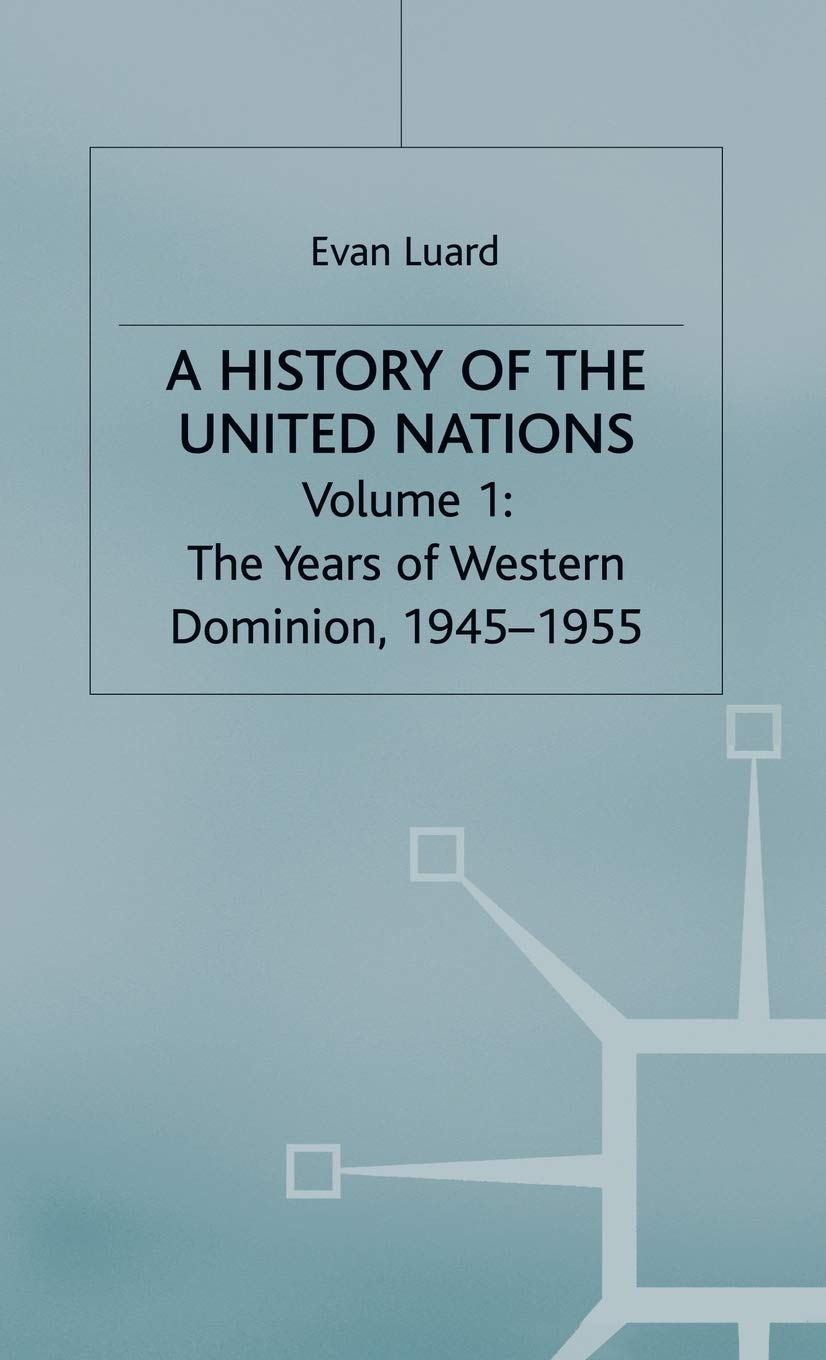
In this review of A History of the United Nations: Volume 1: The Years of Western Domination, 1945-1955 the bottom line is straightforward: this is a detailed, document-focused account best suited to readers who want a careful, archival-style narrative of the UN's first decade. Evan Luard concentrates on the political controversies and institutional choices that shaped the organization, making this volume particularly valuable for students of postwar diplomacy and historians seeking a thorough, context-rich exploration rather than a light overview.
Key Features
- Chronological focus: The book traces the first ten years of the United Nations, giving readers a clear sense of how early decisions and crises established long-term patterns.
- Institutional analysis: Luard examines debates inside the organization to explain how procedures and structures came into being, useful for readers studying governance.
- Political context: The narrative situates UN controversies within the wider geopolitical tensions of 1945-1955, helping readers connect diplomatic actions to global politics.
- Research depth: As the opening volume of a major work, it compiles detailed accounts of negotiations and disagreements that are helpful for academic reference.
- Readable scholarly voice: The tone balances scholarly attention with narrative clarity so that informed general readers can follow complex debates.
Who It's For
This volume is aimed at undergraduate and graduate students of international relations, historians of the postwar era, and policy researchers who need a concentrated study of the UN's formative institutional years. Its emphasis on debates and political factors makes it a good companion for coursework on diplomacy and the development of international organizations.
Readers who want a concise primer, a heavily illustrated popular history, or a general survey of later UN activity should look elsewhere, since Luard's work is tightly focused on 1945-1955 and on political and institutional analysis rather than broad, sweeping narratives.
Pros & Cons
Pros
- Provides a rigorous, chronological account of the UN's first decade that supports academic study and research.
- Details internal controversies and debates, offering insight into how institutional rules emerged.
- Places UN developments clearly within the political context of the immediate postwar years.
Cons
- Limited to 1945-1955, so readers seeking coverage beyond that period will need subsequent volumes or supplementary sources.
Specifications
| Title | A History of the United Nations: Volume 1 |
| Subtitle | The Years of Western Domination, 1945-1955 |
| Author | Evan Luard |
| Focus | Establishment of the United Nations and early controversies |
| Scope | First ten years (1945-1955) |
| Category | Politics & Government / International & World Politics |
Our Verdict
Luard's first volume is a solid, scholarly treatment of the United Nations' formative decade that rewards readers who want institutional detail and political context. It represents good value for students and historians seeking a rigorous reference on early UN controversies, though its narrow time frame means it performs best as part of a wider reading list.
Frequently Asked Questions
Does this volume cover the founding conferences?
Yes, it discusses the establishment of the United Nations and the debates that occurred in the early postwar conferences and meetings.
Is this book suitable for introductory readers?
It is best for readers with some background in postwar history or international relations; those seeking a brief introduction may prefer more general surveys.
Will later years be covered?
This work is explicitly limited to 1945-1955 and is the first volume of a major study intended to be followed by additional volumes for later periods.
Editor's Take
Luard's first volume is a detailed, scholarly account of the United Nations' formative decade, ideal for students and historians who need institutional analysis and political context, though its narrow time frame means it works best as part of broader reading.

Recently viewed
Recently viewed products will appear here as customers browse the store.