

A Practical Theory of Programming - Rigorous, Accessible Theory
A Practical Theory of Programming - Rigorous, Accessible Theory
Price subject to change. Tap below for current.
Couldn't load pickup availability
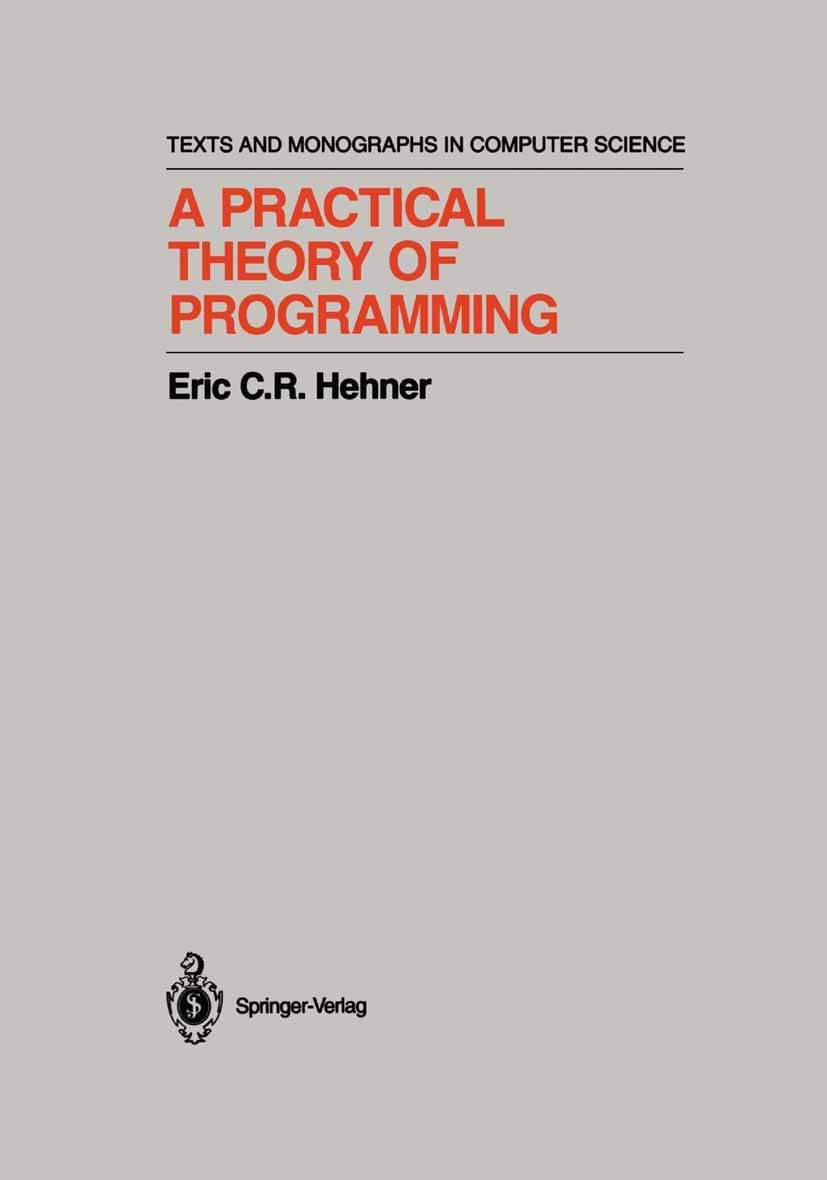
In this review of A Practical Theory of Programming the reviewer finds a focused, mathematically grounded treatment of program specification and verification that is best suited to advanced undergraduates, beginning graduate students, and practicing software engineers who want a concise, formal approach. The single biggest reason to buy is its clear presentation of a programming theory that aims to be simpler and more comprehensive than prior work, making it a practical companion for courses in programming methodology or for engineers applying formal reasoning to real designs.
Key Features
- Clear theoretical focus: The text concentrates on aspects of programming that are amenable to mathematical proof, helping readers build rigorous reasoning skills.
- Simplified programming theory: The author presents a theory described as simpler and more comprehensive than existing theories, reducing conceptual overhead for learners.
- Academic depth: Material is appropriate for advanced undergraduate and beginning graduate coursework, supporting course use in programming methodology.
- Practical relevance: Software engineers in the field can apply the formal techniques to verification and design decisions in real projects.
- Concise exposition: The monograph format keeps discussions focused, making it practical for targeted study or as a course text.
Who It's For
The book is well suited to students enrolled in upper-level programming methodology or verification courses who already have some mathematical maturity and want a compact, rigorous presentation. It also appeals to software engineers who seek to introduce formal proofs into design and verification workflows without wading through longer, more fragmented texts.
Readers looking for a gentle, introductory programming tutorial or extensive, language-specific examples should look elsewhere; this work is concentrated on theory and proof-friendly aspects rather than step-by-step coding guides or broad survey material.
Pros & Cons
Pros
- Concentrated, rigorous coverage of proof-oriented programming concepts useful for coursework and practice.
- Presentation emphasizes a simpler, more comprehensive theory, which can clarify historically confusing areas.
- Compact monograph format makes it efficient to read as part of a curriculum or focused study.
Cons
- Limited practical coding examples and language-specific detail may frustrate readers seeking hands-on tutorials.
Specifications
| Title | A Practical Theory of Programming (Monographs in Computer Science) |
| Author | Eric C.R. C.R. Hehner |
| Series | Monographs in Computer Science |
| Subject | Programming theory, verification, methodology |
| Intended audience | Advanced undergraduates, beginning graduates, software engineers |
| Focus | Aspects of programming amenable to mathematical proof |
Our Verdict
For students and engineers who need a compact, rigorous introduction to program specification and verification, this monograph is strong value: it delivers a simpler, more comprehensive theoretical framework that can be applied in courses and in practice. Those needing extensive examples or tutorial-style content should supplement it with hands-on resources.
Frequently Asked Questions
Is this book suitable for a first course in programming?
No. It assumes mathematical maturity and is intended for advanced undergraduate or beginning graduate courses rather than introductory programming classes.
Will I get practical coding examples in the book?
The emphasis is on theory and proofs, so practical, language-specific tutorials are limited; use it alongside applied resources for hands-on practice.
Who benefits most from this monograph?
Students studying programming methodology and software engineers focused on verification and formal reasoning will gain the most from its concise, rigorous approach.
Editor's Take
A Practical Theory of Programming is a concise, rigorous monograph that offers a simpler, comprehensive framework for program specification and verification, ideal for advanced students and engineers who want formal, proof-based methods.

Recently viewed
Recently viewed products will appear here as customers browse the store.