

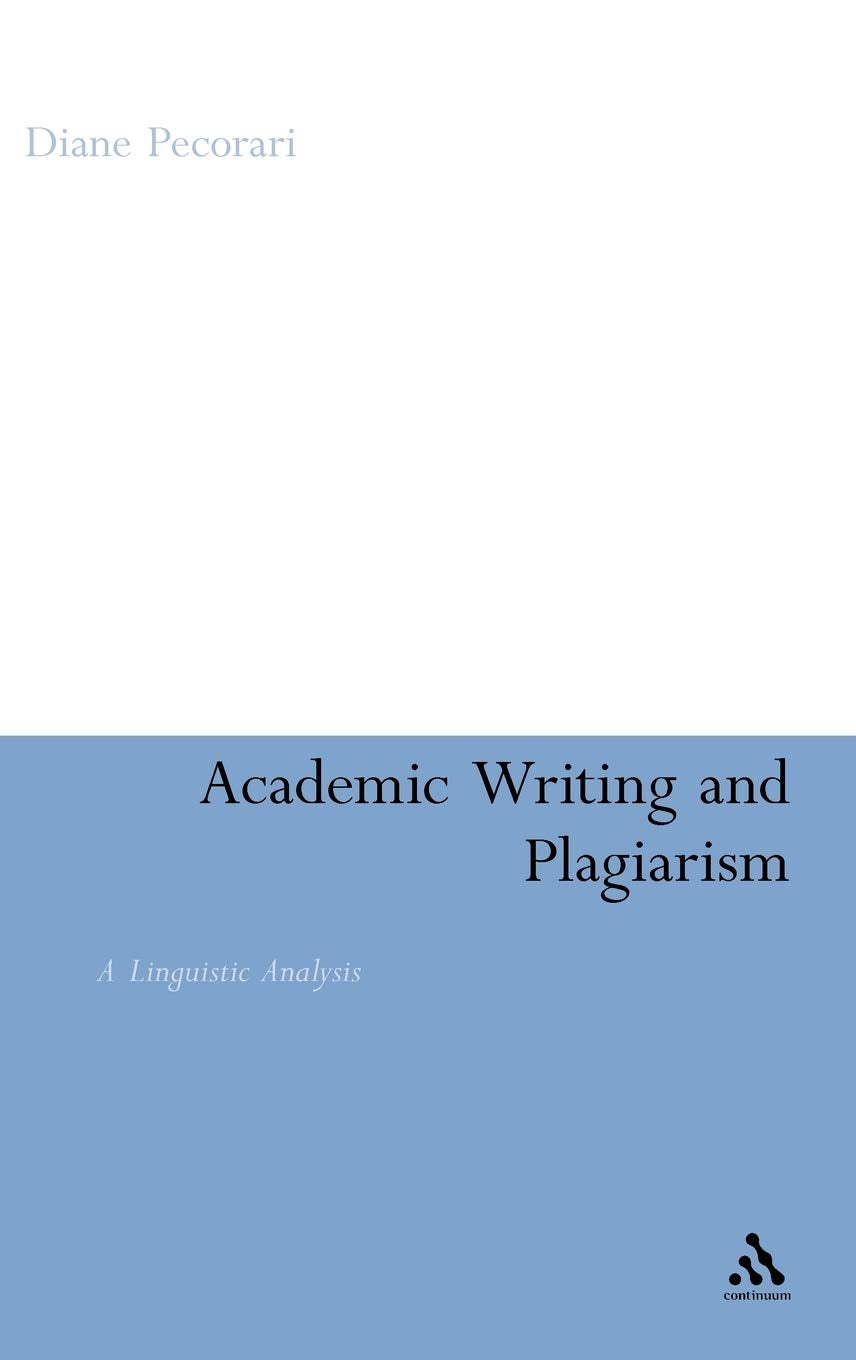
Academic Writing and Plagiarism: A Linguistic Analysis - and Guide
Academic Writing and Plagiarism: A Linguistic Analysis - and Guide
Price subject to change. Tap below for current.
Couldn't load pickup availability
In this review of Academic Writing and Plagiarism: A Linguistic Analysis the reviewer finds a thoughtful, research-driven examination of plagiarism aimed at educators, researchers and advanced students. The book's single biggest reason to buy is its grounding in recent linguistic studies and empirical student writing data, which gives practical insight into how language, identity and source use intersect in academic contexts. This review highlights the book's usefulness for understanding causes of inappropriate source use, rather than offering prescriptive policing tactics.
Key Features
- Linguistic perspective: Explains plagiarism through language analysis, helping readers see how phrasing and source interaction create problematic texts.
- Empirical data: Uses a large sample of student writing to support claims, giving readers concrete examples rather than pure theory.
- Coverage of multilingual issues: Addresses the role of first and second language processes and English as a lingua franca in shaping citation and wording choices.
- Focus on writer identity: Discusses how voice and authorial presence affect judgments about originality, useful for teaching and assessment.
- Links reading and writing: Investigates the interplay between comprehension and text composition to explain how misuse of sources can arise.
- Academic discourse expectations: Clarifies how disciplinary norms shape what counts as acceptable source use, aiding fair evaluation.
Who It's For
The book is best for university teachers, academic integrity officers, linguists and graduate students who need a grounded, research-based account of plagiarism and source use. Its combination of linguistic theory and real student texts makes it particularly valuable for those designing instruction or assessment policies.
Those seeking a quick handbook of sanctions, a step-by-step citation manual, or a general-audience primer on cheating will want a different title; this is an academic, analytic work that assumes interest in language, identity and discourse norms.
Pros & Cons
Pros
- Well-supported by empirical student writing, which strengthens its practical relevance.
- Integrates recent linguistic research, offering novel explanations for why inappropriate source use happens.
- Attends to multilingual writers and English as a lingua franca, widening its applicability in diverse classrooms.
Cons
- Not a quick procedural guide; readers looking for simple checklists or immediate classroom activities may find it theoretical.
Specifications
| Title | Academic Writing and Plagiarism: A Linguistic Analysis |
| Author | Diane Pecorari |
| Approach | Linguistic analysis of plagiarism |
| Evidence base | Empirical data from a large sample of student writing |
| Topics covered | Language processes, writer identity, reading-writing interplay, academic expectations |
| Audience | Educators, researchers, graduate students |
Our Verdict
Academic Writing and Plagiarism is a solid, research-informed book for those who need to understand the linguistic roots of inappropriate source use. It offers useful analysis and evidence for shaping teaching and policy; while not a quick how-to manual, it is good value for educators and scholars seeking deeper explanations rather than surface-level remedies.
Frequently Asked Questions
Does this book offer classroom activities?
Answer. The emphasis is on analysis and empirical findings rather than step-by-step classroom activities, so instructors may need to adapt insights into exercises.
Is the book suitable for non-native English contexts?
Answer. Yes; it explicitly discusses second language processes and English as a lingua franca, making it relevant to diverse student populations.
Who authored the study and perspective?
Answer. Diane Pecorari, writing from a linguistic standpoint with extensive use of student writing samples to support conclusions.
Editor's Take
A research-driven, linguistics-based examination of plagiarism that is valuable for educators and researchers seeking evidence and explanation rather than quick procedural fixes.

Recently viewed
Recently viewed products will appear here as customers browse the store.