

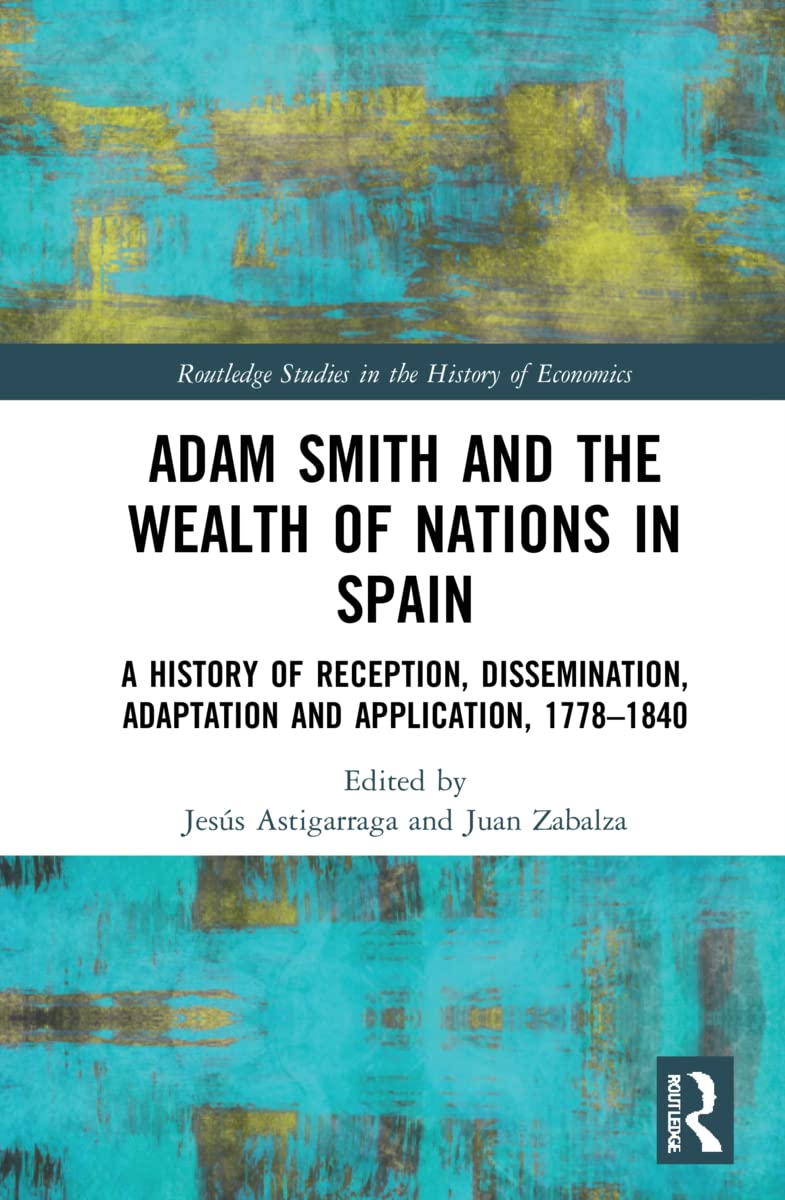
Adam Smith and The Wealth of Nations in Spain - Scholarly Reception
Adam Smith and The Wealth of Nations in Spain - Scholarly Reception
Price subject to change. Tap below for current.
Couldn't load pickup availability
In this review of Adam Smith and The Wealth of Nations in Spain the authors' focused historical reconstruction is recommended for readers who need a rigorous account of how Smith's ideas traveled into peninsular Spain. The book's single biggest strength is its archival and historiographical attention to the reception, adaptation and interpretation of Smith from 1777 to 1840, making it essential for scholars of the history of economic thought and students of Spanish Enlightenment political economy who want a clear, well-documented narrative.
Key Features
- Detailed reception history: Traces the transmission of Smith's central concepts into Spain, offering concrete examples of how ideas were received and adapted in a Spanish context.
- Chronological scope: Covers the formative period from 1777 to 1840 so readers can follow developments from initial contact to early liberal appropriation.
- France as an intermediary: Explains the role of France as an intermediate conduit, clarifying intellectual pathways otherwise treated only superficially.
- Historiographical engagement: Responds to recent methodological advances in history of economic thought, situating the study within current scholarly debates.
- Archival grounding: Reconstructs interpretations and applications of Smith's ideas using documentary evidence to support key claims.
Who It's For
This book is best for historians of economic thought, graduate students, and researchers focused on the Spanish Enlightenment, early liberalism in Iberia, or comparative intellectual history who need a concentrated study of how a canonical British text was received abroad. Its academic tone and attention to historiography make it a strong seminar or research library title.
It is less suitable for general readers seeking an introduction to Adam Smith himself or for casual readers of economic history expecting a broad survey; those audiences should look for generalist introductions or translated editions of The Wealth of Nations instead.
Pros & Cons
Pros
- Well-documented narrative that clarifies the reception and adaptation of Smith's ideas in Spain.
- Clear emphasis on the intermediary role of France sheds light on intellectual transmission networks.
- Engages with recent methodological work, making it relevant to current scholarship.
Cons
- Academic tone and narrow chronological focus limit appeal to non-specialist readers.
Specifications
| Title | Adam Smith and The Wealth of Nations in Spain |
| Series | Routledge Studies in the History of Economics |
| Authors / Editors | Jesus Astigarraga, Juan Zabalza |
| Coverage period | 1777 to 1840 |
| Main focus | Reception, adaptation and interpretation of Smith in peninsular Spain |
| Methodological emphasis | History of economic thought and studies on late Spanish Enlightenment |
Our Verdict
For specialists and advanced students this volume is a valuable, well-researched account of how The Wealth of Nations circulated and was repurposed in Spain, and it is good value as a focused scholarly resource. Those seeking a general introduction to Smith should choose a broader text, but anyone researching Spanish economic thought or intellectual transmission will find this work indispensable.
Frequently Asked Questions
Does the book cover the original text of The Wealth of Nations?
The book focuses on the reception and interpretation of Smith's text in Spain rather than providing a new edition of the original work.
Is the approach archival or theoretical?
The study is archival and historiographical, reconstructing reception with documentary evidence while engaging contemporary methodological debates.
Who are the editors or authors?
Jesus Astigarraga and Juan Zabalza are the scholars responsible for the volume and its editorial framework.
Editor's Take
A well-researched, archival study that traces how The Wealth of Nations was received and adapted in Spain between 1777 and 1840; essential for scholars of economic thought and Spanish Enlightenment studies.

Recently viewed
Recently viewed products will appear here as customers browse the store.