

Advances in Insect Chemical Ecology - Essential for Researchers
Advances in Insect Chemical Ecology - Essential for Researchers
Price subject to change. Tap below for current.
Couldn't load pickup availability
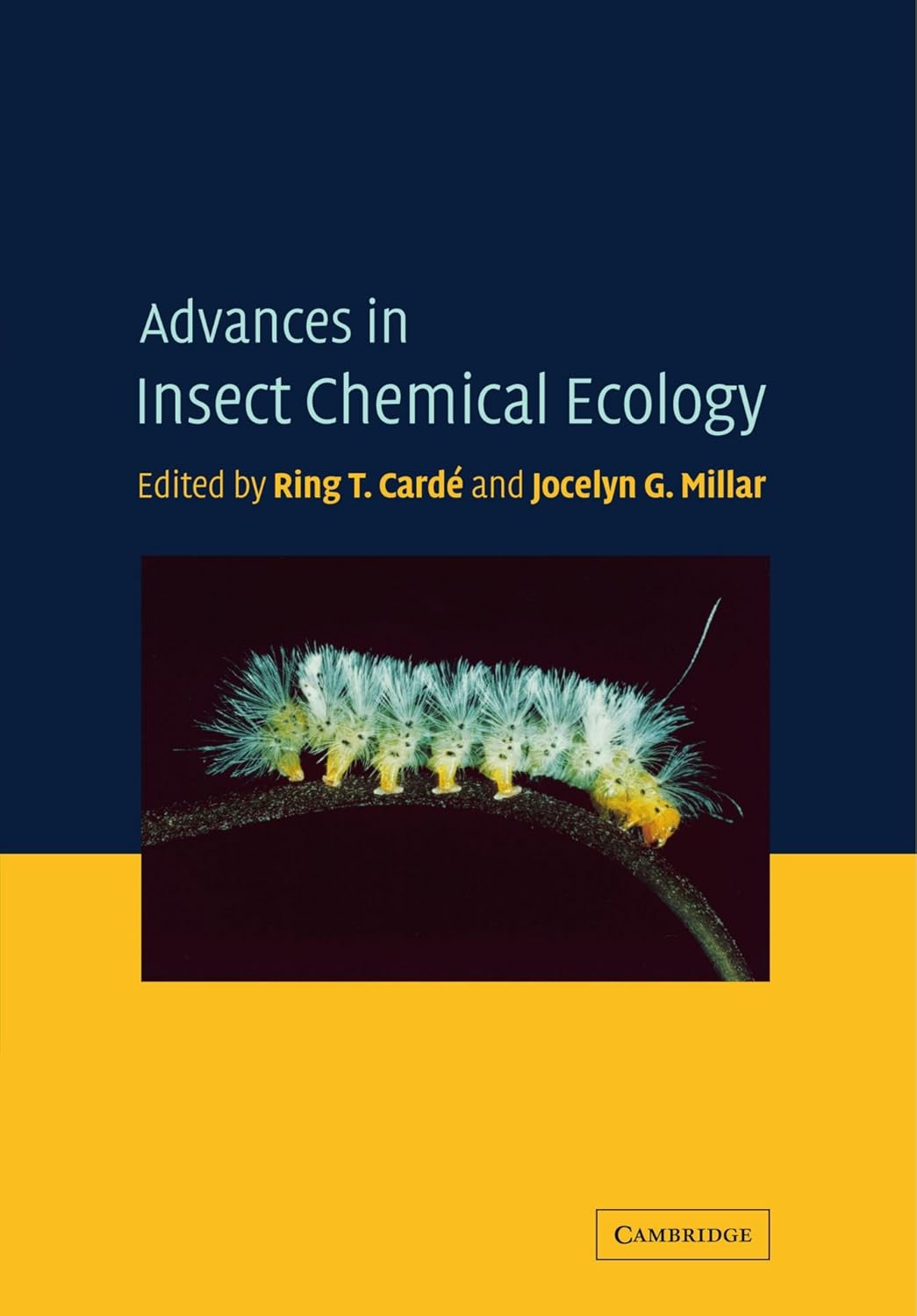
In this review the book Advances in Insect Chemical Ecology is evaluated as a focused, research-oriented volume best suited to graduate students and active researchers. The single biggest reason to buy is the depth of contributions: eight chapters written by internationally recognized experts providing up-to-date discussion of how insects use chemical signals to communicate and interact with plants, predators, and other animals. The review highlights the book's strengths in covering plant defenses, floral odors that attract pollinators, host finding by parasitic insects, and pheromone-mediated interactions across multiple arthropod groups.
Key Features
- Expert authorship: Each chapter is written by internationally recognized experts, ensuring authoritative perspectives on chemical communication in insects.
- Focused chapter topics: Chapters address specific systems like plant defenses and floral odors, giving targeted insights useful for experimental design.
- Diverse taxa covered: The book covers pheromone-mediated interactions in cockroaches, moths, spiders, and mites, offering comparative viewpoints across arthropods.
- Applied and theoretical balance: Discussions include both mechanisms of detection and ecological consequences, helping readers connect lab findings to field relevance.
- Graduate-level depth: The treatment is rigorous enough for graduate students and researchers seeking current syntheses rather than introductory overviews.
Who It's For
The book is ideal for graduate students, postdoctoral researchers, and established investigators in chemical ecology, entomology, and related biological sciences who need a concentrated update on recent work in insect chemical signaling. It is especially useful for those designing experiments on host finding, plant-insect interactions, or pheromone biology.
Readers seeking a textbook introduction for undergraduates or a broad popular science narrative should look elsewhere; the material assumes familiarity with ecological and chemical terminology and is written at an advanced, specialist level.
Pros & Cons
Pros
- Authoritative chapters provide up-to-date syntheses by recognized experts in chemical ecology.
- Broad taxonomic coverage allows comparative approaches across insects and related arthropods.
- Focused topics such as plant defenses and floral odors are directly applicable to experimental work and field studies.
Cons
- The specialized, graduate-level focus means it is not well suited for casual readers or those new to biological sciences.
Specifications
| Title | Advances in Insect Chemical Ecology |
| Authors / Editors | Ring T. Carde, Jocelyn G. Millar |
| Number of chapters | Eight |
| Primary subjects | Plant defenses, floral odors, host finding, pheromone interactions |
| Intended audience | Researchers and graduate students in chemical ecology |
| Taxa discussed | Cockroaches, moths, spiders, mites, parasitic insects |
Our Verdict
Advances in Insect Chemical Ecology is a concentrated, well-curated volume that delivers current perspectives from leaders in the field. Researchers and graduate students will find clear value in the authoritative chapter treatments and the comparative coverage of plant-insect and pheromone-mediated systems, making it a worthwhile reference for labs and graduate reading lists.
Frequently Asked Questions
Is this book suitable for classroom use?
The book is suitable for graduate seminars or advanced courses but is dense for introductory undergraduate classes.
Does it include laboratory methods or protocols?
The focus is synthetic and conceptual; readers will find discussions that inform methods but not step-by-step lab protocols.
Which insect groups are emphasized?
The chapters explicitly cover cockroaches, moths, spiders, mites, and parasitic insect host-finding systems.
Editor's Take
Advances in Insect Chemical Ecology is a concentrated, expert-authored volume ideal for researchers and graduate students seeking current syntheses on plant-insect interactions, pheromones, and host-finding systems; its specialist focus makes it less suitable for casual readers.

Recently viewed
Recently viewed products will appear here as customers browse the store.