

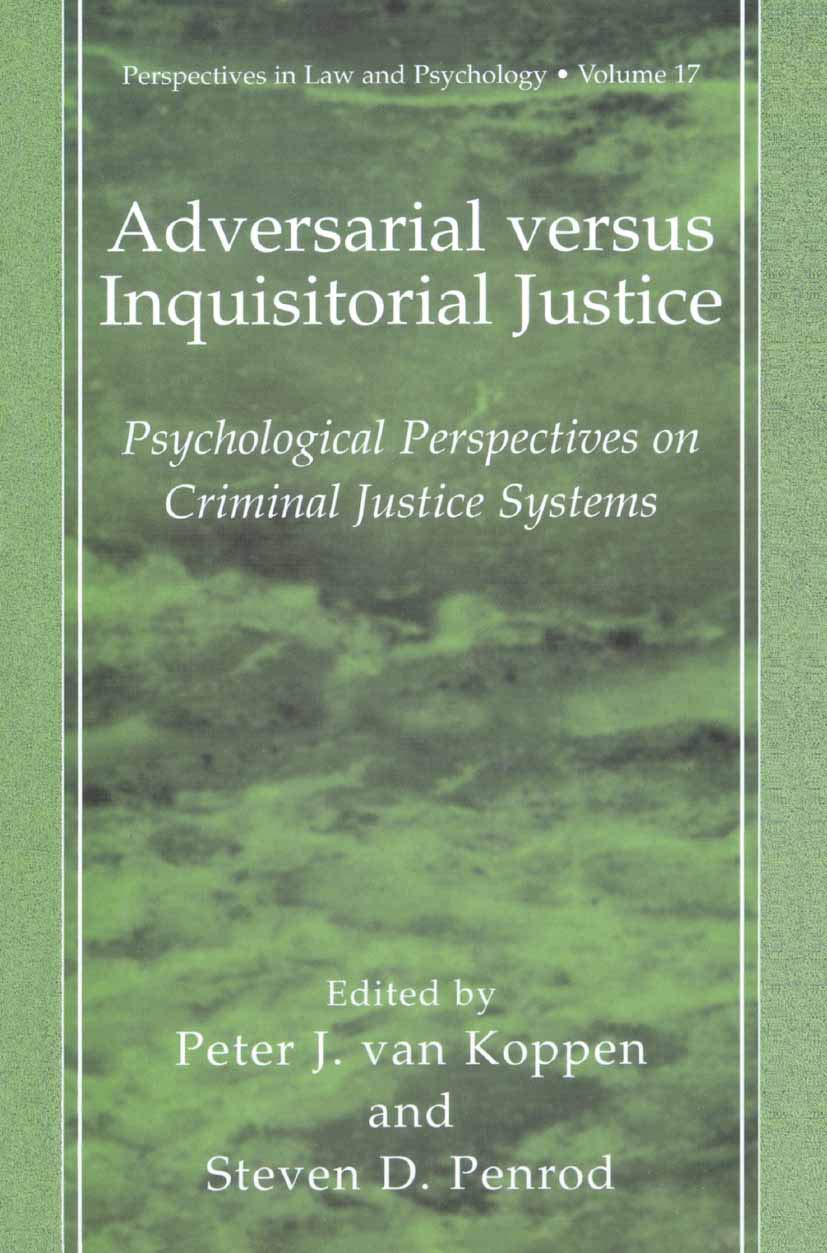
Adversarial versus Inquisitorial Justice - Comparative Psychological
Adversarial versus Inquisitorial Justice - Comparative Psychological
Price subject to change. Tap below for current.
Couldn't load pickup availability
In this review of Adversarial versus Inquisitorial Justice, the reviewer assesses a focused, academic comparison of two criminal justice traditions from a psychological perspective. The single biggest reason to buy is the book's clear, cross-system analysis that links legal practices to psychological research, making it useful to scholars and practitioners who want to understand why American and continental systems adopt different procedural solutions. This volume reads like a specialist review meant for readers who value rigorous, comparative argument over general-audience summaries.
Key Features
- Comparative focus: Directly contrasts adversarial and inquisitorial systems so readers can see how each system handles similar legal problems differently.
- Psychological emphasis: Prioritizes findings from psychology and how they inform police techniques, witness handling, and decision making in courts.
- Wide topic range: Covers police investigative techniques, risk assessment, the death penalty, recovered memories, and child witnesses to address practical issues across systems.
- Multinational perspective: Brings American and European continental viewpoints together to help readers appreciate cultural and procedural divergence.
- Edited volume format: Compiles chapters by experts so readers get multiple methodological angles rather than a single-author narrative.
Who It's For
The best audience includes legal scholars, forensic psychologists, graduate students in psychology or law, and criminal justice practitioners who need a comparative, research-driven perspective on procedural differences. It is especially useful for those researching how psychological evidence and procedures operate within differing institutional frameworks.
Those looking for a short primer for a general audience or a practical handbook for courtroom advocacy should look elsewhere, as the text is scholarly and assumes familiarity with legal systems and psychological research methods.
Pros & Cons
Pros
- Provides a rigorous comparative analysis that clarifies why different systems choose different procedural solutions.
- Focus on psychological research makes the book particularly relevant to practitioners and researchers in applied psychology.
- Chapters on concrete topics like police techniques and child witnesses offer practical insights grounded in research.
Cons
- As an edited scholarly volume, it can be dense and is not tailored to a casual reader seeking quick answers.
Specifications
| Title | Adversarial versus Inquisitorial Justice |
| Series | Perspectives in Law & Psychology |
| Editors/Authors | Peter J. van Koppen, Steven D. Penrod |
| Scope | Comparative psychological perspectives on criminal justice systems |
| Topics covered | Police investigative techniques; risk assessment; death penalty; recovered memories; child witnesses |
| Approach | Scholarly, edited chapters by experts |
Our Verdict
Adversarial versus Inquisitorial Justice is a valuable comparative text for academics and practitioners who need a research-grounded explanation of procedural differences between legal systems. Its focus on psychological evidence and applied topics makes it good value for specialists, though its scholarly tone limits its appeal to casual readers.
Frequently Asked Questions
Does the book compare U.S. and European systems?
Yes, the volume explicitly contrasts American adversarial practices with European continental inquisitorial approaches from a psychological standpoint.
Are practical topics like child witnesses and police techniques covered?
Yes, chapters address police investigative techniques, child witnesses, and other applied topics relevant to practitioners.
Is this suitable for a general reader?
The text is scholarly and best suited to students, researchers, or professionals rather than casual readers.
Editor's Take
Adversarial versus Inquisitorial Justice is a scholarly comparative study that links legal procedures to psychological research, ideal for academics and practitioners seeking research-driven insight into differences between American and European systems.

Recently viewed
Recently viewed products will appear here as customers browse the store.