

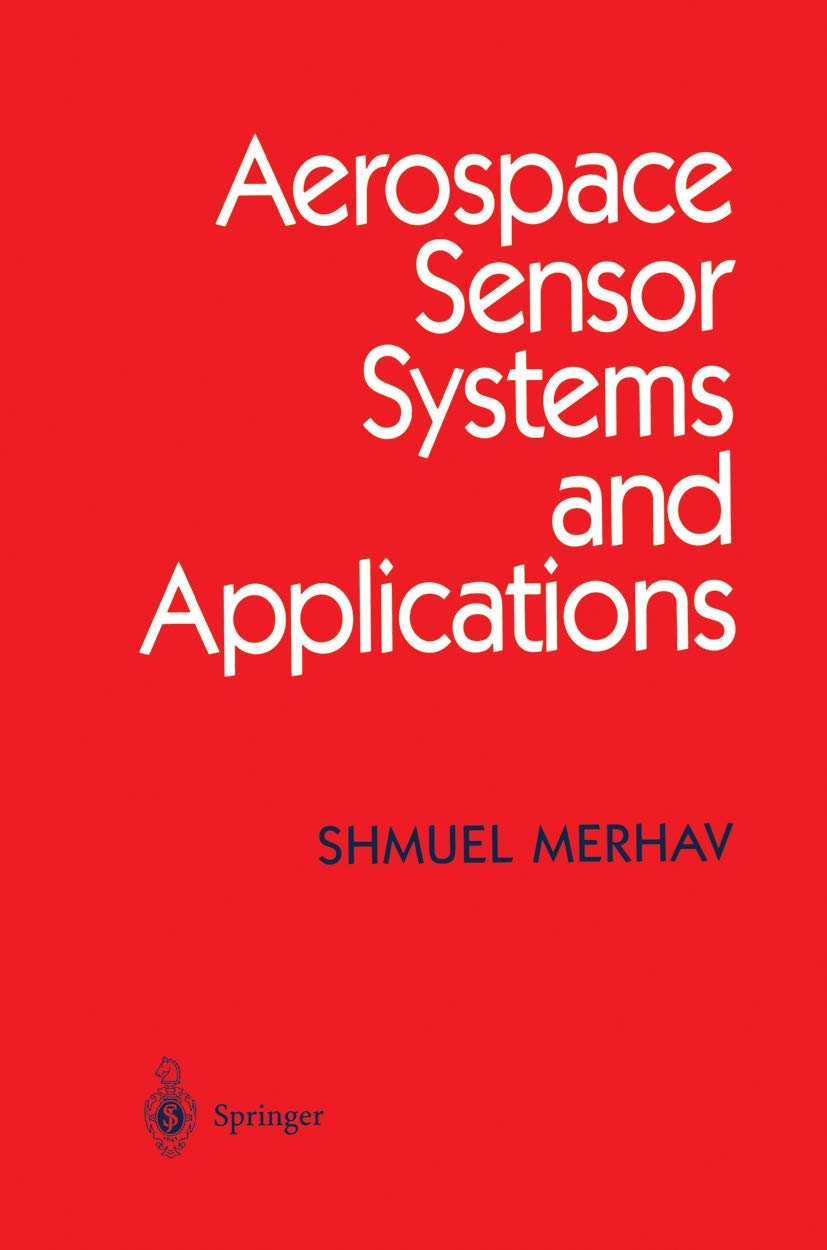
Aerospace Sensor Systems and Applications - Practical for Engineers
Aerospace Sensor Systems and Applications - Practical for Engineers
Price subject to change. Tap below for current.
Couldn't load pickup availability
In this review of Aerospace Sensor Systems and Applications, the reviewer finds a focused, technically grounded textbook aimed squarely at advanced undergraduates and research engineers who need rigorous understanding of sensor physics and modeling. The single biggest reason to buy is its consistent mathematical framework that ties sensor principles to the subsystems and flight missions they serve, making complex error sources and dynamics tractable for practical research or graduate study.
Key Features
- Unified mathematical modeling: Presents sensor physics and error sources within a single modeling approach so readers can translate physical effects into quantitative models for analysis and design.
- Subsystem context: Describes sensors in the framework of the subsystems where they operate so engineers can see how sensors interact with avionics and mission requirements.
- Mission-oriented treatment: Organizes material according to flight missions, helping readers assess which sensor concepts suit particular operational needs.
- Focus on vulnerabilities: Covers typical shortcomings and vulnerabilities of sensor types so designers can anticipate failure modes and mitigation strategies.
- Targeted for advanced study: Written at the advanced undergraduate and graduate level, offering depth appropriate for research engineers who need immediate, applicable knowledge.
Who It's For
The book is best for advanced undergraduates, graduate students, and practicing research engineers working in aerospace or avionics who require a rigorous, math-based understanding of sensor operation, dynamics, and error modeling. It is particularly useful for those involved in sensor selection, subsystem integration, or research where translating physics into models is essential.
Readers who want an introductory, nonmathematical overview or a quick troubleshooting manual should look elsewhere; this work assumes comfort with mathematical modeling and system-level thinking rather than step-by-step repair procedures.
Pros & Cons
Pros
- Clear, consistent modeling approach that helps convert physical sensor behavior into usable mathematical descriptions.
- Contextual presentation within subsystems and missions, aiding practical integration and selection decisions.
- Honest treatment of limitations and vulnerabilities, useful for risk assessment and mitigation planning.
Cons
- Material is mathematically oriented and may be challenging for readers seeking a nontechnical introduction.
Specifications
| Title | Aerospace Sensor Systems and Applications |
| Author | Shmuel Merhav |
| Subject focus | Aerospace sensors, principles, vulnerabilities |
| Intended audience | Advanced undergraduate, graduate students, research engineers |
| Approach | Uniform mathematical modeling of physics and errors |
| Context | Described within subsystems and flight missions |
Our Verdict
Aerospace Sensor Systems and Applications is a worthwhile investment for students and research engineers who need a mathematically consistent, subsystem- and mission-oriented treatment of sensor physics and error modeling. Its focused approach and candid discussion of vulnerabilities make it good value for specialists seeking depth rather than casual readers seeking an introductory survey.
Frequently Asked Questions
Is this book suitable for undergraduate coursework?
Yes; it is suitable for advanced undergraduate courses but expects comfort with mathematical modeling.
Does the book cover practical integration with avionics subsystems?
Yes; sensors are described in the framework of the subsystems where they function, aiding integration understanding.
Will it help with sensor error analysis?
Yes; the book explains error sources and provides corresponding mathematical models for analysis and design.
Editor's Take
Aerospace Sensor Systems and Applications is a mathematically rigorous, mission- and subsystem-oriented textbook that equips advanced students and research engineers with practical models of sensor physics and error sources, making it a strong choice for specialists needing depth rather than casual readers.

Recently viewed
Recently viewed products will appear here as customers browse the store.