

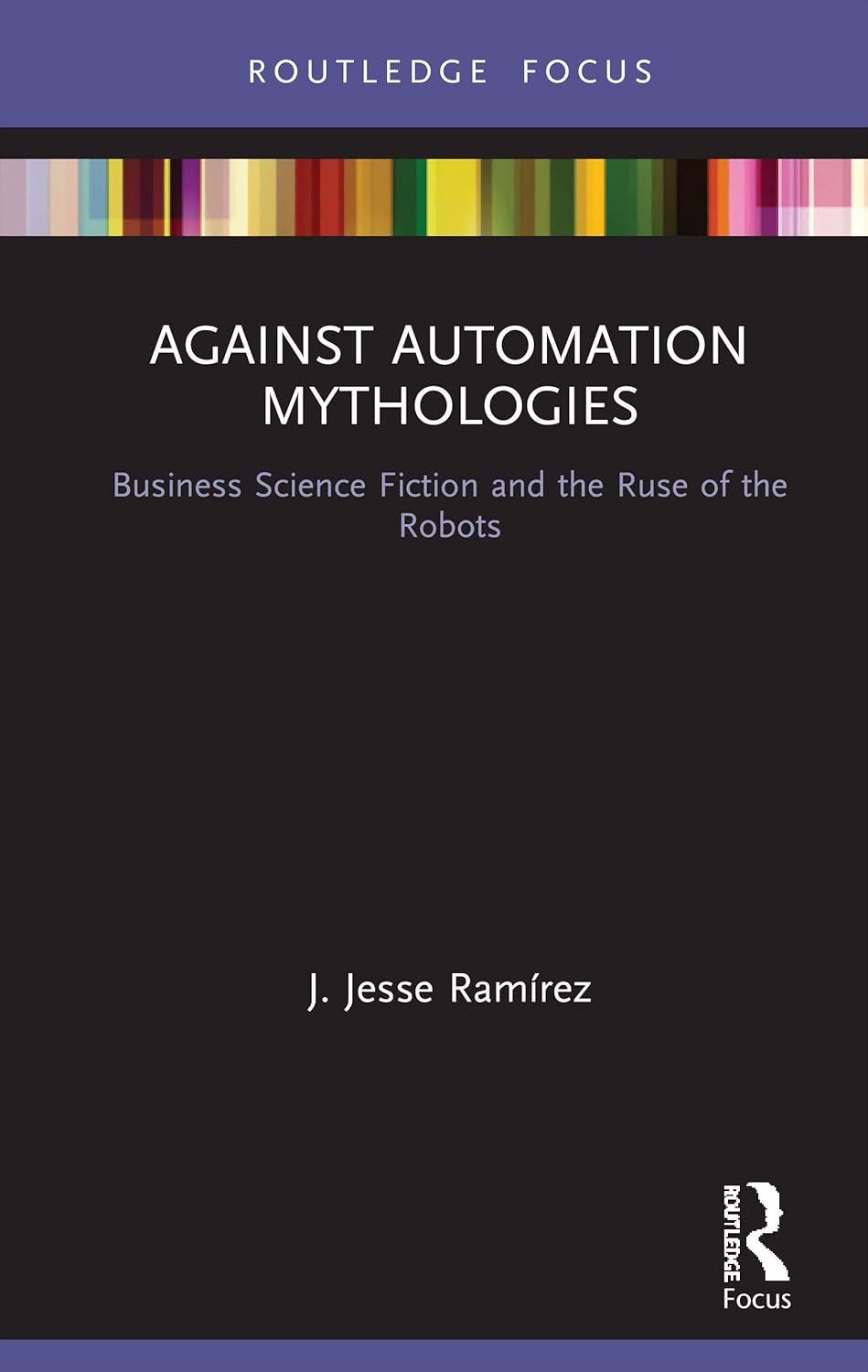
Against Automation Mythologies - Cultural Critique of Automation
Against Automation Mythologies - Cultural Critique of Automation
Price subject to change. Tap below for current.
Couldn't load pickup availability
In this review of Against Automation Mythologies the reviewer argues this book is for readers who want a cultural, historical lens on debates about labor and technology; its single biggest reason to read is the way it reframes automation as a technosocial project rather than a simple machines-versus-people narrative. Jesse Ramirez applies a critical practice informed by semioclasm to expose how stories, images, and policy talk turn automation into inevitability, making this text valuable for scholars, policy observers, and thoughtful technologists interested in the narratives that shape public understanding.
Key Features
- Cultural critique: Treats automation as a set of stories and symbols so readers can see how discourse shapes policy and perception.
- Technosocial framing: Positions automation as an ensemble of technologies and science fictions to reveal the social forces that give technologies meaning.
- Methode inspired by semioclasm: Adapts Roland Barthes's approach to debunk myths, making the analysis accessible for cultural studies readers.
- Focus on ideology: Foregrounds ideologies, exaggerations, and mystifications to challenge simplistic "rise of the robots" claims.
- Interdisciplinary approach: Uses cultural studies and history to connect narratives about automation to their political effects, useful for cross-field readers.
Who It's For
This book is best for academics, graduate students, journalists, and policy researchers who want a critical, theory-informed take on automation and labor. It suits readers looking for analysis of narratives and visual culture rather than technical machine-level explanation or programming guides.
Those seeking a practical handbook on building automation systems, a technical primer on machine learning, or a textbook of engineering methods should look elsewhere. Against Automation Mythologies is a cultural study that interrogates ideas and rhetoric rather than offering technical implementations.
Pros & Cons
Pros
- Provides a clear cultural framework for understanding automation, helping readers spot mythic claims in media and policy.
- Combines history and cultural studies to trace how images and discourse shape public views of labor.
- Uses the method of semioclasm to offer a focused, theoretically grounded critique rather than broad speculation.
Cons
- Not a technical or engineering-focused book, so readers expecting practical machine-level guidance may be disappointed.
Specifications
| Title | Against Automation Mythologies |
| Author | J. Jesse Ramirez |
| Approach | Technoclasm; cultural critique inspired by semioclasm |
| Focus | Narratives, images, ideologies around automation |
| Subject areas | Cultural studies, history, politics of automation |
| Intended audience | Scholars, journalists, policy researchers |
Our Verdict
Against Automation Mythologies is a compact, thoughtful critique that repays attention from anyone concerned with how discourse around automation shapes policy and public perception. Readers who value theory-driven cultural analysis will find strong value in Ramirez's reframing, while those needing technical detail should seek a different volume.
Frequently Asked Questions
Does this book explain how automation technologies work?
Answer. No; the book analyzes narratives and ideologies rather than providing technical instruction on automation systems.
Who wrote the book and what is the central method?
Answer. J. Jesse Ramirez authored the work, using a technoclasm approach inspired by Roland Barthes's semioclasm to critique automation mythologies.
Is the book aimed at a general audience?
Answer. It is aimed primarily at academic and policy-minded readers, though an interested general reader with patience for cultural theory can follow the analysis.
Editor's Take
Against Automation Mythologies is a theory-driven cultural critique that reframes automation as a technosocial project; it is valuable for scholars and policy-minded readers who want to understand how narratives shape perceptions of labor and technology.

Recently viewed
Recently viewed products will appear here as customers browse the store.