

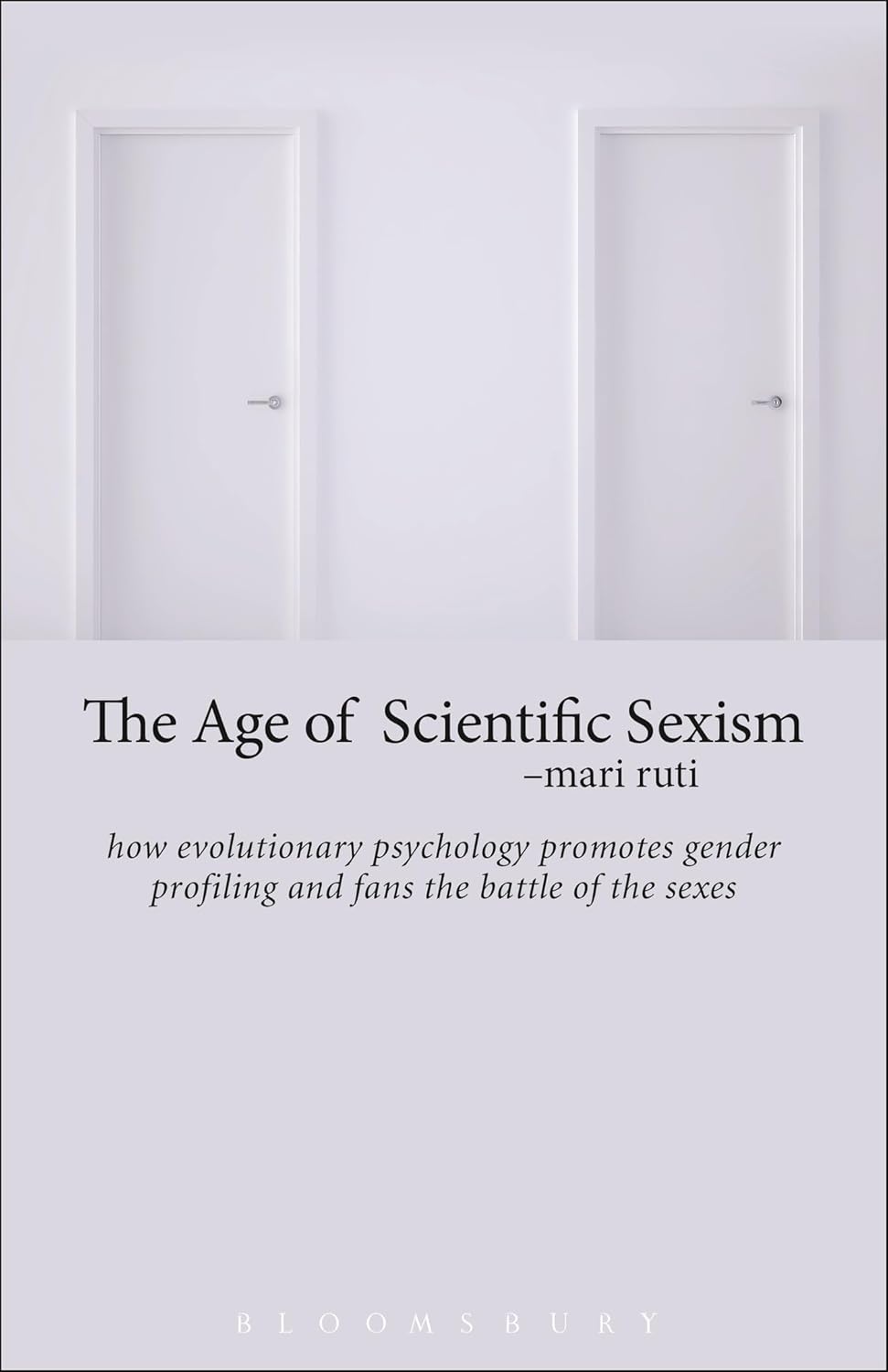
Age of Scientific Sexism: How Evolutionary Psychology Promotes Gender
Age of Scientific Sexism: How Evolutionary Psychology Promotes Gender
Price subject to change. Tap below for current.
Couldn't load pickup availability
In this review of Age of Scientific Sexism, Mari Ruti offers a rigorous, philosophically grounded critique aimed at readers who want to interrogate popular claims about sex differences. The book is best for those interested in feminist theory, philosophy of science, and cultural criticism; its single biggest reason to read is Ruti's persistent challenge to the assumption that evolutionary psychology provides objective facts about male and female behavior. She exposes how gender mythologies are repackaged as science, making this a timely read for scholars and thoughtful general readers alike.
Key Features
- Critical philosophical lens: Ruti applies sustained philosophical analysis to show how cultural ideologies shape purportedly objective scientific claims, helping readers spot rhetorical moves that present stereotype as science.
- Focus on evolutionary psychology: The book directly targets the gender profiling tendencies within evolutionary psychology, clarifying how its narratives revive retrograde models of sexuality.
- Examination of gender mythologies: Ruti untangles multiple strands of gender myth, offering readers concrete examples of how those myths are narrated as empirical fact.
- Cultural relevance: By linking academic arguments to mainstream culture, the book helps readers understand how scientific-sounding claims influence public debate about gender and relationships.
- Accessible critique: Though philosophically informed, the writing remains aimed at an educated general audience interested in feminist and critical theory.
Who It's For
This book is best for students and readers of feminist theory, scholars in the humanities, and anyone frustrated by simplistic claims that men and women inhabit wholly separate psychological universes. It is useful as a companion text for courses in gender studies, critical theory, or the history and criticism of science.
Readers seeking empirical guides to human biology or a technical primer on evolutionary modeling should look elsewhere, because the book focuses on philosophical and cultural critique rather than primary scientific methodology or data-driven instruction.
Pros & Cons
Pros
- Careful philosophical argumentation illuminates how gender stereotypes become framed as scientific facts.
- The focus on evolutionary psychology is timely and clarifies common misconceptions perpetuated in popular discourse.
- Links theory to culture, making complex ideas relevant to non-specialists.
Cons
- The book is interpretive and critical rather than an empirical textbook, so readers seeking detailed scientific data may find it limited.
Specifications
| Title | Age of Scientific Sexism, The: How Evolutionary Psychology Promotes Gender Profiling and Fans the Battle of the Sexes |
| Author | Mari Ruti |
| Subject | Critique of evolutionary psychology and gender mythologies |
| Approach | Philosophical and cultural criticism |
| Intended audience | Students, scholars, and readers of feminist theory |
| Category hints | Books; Literature & Fiction; History & Criticism; Feminist |
Our Verdict
Age of Scientific Sexism is a strong, intellectually engaged critique that belongs on the shelf of anyone concerned with how scientific authority is invoked to justify gender stereotypes. It delivers good value for readers who want to sharpen their critical tools and challenge the cultural claims of evolutionary psychology.
Frequently Asked Questions
Does the book defend evolutionary psychology?
No; the book offers a critical examination of evolutionary psychology and argues that it often presents cultural stereotypes as scientific fact.
Who should read this book?
Students and readers interested in feminist critique, philosophy of science, and cultural studies will find it most useful.
Is the book a scientific textbook?
No; it is a philosophical and cultural critique rather than an empirical or methodological primer on evolutionary science.
Editor's Take
Age of Scientific Sexism is a sharp philosophical critique that exposes how evolutionary psychology can repackage gender stereotypes as science; recommended for readers of feminist theory and cultural criticism.

Recently viewed
Recently viewed products will appear here as customers browse the store.