

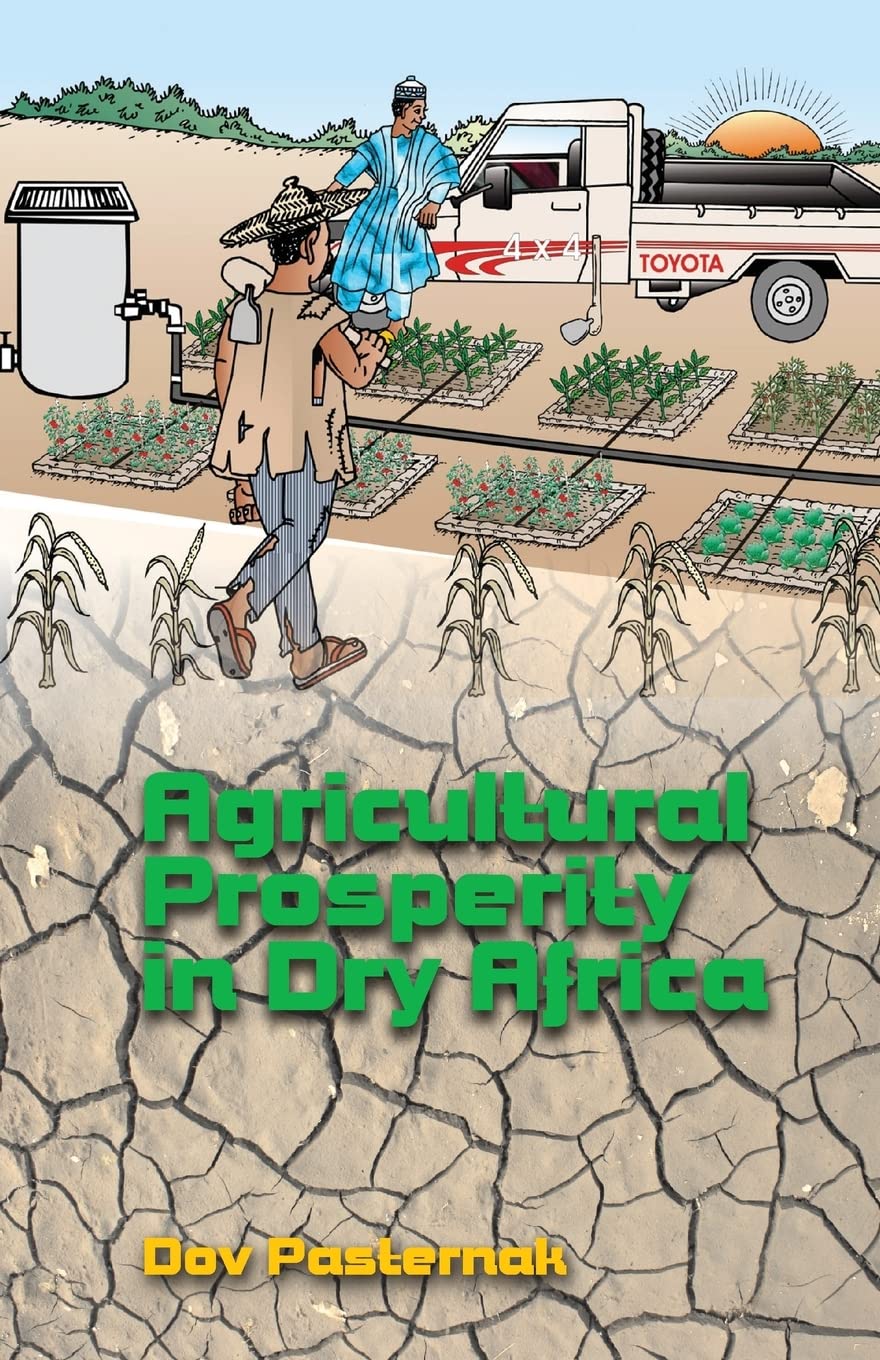
Agricultural Prosperity in Dry Africa - Practical Lessons
Agricultural Prosperity in Dry Africa - Practical Lessons
Price subject to change. Tap below for current.
Couldn't load pickup availability
In this review of Agricultural Prosperity in Dry Africa, the book is recommended for practitioners, policy makers and students who need practical, field-tested guidance on farming in arid regions. Prof Dov Pasternak writes from decades of direct involvement in African projects, and the single biggest reason to read it is the combination of technical detail and candid analysis of why development projects fail and how to make them work. The tone is accessible, making the book useful to both scientists and lay readers who want hands-on, applicable solutions for irrigation and crop diversification.
Key Features
- Pioneer experience: Describes first-hand work by a drip irrigation pioneer, offering historically grounded lessons that inform modern practice.
- Saline water irrigation: Explains approaches to irrigating with saline water, providing practical options for marginal water resources.
- Arid crops domestication: Summarizes efforts to adapt and domesticate crops suited to dry conditions, useful for diversification strategies.
- Project analysis: Breaks down common reasons development projects fail and proposes actionable corrective measures for better outcomes.
- Vegetable and fruit focus: Emphasizes irrigation methods and systems that make vegetable and fruit production more profitable in dry lands.
- Audience range: Written to be accessible to both laymen and scientists, so technical detail is paired with clear explanations.
Who It's For
The book is best for agricultural development advisers, extension workers, engineers and researchers engaged in dryland agriculture who need pragmatic techniques for irrigation, crop selection and project design. It is also valuable to NGO staff and government planners seeking realistic, on-the-ground perspectives rather than idealized models.
Casual readers with a passing interest in agricultural history will find the narrative informative but may not need all technical sections. Those seeking step-by-step how-to manuals for backyard gardening or highly detailed lab protocols should look elsewhere, as the book focuses on field experience and project-level solutions.
Pros & Cons
Pros
- Draws on long-term, practical experience in Africa, giving credibility to recommendations.
- Addresses saline irrigation and arid crop domestication, offering options for marginal environments.
- Balances scientific insight with readable explanations, making it accessible to a broad audience.
Cons
- The book is experience-driven rather than a step-by-step manual, so readers looking for detailed implementation blueprints may need supplemental guides.
Specifications
| Author | Prof Dov Pasternak |
| Subject | Agriculture in arid regions and irrigation |
| Focus areas | Drip irrigation, saline water use, crop domestication |
| Intended audience | Laymen and scientists |
| Geographic emphasis | Africa |
| Perspective | Field experience and project analysis |
Our Verdict
For development professionals and researchers working in dryland agriculture, this book is a compact, high-value resource that combines pioneering irrigation experience with frank project analysis. It is especially worthwhile for those planning irrigation of vegetables and fruit or designing diversification projects in marginal areas, and it delivers practical insight that complements technical manuals.
Frequently Asked Questions
Does the book cover technical irrigation methods?
The book discusses drip irrigation and saline water use with practical examples, though it is framed around field experience rather than detailed engineering blueprints.
Is this suitable for non-specialists?
Yes. The text is written for both laymen and scientists, providing explanations accessible to non-specialists while still useful to professionals.
Does it focus on a particular region?
Yes. The experiences and projects described are based on Prof Pasternak's work in Africa and the lessons are tailored to arid African conditions.
Editor's Take
This book is a practical, experience-driven resource for development professionals and researchers in dryland agriculture, offering actionable insight on irrigation, saline water use and crop diversification.

Recently viewed
Recently viewed products will appear here as customers browse the store.