

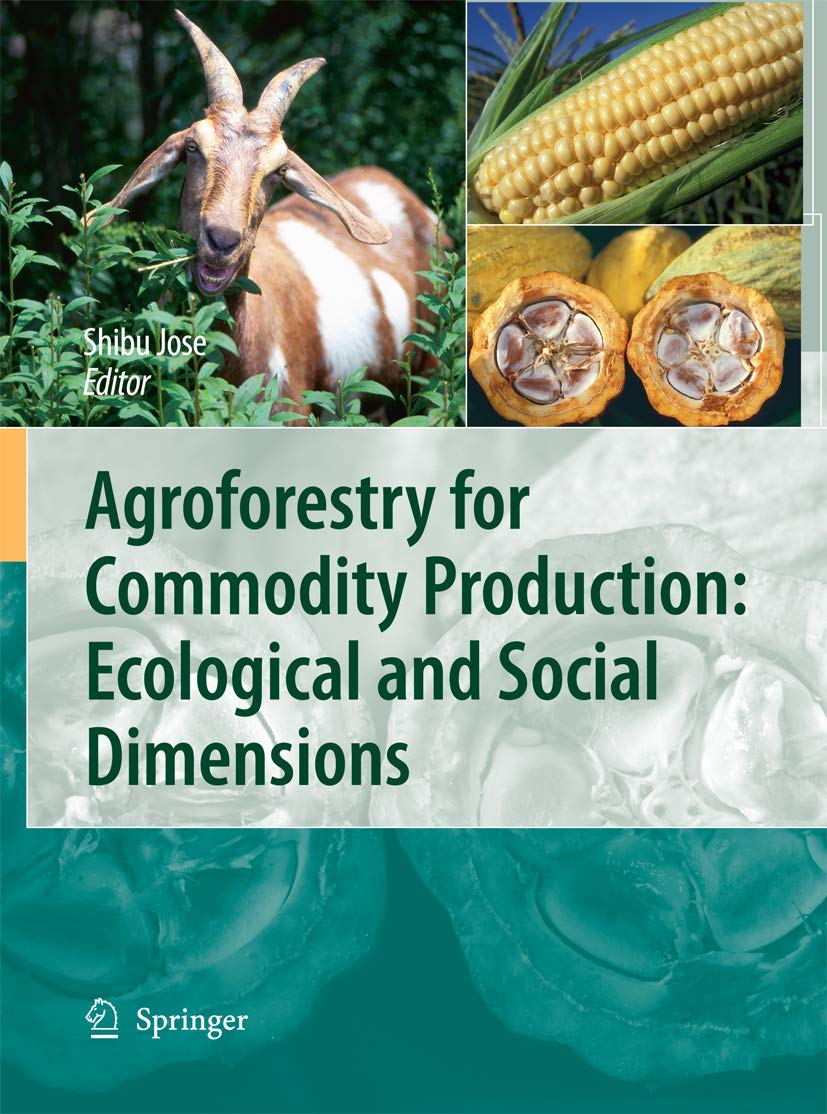
Agroforestry for Commodity Production: Ecological and Social
Agroforestry for Commodity Production: Ecological and Social
Price subject to change. Tap below for current.
Couldn't load pickup availability
Our review of Agroforestry for Commodity Production: Ecological and Social Dimensions finds it a thoughtful, case-study driven resource for practitioners and students seeking a deeper understanding of how integrated tree-crop systems can supply traditional and novel commodities. The book's single biggest strength is its balanced treatment of both biophysical processes and socioeconomic factors, making it more than a how-to manual and instead a rigorous reference that helps readers judge whether agroforestry is truly sustainable in specific contexts.
Key Features
- Global case studies: Detailed examples from around the world illustrate how agroforestry systems perform under diverse ecological and social conditions, helping readers apply lessons to local settings.
- Commodity focus: The book emphasizes production of food, fodder and fiber, showing practical pathways to integrate these commodities without sacrificing ecosystem services.
- Integration of novel crops: Coverage of biomass crops, botanicals and ornamental plants expands the typical agroforestry frame to include emerging market opportunities.
- Biophysical and socioeconomic balance: Parallel treatment of ecological processes and human dimensions provides a rounded basis for evaluating sustainability and policy implications.
- Audience-oriented writing: The text is arranged to be useful to students, researchers, professionals and policy makers involved in natural resource and environmental management.
Who It's For
This book is best for graduate students, researchers and extension professionals who need a rigorous, literature-backed synthesis of how agroforestry can produce commodities while maintaining ecosystem functions. Its case-study approach also makes it valuable to policy makers evaluating land-use strategies and to practitioners curious about integrating non-traditional crops into mixed systems.
Readers looking for a step-by-step implementation guide or field manual with planting schedules and detailed design blueprints should look elsewhere; this volume is stronger on synthesis, comparative analysis and policy-relevant discussion than on hands-on construction details.
Pros & Cons
Pros
- Comprehensive case studies offer real-world evidence of ecological and economic outcomes across regions.
- Explicit focus on a broad commodity spectrum, including biomass and botanicals, opens practical options for diversification.
- Balanced attention to both biophysical and socioeconomic dimensions aids interdisciplinary planning and policy work.
Cons
- The book is not a field manual, so readers seeking detailed planting plans or stepwise management protocols will need supplemental resources.
Specifications
| Title | Agroforestry for Commodity Production: Ecological and Social Dimensions |
| Author / Brand | Shibu Jose |
| Scope | Global case studies and synthesis of agroforestry systems |
| Commodity coverage | Food, fodder, fiber, biomass, botanicals, ornamentals |
| Intended audience | Students, researchers, professionals, policy makers |
| Focus areas | Biophysical processes and socioeconomic dimensions |
Our Verdict
Agroforestry for Commodity Production is a strong academic and applied resource for anyone evaluating agroforestry as a sustainable production strategy; its global cases and dual focus on ecology and social factors make it good value for students, researchers and decision makers who need evidence-based insight rather than a field handbook.
Frequently Asked Questions
Does this book include practical planting schedules?
The volume emphasizes synthesis and case studies rather than step-by-step planting schedules or field-level installation guides.
Who authored the book?
The book is associated with Shibu Jose and compiles global research and case examples on agroforestry commodity production.
Will it help with policy decisions?
Yes; the balanced treatment of socioeconomic and ecological dimensions makes it useful for policy makers assessing sustainable land-use options.
Editor's Take
A rigorous, case-study driven synthesis that balances biophysical and socioeconomic perspectives; best for students, researchers and policy makers evaluating agroforestry as a sustainable commodity strategy.

Recently viewed
Recently viewed products will appear here as customers browse the store.