

Algebraic Geometry - Classic Introduction for Geometers
Algebraic Geometry - Classic Introduction for Geometers
Price subject to change. Tap below for current.
Couldn't load pickup availability
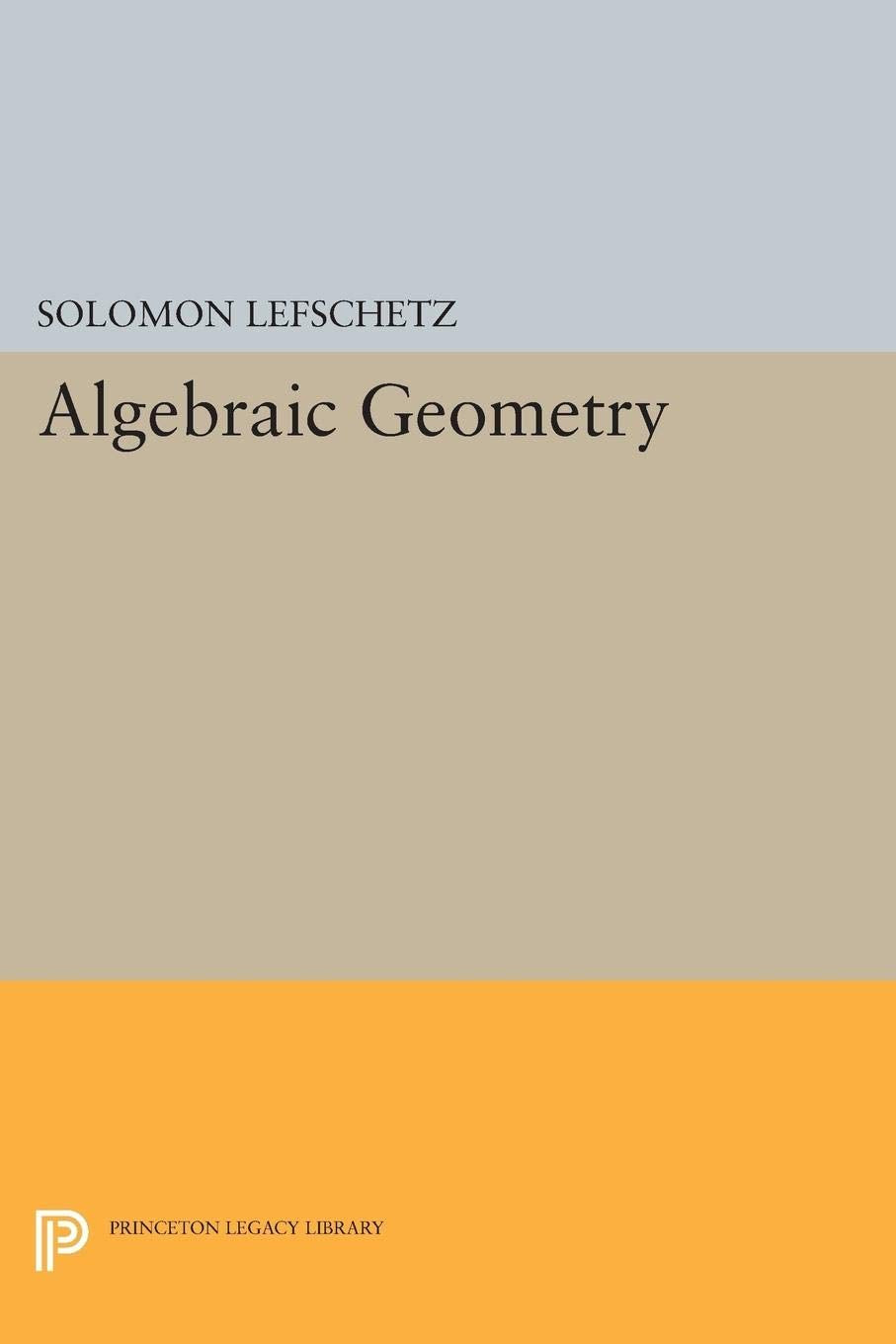
Our review of Algebraic Geometry explains why this classic text remains a valuable bridge between algebra and geometry for readers seeking historical depth and clear exposition. Originally published in 1953 and reissued in the Princeton Legacy Library, this book by Solomon Lefschetz presents the first systematic use of modern algebraic techniques on classical geometry problems, making it especially useful for researchers, advanced students, and mathematicians who prefer geometric intuition alongside algebraic methods. The bottom line: buy this if you want a spirited, original historical treatment that complements more modern, purely algebraic textbooks.
Key Features
- Historical perspective: The text applies modern algebraic tools to classical problems, giving readers a sense of how algebraic geometry developed.
- Comprehensive selection: Lefschetz covers a wide range of classical geometric problems, useful for seeing connections across topics.
- Readable exposition: Written with spirit and originality, the prose helps readers who approach the subject from a geometric, not purely algebraic, viewpoint.
- Durable reprint: The Princeton Legacy Library edition restores the original text in a paperback or hardcover format for continued access.
- Scholarly value: Preserving the original presentation makes this a useful reference for historical study and comparison with modern treatments.
Who It's For
Algebraic Geometry is aimed at readers who already have a solid undergraduate background in mathematics and want a historically grounded treatment that emphasizes geometric insight. Graduate students, researchers in geometry and topology, and instructors looking for classical perspectives will find the book rewarding.
Those seeking a contemporary, computational, or category-theoretic modern textbook may prefer a more recent treatment focused on schemes and modern algebraic geometry machinery; this reprint is strongest as a classical companion rather than a primary modern course text.
Pros & Cons
Pros
- Preserves Lefschetz's original voice and methodology, which is instructive for historical context.
- Connects algebraic techniques to classical geometry problems, aiding geometric intuition.
- Durable Princeton Legacy Library reprint makes an out-of-print classic accessible again.
Cons
- Not a replacement for modern algebraic geometry texts that emphasize schemes and contemporary formalism.
Specifications
| Title | Algebraic Geometry (Princeton Legacy Library) |
| Author | Solomon Lefschetz |
| Original publication | 1953 |
| Edition | Princeton Legacy Library reprint |
| Format | Paperback or hardcover reissue |
| Audience | Advanced undergraduates, graduate students, researchers |
Our Verdict
Algebraic Geometry is a worthwhile purchase for readers who want a classical, geometrically oriented introduction that preserves Lefschetz's original approach; it offers strong historical and pedagogical value and good long-term utility as a reference alongside more modern texts.
Frequently Asked Questions
Is this suitable as a first course in algebraic geometry?
It is best as a companion or supplemental text; readers may need a more modern introductory book for scheme theory and current formalism.
Does this reprint alter the original content?
The Princeton Legacy Library edition preserves the original text and presentation while offering durable reprint formats.
Who benefits most from this book?
Graduate students, researchers, and instructors seeking classical geometric treatments and historical perspective will benefit most.
Editor's Take
Algebraic Geometry is a valuable reprint that preserves Lefschetz's original, geometrically focused treatment; recommended for advanced students and researchers seeking historical perspective alongside modern texts.

Recently viewed
Recently viewed products will appear here as customers browse the store.