

Algorithmic Aspects of Bioinformatics - Clear Algorithmic Models
Algorithmic Aspects of Bioinformatics - Clear Algorithmic Models
Price subject to change. Tap below for current.
Couldn't load pickup availability
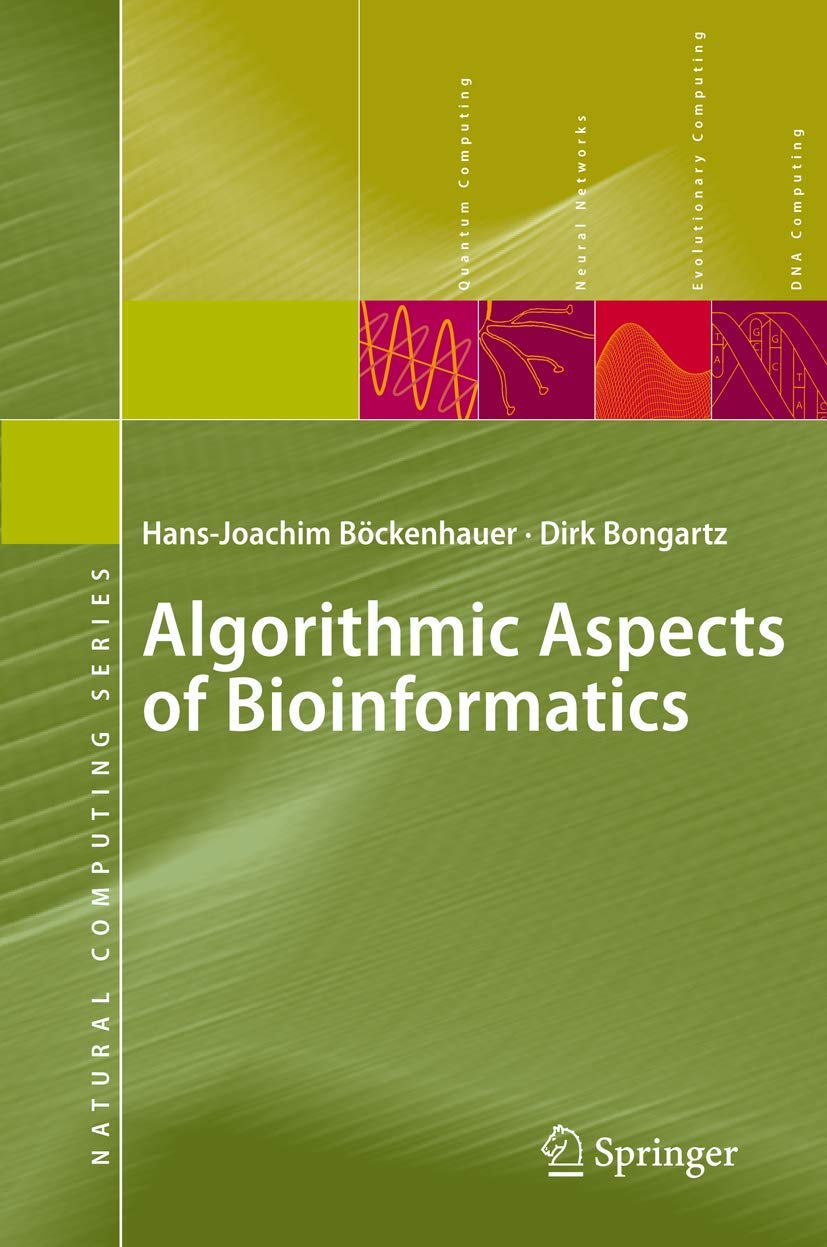
In this review of Algorithmic Aspects of Bioinformatics the reviewer finds a rigorous, example-rich introduction to the algorithmic foundations of modern bioinformatics. This book is best for readers who want a mathematically precise yet intuitive treatment of problems such as string algorithms, sequence alignment, physical mapping, and DNA sequencing; the single biggest reason to buy is its clear presentation of formal models together with detailed derivations that bridge biology and algorithmics for practical analysis.
Key Features
- Foundational biology primer: A concise introduction to the basics of molecular biology that prepares readers to understand downstream algorithmic problems.
- String algorithms and alignments: Detailed coverage of string processing techniques and alignment methods helps readers apply algorithmic thinking to sequence analysis.
- Physical mapping and sequencing: Clear explanations of physical mapping and DNA sequencing models show how theoretical algorithms connect to laboratory data.
- Application-driven examples: Real application examples, including protein spatial structure prediction and haplotype computation, demonstrate practical algorithmic use.
- Mathematical rigor with intuition: Formal models are presented precisely but supported by many figures, chapter summaries, and worked derivations for accessibility.
Who It's For
This book suits advanced undergraduates, graduate students, and practitioners in computer science or computational biology who want a careful, algorithmic perspective on bioinformatics problems and models. It is particularly valuable for readers who appreciate formal proofs alongside intuitive explanations and visual aids.
Readers seeking a purely experimental laboratory manual, a high-level nontechnical overview, or a survey of the latest machine learning architectures for bioinformatics should look elsewhere, since the book focuses on algorithmic models and theoretical analysis rather than lab protocols or deep learning toolkits.
Pros & Cons
Pros
- Combines formal models and intuitive explanations to make complex algorithmic ideas accessible.
- Includes detailed derivations and many figures that clarify algorithmic steps and proofs.
- Provides practical application examples such as protein structure prediction and haplotype computation.
Cons
- The emphasis on mathematical precision may be dense for readers seeking a lightweight introduction or purely applied tutorials.
Specifications
| Title | Algorithmic Aspects of Bioinformatics |
| Series | Natural Computing Series |
| Authors | Hans-Joachim Bockenhauer, Dirk Bongartz |
| Subject focus | String algorithms, alignments, physical mapping, DNA sequencing |
| Approach | Formal models with mathematical derivations and figures |
| Application examples | Protein spatial structure prediction, haplotype computation |
Our Verdict
Algorithmic Aspects of Bioinformatics is a solid choice for readers who want a precise, model-driven treatment of bioinformatics problems. Its clear derivations and application examples make it good value for students and researchers who need a bridge between molecular biology concepts and algorithmic methods.
Frequently Asked Questions
Does this book require a strong math background?
Some comfort with discrete algorithms and basic mathematical reasoning is helpful because the book presents formal models and derivations.
Are there practical examples included?
Yes, the book includes application examples such as predicting protein spatial structure and computing haplotypes from genotype data.
Is this a lab protocol or experimental methods book?
No, it focuses on algorithmic models and analysis rather than experimental laboratory procedures.
Editor's Take
A rigorous, example-rich guide that links molecular biology to algorithmic models; ideal for students and researchers who want precise, application-focused analysis rather than lab protocols.

Recently viewed
Recently viewed products will appear here as customers browse the store.