

An Introduction to Thermal-Fluid Engineering - Integrated Intro
An Introduction to Thermal-Fluid Engineering - Integrated Intro
Price subject to change. Tap below for current.
Couldn't load pickup availability
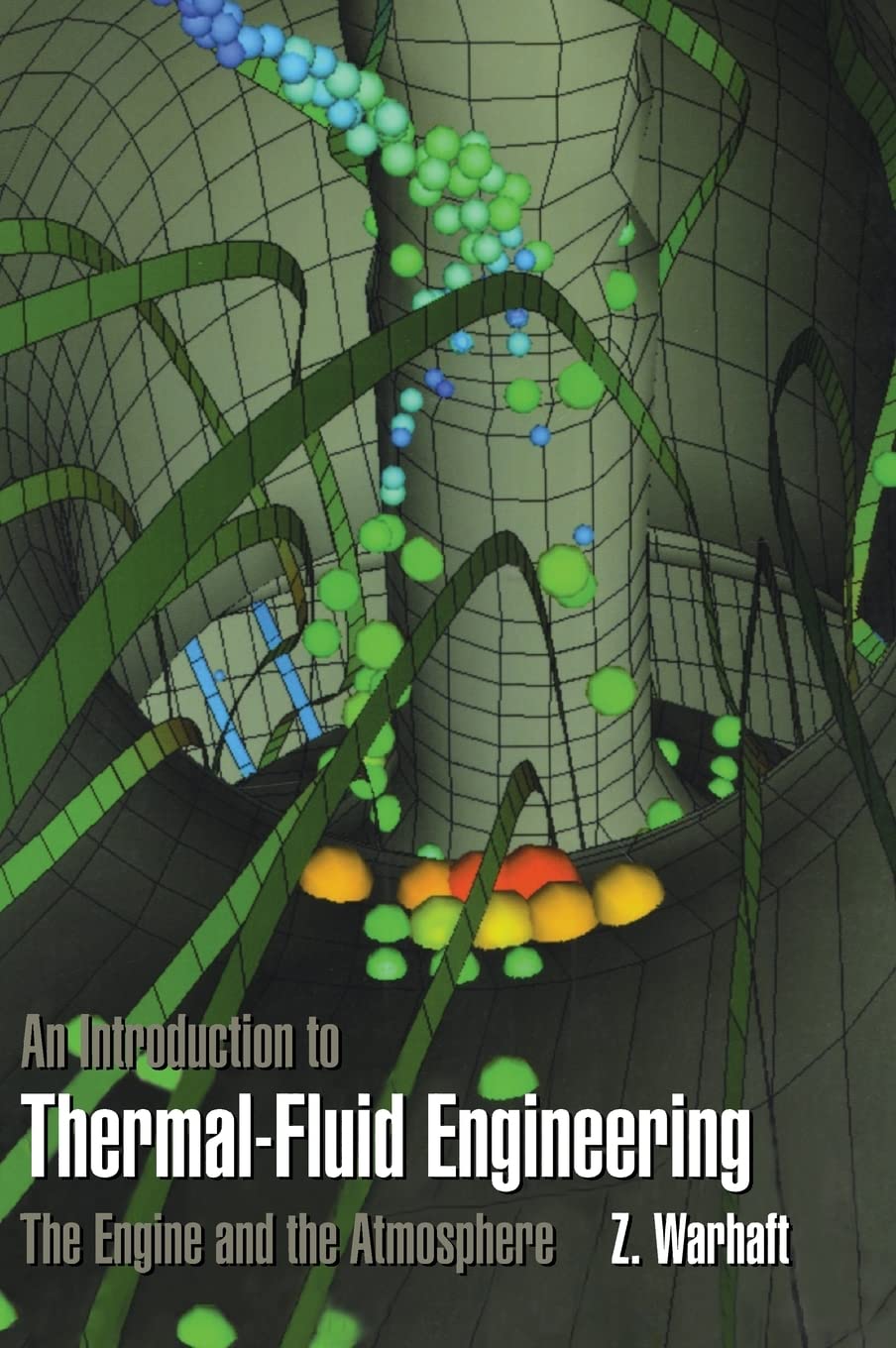
Our review of An Introduction to Thermal-Fluid Engineering: The Engine and the Atmosphere finds it an unusually readable textbook for beginning engineers who want a practical bridge between core theory and real-world environmental impact. Written to introduce thermodynamics, fluid mechanics, heat transfer and combustion through the concrete example of an engine operating in the atmosphere, the book's single biggest selling point is its integrated approach that ties technical fundamentals to social and environmental consequences in a manner suited to first-year or early undergraduate courses.
Key Features
- Integrated curriculum: Presents thermodynamics, fluid mechanics, heat transfer and combustion together so students see how these disciplines interact in practical engineering problems.
- Real-world focus: Uses the engine and its interaction with the atmosphere as a running example to ground abstract concepts in tangible situations.
- Environmental context: Discusses the greenhouse effect and atmospheric inversions to connect engine exhaust and energy use to larger environmental issues.
- Accessible to beginners: Aimed at beginning engineering students, the text explains fundamentals without assuming advanced prior coursework, making it suitable for introductory classes.
- Broad discipline appeal: Written to be useful to mechanical, civil, agricultural, environmental, aerospace and chemical engineering students who need thermal-fluid foundations.
Who It's For
This book is best for instructors and students at the start of an engineering program who want a single resource that links basic thermal-fluid science with practical applications and societal implications. It works well for first- and second-year undergraduates in multiple disciplines who benefit from an applied approach rather than a narrowly theoretical one.
Those seeking a rigorous graduate-level reference or a problem-saturated engineering text for advanced design courses should look elsewhere; the emphasis here is on clear exposition and conceptual integration rather than exhaustive mathematical derivations.
Pros & Cons
Pros
- Clear, integrated presentation of multiple core subjects helps students understand system-level behavior.
- Concrete engine-and-atmosphere framing makes abstract topics easier to visualize and relate to environmental issues.
- Accessible style and illustrations welcome newcomers to thermal-fluid topics across engineering disciplines.
Cons
- Not intended as an advanced, highly mathematical textbook, so instructors needing deep derivations may supplement with other texts.
Specifications
| Title | An Introduction to Thermal-Fluid Engineering: The Engine and the Atmosphere |
| Series | Cambridge Series on Chemical Engineering |
| Author | Zellman Warhaft |
| Scope | Thermodynamics, fluid mechanics, heat transfer, combustion |
| Audience | Beginning engineering students across several disciplines |
| Focus | Engine interaction with atmosphere and social implications |
Our Verdict
For undergraduate instructors and students who want an approachable, system-oriented introduction to thermal-fluid engineering, this book offers excellent value by combining multiple core topics with environmental perspective. It is especially useful where teaching goals include connecting technical fundamentals to the social and atmospheric consequences of engineering practice.
Frequently Asked Questions
Does this book cover combustion basics?
Yes. Combustion is presented alongside thermodynamics, fluid mechanics and heat transfer as part of the integrated engine-atmosphere treatment.
Is it suitable for nonmechanical engineers?
Yes. The book is written for students in mechanical, civil, agricultural, environmental, aerospace and chemical engineering.
Is this a graduate-level reference?
No. The emphasis is on introductory concepts and integrated understanding rather than advanced mathematical detail.
Editor's Take
This accessible introductory text ties thermodynamics, fluid mechanics, heat transfer and combustion to real-world engine and atmospheric issues, making it ideal for beginning engineering students who need an integrated, environmentally aware foundation.

Recently viewed
Recently viewed products will appear here as customers browse the store.