

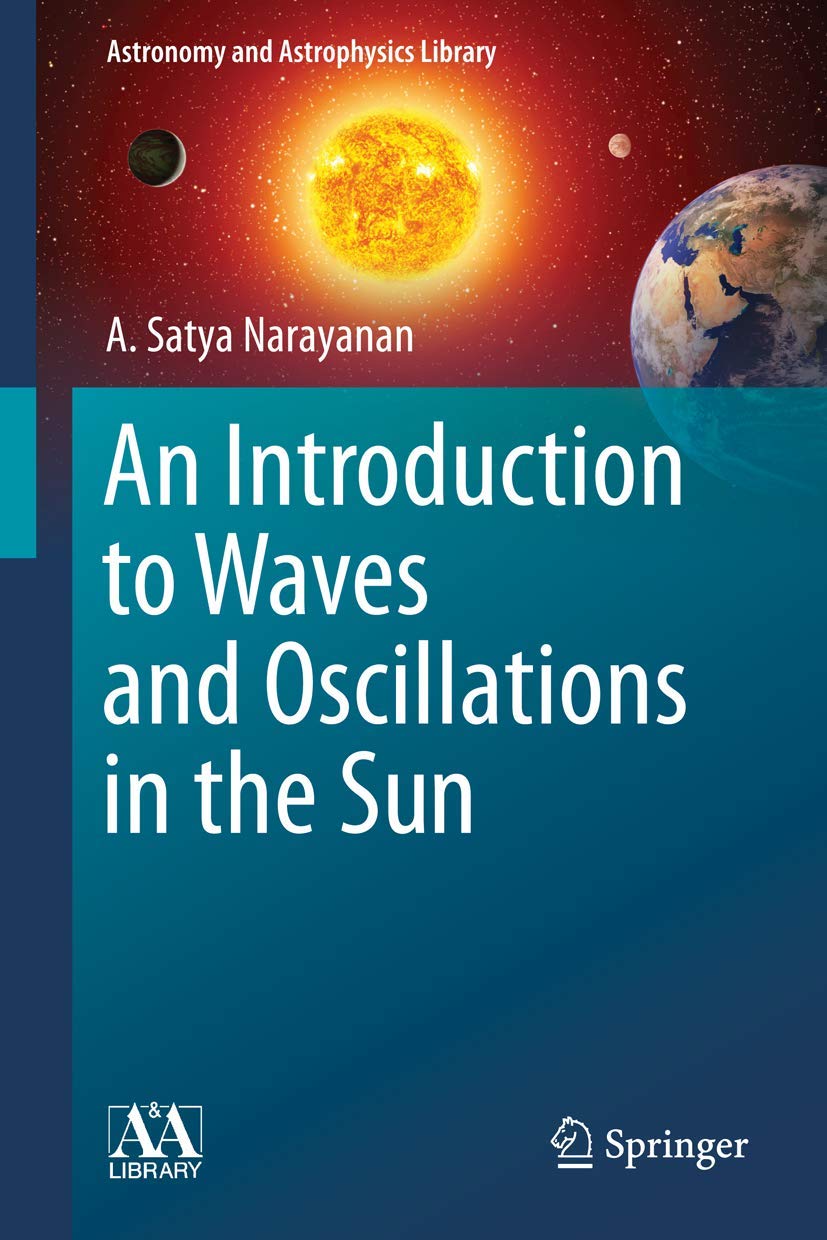
An Introduction to Waves and Oscillations in the Sun - Clear Intro
An Introduction to Waves and Oscillations in the Sun - Clear Intro
Price subject to change. Tap below for current.
Couldn't load pickup availability
In this review of An Introduction to Waves and Oscillations in the Sun readers get a compact, focused introduction aimed at students and researchers in solar physics and astrophysics. The book's single biggest reason to buy is its clear, topic-driven presentation of waves and oscillations in both uniform and non-uniform solar media, combined with basic electrodynamics and magnetohydrodynamics foundations that make advanced literature easier to follow. This review highlights where the text succeeds as a classroom supplement and a researcher reference.
Key Features
- Comprehensive scope: Covers the Sun's basic properties and the fundamentals needed to study solar oscillations, which helps readers build context before technical material.
- Electrodynamics foundation: Offers clear treatment of electrodynamics that supports later chapters on magneto-hydrodynamics and wave behavior in magnetized plasmas.
- Magneto-hydrodynamics focus: Discusses force-free and current-free fields so readers understand the common idealized field configurations used in solar theory.
- Waves in varied media: Presents sound, Alfven, surface waves and geometry-specific solutions in slab and cylindrical geometries to bridge theory and observed phenomena.
- Instabilities and observations: Introduces fluid instabilities and notes observational signatures of oscillations, helping connect mathematical results to solar data.
- Intro to helio-seismology: Provides a doorway into helio-seismology, making it useful for those beginning to study the Sun's internal structure.
Who It's For
The book is aimed primarily at graduate students, early-stage researchers, and advanced undergraduates who need a concise, mathematically informed introduction to waves and oscillations in the Sun. It works well as a course supplement or a reference chapter-by-chapter when preparing to read more advanced research papers.
Those seeking an exhaustive textbook with extensive problem sets or an extended historical survey of observational programs should look elsewhere, as the text emphasizes core theory and essential observational ties rather than pedagogical exercises or comprehensive observational catalogs.
Pros & Cons
Pros
- Clearly structured progression from fundamentals to specialized wave topics makes complex ideas accessible.
- Solid coverage of magneto-hydrodynamics provides practical context for solar magnetic field studies.
- The inclusion of helio-seismology and observational signatures helps bridge theory and data analysis.
Cons
- Not designed as a problem-driven textbook, so instructors needing extensive exercises will need supplemental materials.
Specifications
| Title | An Introduction to Waves and Oscillations in the Sun |
| Series | Astronomy and Astrophysics Library |
| Author | A. Satya Narayanan |
| Subject focus | Waves, oscillations, magneto-hydrodynamics, helio-seismology |
| Target audience | Students and researchers in solar and astrophysics |
| Content highlights | Electrodynamics, force-free fields, Alfven and surface waves, instabilities |
Our Verdict
An Introduction to Waves and Oscillations in the Sun is a concise, technically solid resource for students and early researchers who need a focused entry into solar wave theory and magneto-hydrodynamics. It delivers clear explanations and relevant geometry-specific discussions that make it good value as a course supplement or reference, though instructors requiring many exercises should pair it with problem collections.
Frequently Asked Questions
Does this book cover helio-seismology?
Yes, it provides an introduction to helio-seismology and how oscillations probe the Sun's internal structure.
Is prior MHD knowledge required?
No, the text includes basics of electrodynamics and magneto-hydrodynamics to prepare readers for the wave topics.
Is it suitable as a primary textbook for a semester course?
It is best used as a supplement or concise course text; instructors who need extensive exercises should add problem sets from other sources.
Editor's Take
A concise, technically sound introduction to solar wave theory and magneto-hydrodynamics ideal for graduate students and early researchers; useful as a course supplement though it lacks extensive exercises.

Recently viewed
Recently viewed products will appear here as customers browse the store.