

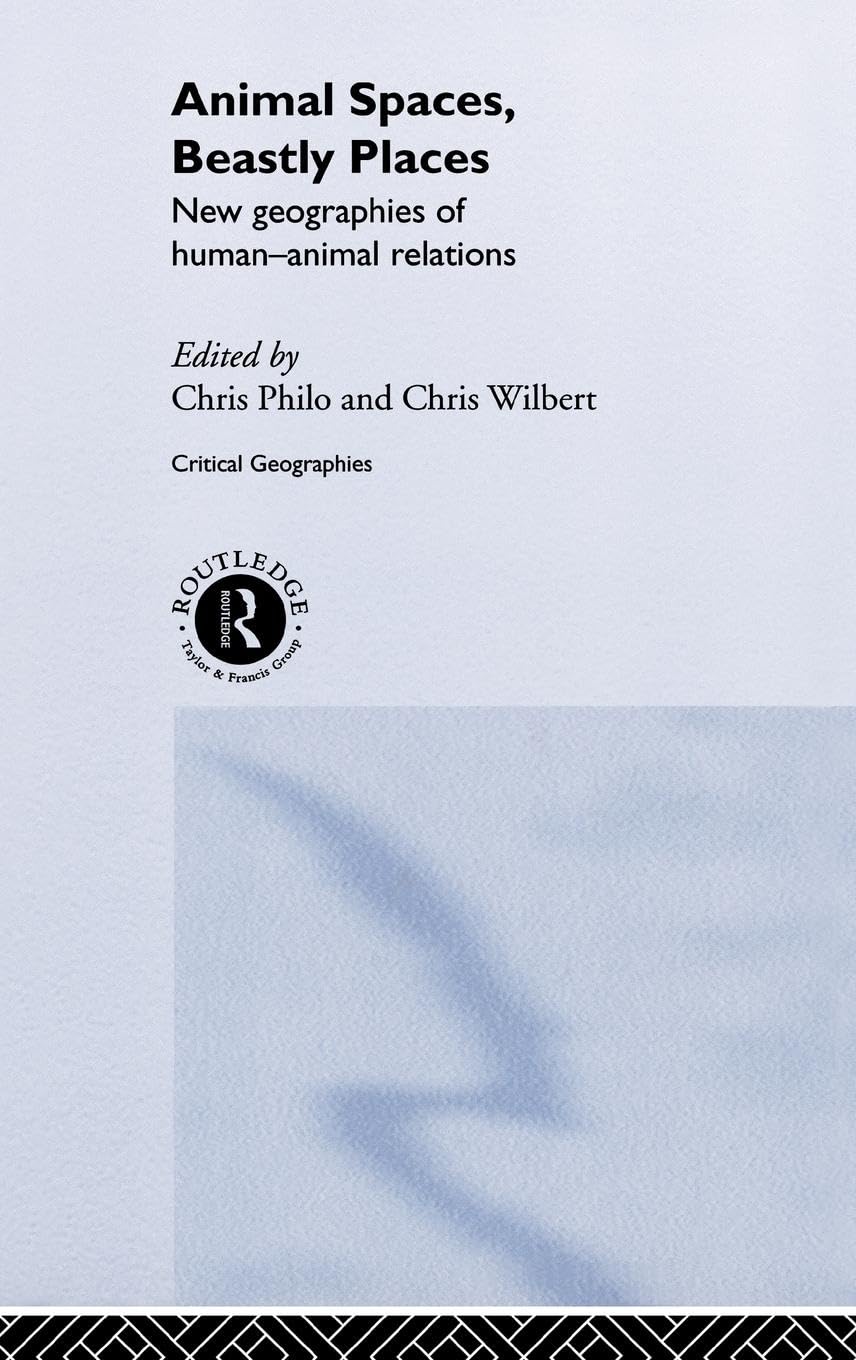
Animal Spaces, Beastly Places - Critical Geographies
Animal Spaces, Beastly Places - Critical Geographies
Price subject to change. Tap below for current.
Couldn't load pickup availability
In this review of Animal Spaces, Beastly Places the authors assemble essays that map human and non-human interactions across everyday settings and more contested environments. The book is best suited to readers who want a thoughtful, academic exploration of how animals are categorized and placed within social and spatial orders; its single biggest strength is the variety of cases, from feral cats and wild wolves to domestic pets and intensively farmed cattle, that illuminate complex emotional and institutional relations. The tone is analytical rather than prescriptive, and the collection consistently foregrounds the tangled mix of compassion, control and power in animal-human encounters.
Key Features
- Wide-ranging case studies: The essays cover diverse examples such as feral cats, wolves, domestic animals and intensively farmed cattle to show different human-animal relations.
- Conceptual framing: Contributors interrogate how species, usefulness, domesticity and wildness are used to sort animals into places and roles.
- Emotional perspective: The book acknowledges emotions from compassion to cruelty, adding nuance to discussions of policy and everyday practice.
- Geographical focus: Spatial ordering and contested places are central, helping readers see how location shapes treatment and meaning of animals.
- Interdisciplinary contributors: Multiple voices provide varied methodological approaches that deepen understanding of human-animal mixes.
Who It's For
Animal Spaces, Beastly Places is aimed at students, researchers and practitioners in human geography, animal studies and biological social sciences who want critical perspectives on how animals are assigned spaces and social roles. It works well as a course text or for seminar reading when paired with empirical case discussion.
The book is less suitable for readers seeking practical care guides, step-by-step animal husbandry manuals or a purely natural history account; its emphasis is theory-driven and focused on social ordering rather than species-level biology or how-to instruction.
Pros & Cons
Pros
- Rich, varied examples provide concrete illustrations of abstract ideas about place and classification.
- Strong emphasis on spatial dynamics clarifies how environments influence human-animal relations.
- Interdisciplinary essays keep the discussion lively and allow comparative perspectives.
Cons
- The academic tone and theoretical focus may feel dense for casual readers seeking lighter narrative or practical guidance.
Specifications
| Title | Animal Spaces, Beastly Places: New geographies of humananimal relations (Critical Geographies) |
| Authors / Editors | Chris Philo, Chris Wilbert |
| Main subjects | Human-animal relations, spatial ordering, animal categorization |
| Representative cases | Feral cats, wild wolves, domestic animals, intensively farmed cattle |
| Approach | Interdisciplinary essays combining geography and animal studies |
| Tone | Analytical, critical, academic |
Our Verdict
Animal Spaces, Beastly Places is a thoughtful, well-structured collection that will repay readers who want to understand how societies sort animals into places and roles. Its value lies in comparative case work and conceptual clarity, making it a good purchase for academics and graduate students interested in critical geography and animal studies, though casual readers may find the style somewhat dense.
Frequently Asked Questions
Does this book focus on specific species?
It uses a range of species as examples, including feral cats, wolves, domestic animals and intensively farmed cattle, to explore broader spatial and social themes.
Is the book practical for animal care?
No; the emphasis is on critical and geographical analysis rather than hands-on care or husbandry guidance.
Who contributed to this volume?
The book is a collection of essays edited by Chris Philo and Chris Wilbert, drawing on interdisciplinary scholarship in geography and animal studies.
Editor's Take
Animal Spaces, Beastly Places is a thoughtful collection that uses varied case studies to reveal how societies sort animals into places and roles; it is highly useful for academics and graduate students though its theoretical tone may be dense for casual readers.

Recently viewed
Recently viewed products will appear here as customers browse the store.