

Argument Types and Fallacies in Legal Argumentation - Analytical
Argument Types and Fallacies in Legal Argumentation - Analytical
Price subject to change. Tap below for current.
Couldn't load pickup availability
In this review of Argument Types and Fallacies in Legal Argumentation, the bottom line is clear: this book is for legal scholars, advanced law students and practicing lawyers who need rigorous tools to judge whether a legal argument is sound. The authors provide a focused, theory-driven treatment of several classic argument types and fallacies, so the single biggest reason to buy is its careful method for distinguishing sound instances of an argument type from unsound ones. The tone is academic but practical, and the book consistently aims to improve the reader's ability to evaluate legal reasoning.
Key Features
- Theoretical tools: The book supplies conceptual frameworks that help readers assess the internal structure and premises of legal arguments.
- Argument types covered: Detailed analyses of argument from authority, argument ad hominem and argument from ignorance clarify how these forms operate in legal contexts.
- Slippery slope analysis: A focused examination of slippery slope arguments shows when such chains of reasoning are persuasive and when they fail.
- Distinction of sound vs unsound: Each argument type is treated so readers learn to separate sound instances from unsound ones in practice.
- Practical orientation: Although theoretical, the text repeatedly connects concepts to their particular use in legal argumentation, aiding application in cases and briefs.
- Concise scope: By concentrating on a selection of common argument types, the book delivers depth rather than broad, surface coverage.
Who It's For
This book is best suited to law faculty, doctoral students in law and philosophy, and practicing lawyers who regularly evaluate or construct legal arguments and want a principled basis for judging argument quality. Its emphasis on distinguishing sound from unsound instances makes it a strong companion for seminars on legal reasoning or appellate brief review.
Readers looking for an introductory textbook on informal logic or a broad survey of all fallacies may find the focus narrower than expected; those audiences should consider a general logic primer instead.
Pros & Cons
Pros
- Clear theoretical frameworks that enhance critical evaluation of legal arguments.
- Detailed treatment of specific argument types relevant to legal practice.
- Practical linkage between theory and how arguments are used in legal settings.
Cons
- The material is academic in tone and may be dense for readers without background in legal theory.
Specifications
| Title | Argument Types and Fallacies in Legal Argumentation |
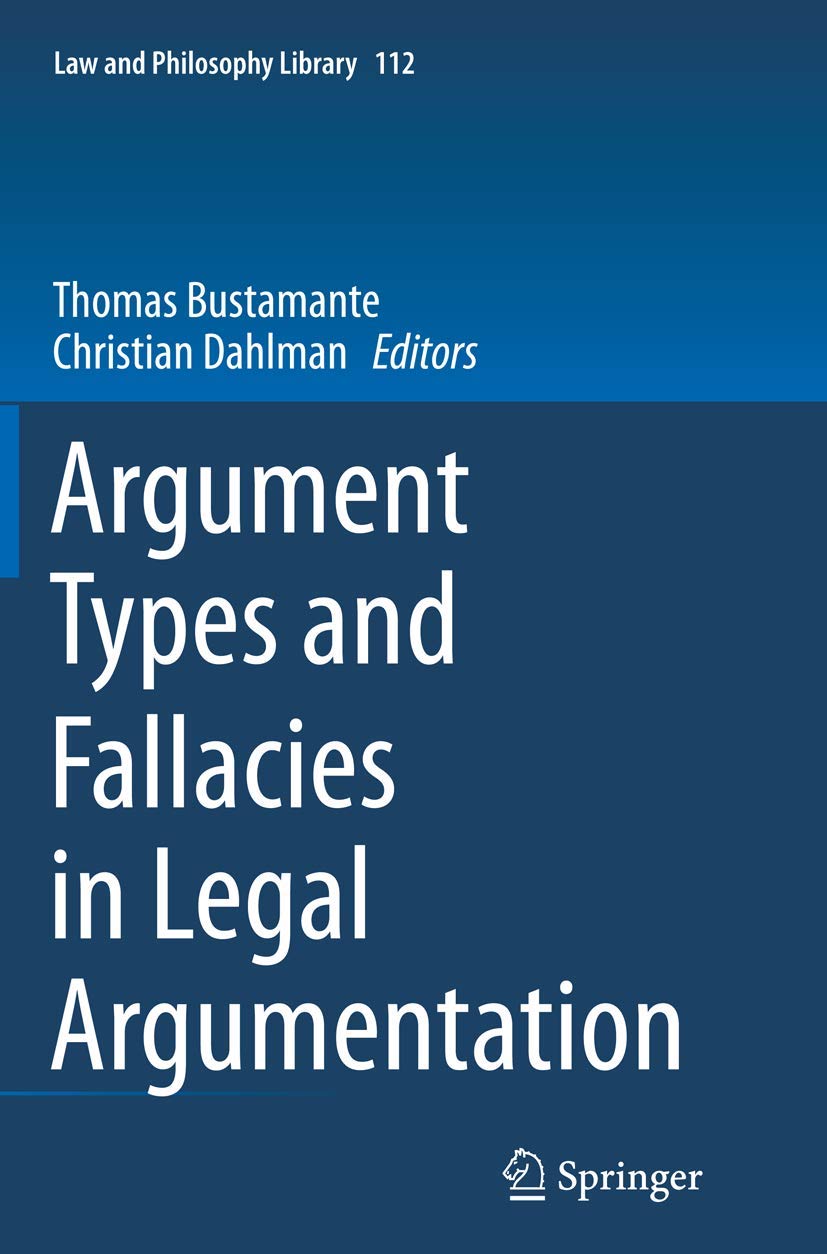
| Series | Law and Philosophy Library, 112 |
| Authors | Thomas Bustamante, Christian Dahlman |
| Focus | Theoretical tools for evaluating legal arguments |
| Argument types analyzed | Authority, ad hominem, ignorance, slippery slope and others |
| Use case | Legal reasoning, academic study, appellate argument evaluation |
Our Verdict
Argument Types and Fallacies in Legal Argumentation is a thoughtful, narrowly focused work that pays off for readers who need rigorous methods to assess legal reasoning. It is good value for those in legal academia or practice because it turns abstract fallacy discussion into usable evaluative tools, though casual readers seeking a lighter introduction may prefer a more elementary text.
Frequently Asked Questions
Does the book cover practical courtroom examples?
The book emphasizes theoretical analysis but links concepts to legal usage rather than presenting exhaustive case studies.
Who wrote the book?
It was written by Thomas Bustamante and Christian Dahlman for the Law and Philosophy Library series.
Is this suitable for beginners in logic?
Not primarily; the text assumes some familiarity with legal theory and argumentative concepts and is best for advanced students and practitioners.
Editor's Take
A focused, theory-driven guide that helps legal scholars and practitioners distinguish sound from unsound instances of common argument types, offering strong value for those needing rigorous evaluative tools.

Recently viewed
Recently viewed products will appear here as customers browse the store.