

Aristotle's De Anima: A Critical Commentary - Clear Exposition
Aristotle's De Anima: A Critical Commentary - Clear Exposition
Price subject to change. Tap below for current.
Couldn't load pickup availability
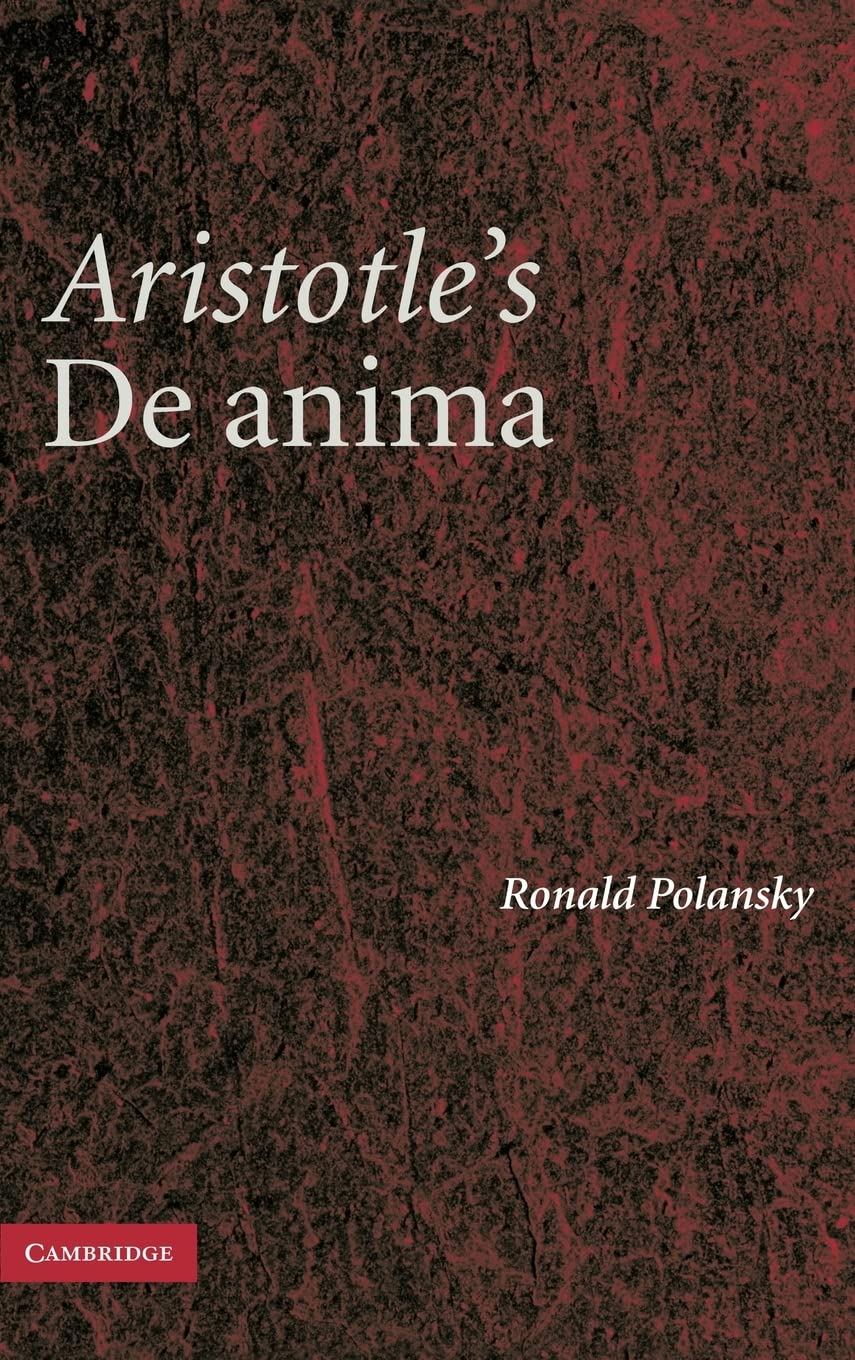
In this review of Aristotle's De Anima: A Critical Commentary, the bottom line is straightforward: this is a thoughtful, disciplined guide to one of Aristotle's most important works and it is best suited to readers who want a careful, systematic interpretation rather than a brief introduction. Ronald Polansky argues persuasively that De Anima is more structured and unified than many earlier readings allow, and this commentary consistently highlights how the parts fit into a broader account of the soul and its faculties. For scholars, advanced students, and serious readers of ancient philosophy, the book's methodical approach is the single biggest reason to buy.
Key Features
- Systematic reading: Polansky presents De Anima as a tightly organized work, which helps readers trace Aristotle's argument across chapters and themes.
- Close textual analysis: The commentary examines key passages in detail, clarifying Aristotle's claims about perception, thought, and the soul.
- Contextual interpretation: The work places arguments from De Anima within Aristotle's broader biology and psychology, making connections that illuminate purpose and function.
- Accessible scholarship: While aimed at a scholarly audience, the prose explains technical points patiently, aiding advanced students learning to read Aristotle closely.
- Argument-focused: The commentary emphasizes why Aristotle treats faculties as he does, helping readers assess competing interpretations.
Who It's For
This commentary is best for graduate students, professional philosophers, and serious undergraduates who already have some familiarity with Aristotle and want a rigorous, interpretive guide to De Anima rather than a simple primer. Its focus on structure and argument makes it particularly useful for readers preparing papers or teaching seminars.
Readers seeking a short, popular introduction to Aristotle or a purely historical survey of ancient psychology should look elsewhere; this volume assumes willingness to engage with dense argument and sustained textual attention.
Pros & Cons
Pros
- Faithful, detailed readings of passages that reveal the alleged systematic unity of De Anima.
- Clarifies connections between faculties of the soul and Aristotle's biological framework.
- Careful argumentation that supports scholars reconstructing Aristotle's intentions.
Cons
- The book's emphasis on systematic structure may feel dense to readers seeking a lighter introductory overview.
Specifications
| Title | Aristotle's De Anima: A Critical Commentary |
| Author | Ronald Polansky |
| Subject | Aristotle, De Anima, ancient philosophy |
| Focus | Systematic interpretation of the soul and its faculties |
| Intended audience | Scholars, advanced students, academic readers |
| Approach | Close textual commentary and argument reconstruction |
Our Verdict
Polansky's commentary is a strong, careful resource for anyone committed to reading De Anima in depth; it repays patient study by revealing a coherent, systematic Aristotle. Those who need a concise primer should seek a different introduction, but for scholars and advanced students this volume is good value for the depth of interpretive work it provides.
Frequently Asked Questions
Is this commentary suitable for beginners?
It is aimed at readers with prior exposure to Aristotle; beginners may find it demanding and should pair it with a general introduction to Aristotelian philosophy.
Does the book argue that De Anima is unified?
Yes; Polansky contends the treatise is more structured and systematic than commonly thought and traces that unity through the work's approach to faculties.
Will this help with teaching Aristotle?
Yes; the close readings and emphasis on argument structure are useful for seminar preparation and classroom discussion.
Editor's Take
Polansky's commentary offers a careful, systematic reading of De Anima that rewards scholars and advanced students who want an in-depth interpretive guide, though it is dense for beginners.

Recently viewed
Recently viewed products will appear here as customers browse the store.