

Aristotle's Syllogism and the Creation of Modern Logic - Historical
Aristotle's Syllogism and the Creation of Modern Logic - Historical
Price subject to change. Tap below for current.
Couldn't load pickup availability
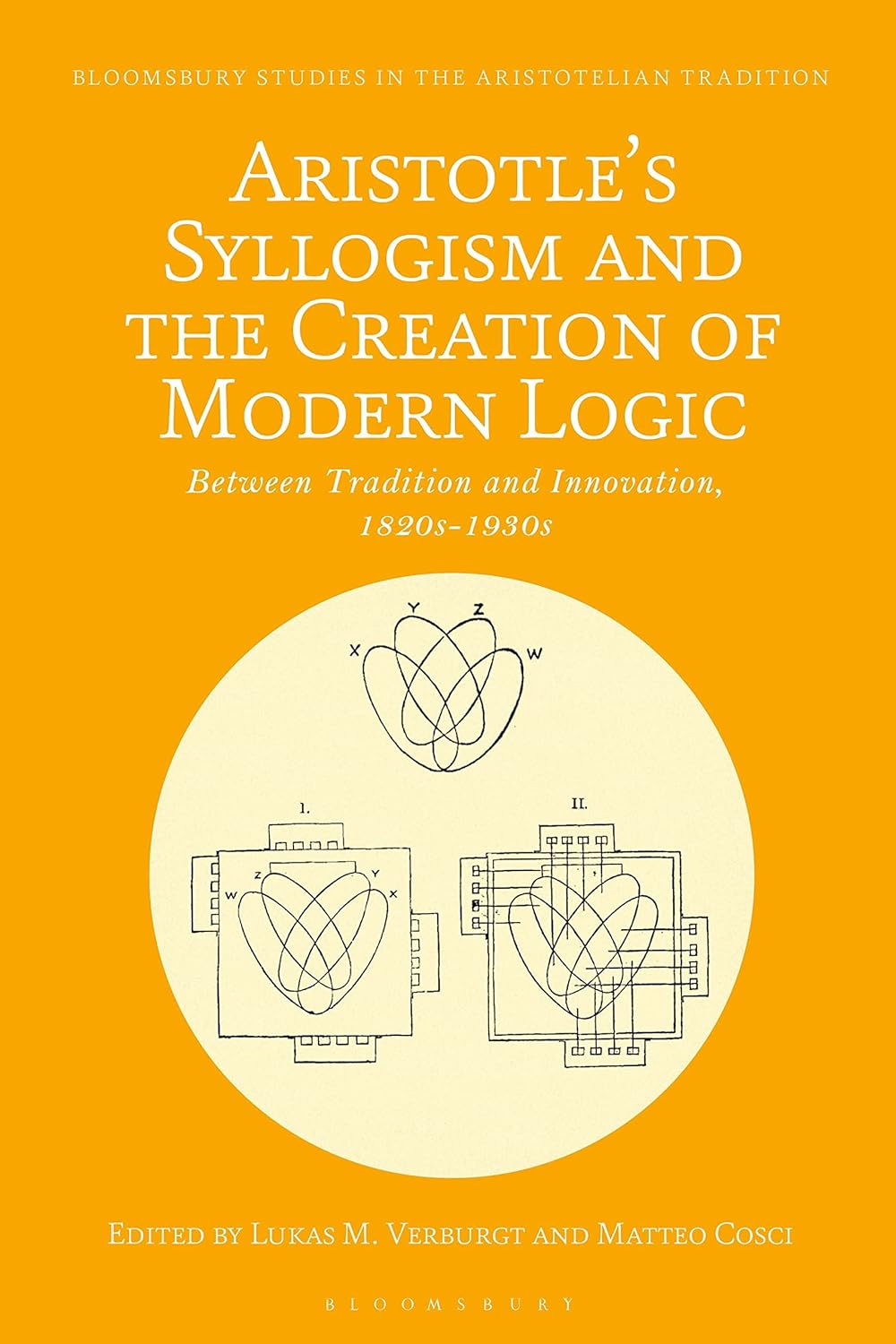
Our review examines Aristotle's Syllogism and the Creation of Modern Logic, a scholarly volume that maps the surprisingly persistent role of the syllogism from the 1820s to the 1930s. This book is for readers who want a rigorous historical account of how traditional Aristotelian ideas intersected with breakthroughs by figures such as Boole, Frege and Peirce; the single biggest reason to read it is its argument that the syllogistic tradition was not merely displaced but actively informed early developments in modern logic and first-order systems.
Key Features
- Historical scope: The book traces developments across a century (1820s-1930s), giving readers a long-view of intellectual continuity and change.
- Focused argument: It argues that reflections on the syllogism helped shape new logical systems, so readers gain a clear interpretive thesis rather than only descriptive history.
- Scholarly collaboration: Edited by Lukas M. Verburgt and Matteo Cosci, the volume brings multiple specialist voices to bear on complex texts and debates.
- Connections to major figures: The text situates Boole, Frege and Peirce in relation to syllogistic traditions, helping readers see continuity behind apparent rupture.
- Balance of tradition and innovation: The book frames the period as one of both continuity and discontinuity, useful for those studying intellectual transitions.
Who It's For
This book is best for graduate students, academic researchers and informed readers interested in the history of logic, philosophy of language, or the development of set theory and first-order logic. Its emphasis on argument and interpretation rewards readers who can follow technical and historical nuance and who want to reconsider standard narratives about the rise of modern logic.
Those seeking an elementary or introductory textbook on logic should look elsewhere, since the volume assumes familiarity with key figures and debates and is pitched as a scholarly contribution rather than a primer on formal methods.
Pros & Cons
Pros
- Persuasive thesis that reframes the role of the syllogism in modern logical developments.
- Careful historical span (1820s-1930s) that highlights continuity across generations of logicians.
- Contributions draw connections to notable figures like Boole, Frege and Peirce, enriching contextual understanding.
Cons
- The scholarly tone and assumed background make it less accessible to casual readers or beginners.
Specifications
| Title | Aristotle's Syllogism and the Creation of Modern Logic |
| Series | Bloomsbury Studies in the Aristotelian Tradition |
| Editors/Author | Lukas M. Verburgt (with Matteo Cosci) |
| Period covered | 1820s-1930s |
| Main focus | Influence of Aristotelian syllogism on modern logic |
| Key figures discussed | Boole, Frege, Peirce |
Our Verdict
Aristotle's Syllogism and the Creation of Modern Logic is a thoughtful, well-argued scholarly volume that will repay readers who want to rethink the genealogy of first-order logic and early set theory; its value lies in reframing a familiar story and showing how tradition and innovation coexisted. Recommended for specialists and advanced students as a strong, research-oriented treatment.
Frequently Asked Questions
Does this book cover technical proofs of modern logic?
The book is historical and interpretive in focus; it discusses logical developments and influence more than providing formal textbook-style proofs.
Who edited the volume?
The volume is presented by Lukas M. Verburgt with Matteo Cosci contributing to the editorial project.
What period does the book examine?
It examines the era from the 1820s through the 1930s, emphasizing continuity and change in logical thought.
Editor's Take
A thoughtful scholarly volume that persuasively argues the syllogism helped shape modern logic; recommended for advanced students and researchers who want a nuanced historical reappraisal.

Recently viewed
Recently viewed products will appear here as customers browse the store.