

Arnheim, Gestalt and Media: An Ontological Theory - Media Ontology
Arnheim, Gestalt and Media: An Ontological Theory - Media Ontology
Price subject to change. Tap below for current.
Couldn't load pickup availability
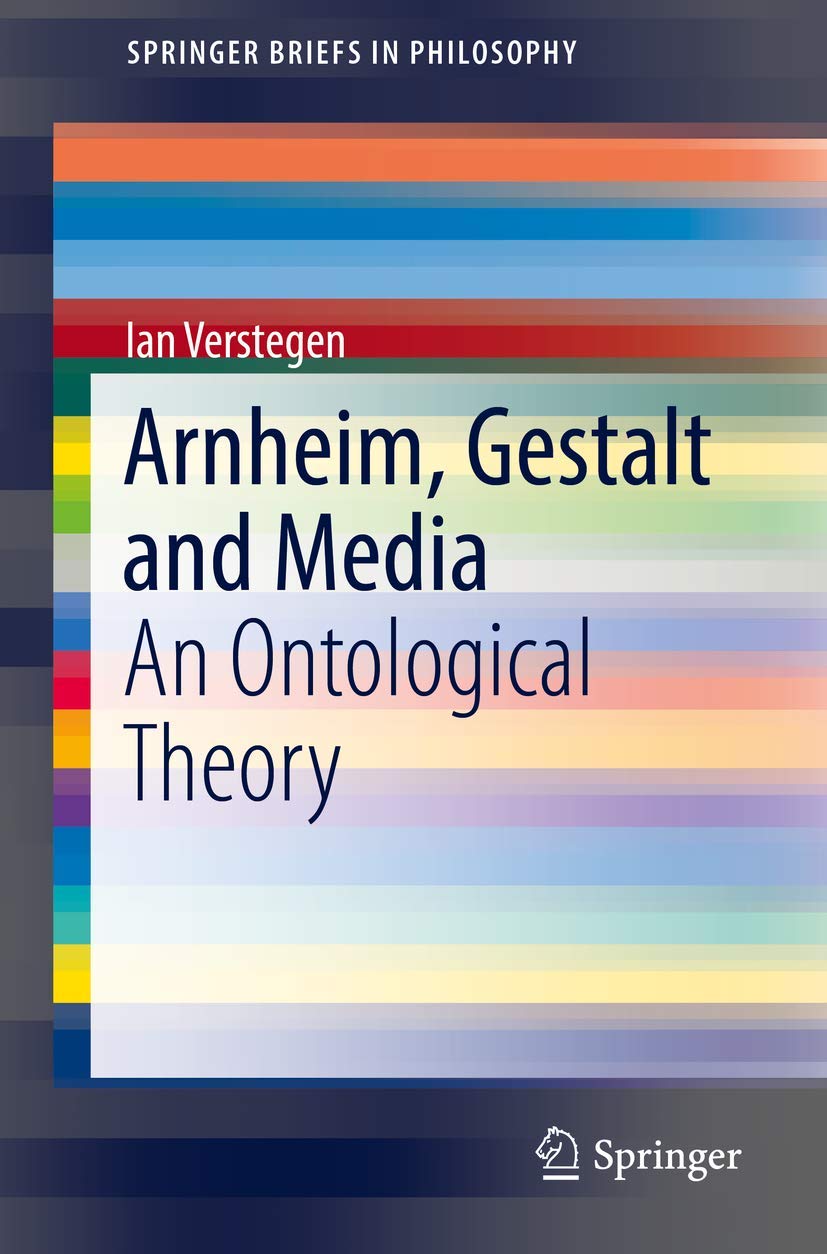
In this review of Arnheim, Gestalt and Media: An Ontological Theory the bottom line is clear: this short book is best for readers who want a rigorous, concept-driven defense of media difference and an unusual pairing of Gestalt psychology with Austrian ontology. Ian Verstegen presents a focused, scholarly argument that reconstructs Rudolf Arnheim's ideas into a coherent ontological framework, so scholars and advanced students of philosophy, media theory, and film studies will find the book most rewarding. The book's strength is its precise theoretical move: a non-essential account of media difference that avoids simplistic identity claims.
Key Features
- Non-essential ontology: The book defends media difference without relying on fixed essences, offering a flexible account useful for contemporary media theory.
- Gestalt and ontology synthesis: It marries Gestalt psychology with Austrian ontological concepts to reframe Arnheim's proposals in philosophical terms.
- Focused argument: The text concentrates on core theoretical claims, making it a compact resource for scholars rather than a broad survey.
- Historical engagement: The author situates Rudolf Arnheim as a significant early critic and theorist of film and radio, clarifying his contributions for modern readers.
- Concise presentation: As a brief academic monograph, it provides a dense but readable treatment that can be read in a few concentrated sittings.
Who It's For
This book suits graduate students and researchers in philosophy, media studies, film theory, and the history of psychology who need a defensible, ontological argument about what makes media distinct. Those interested in Rudolf Arnheim's work will appreciate the clarified theoretical lineage and the explicit linking to Gestalt ideas.
Readers seeking an introductory textbook, a broad history of media, or practical guidance for media production should look elsewhere; the treatment is theoretical and assumes familiarity with philosophical terms and the basics of Gestalt psychology.
Pros & Cons
Pros
- Provides a clear, philosophically rigorous defense of media difference grounded in a non-essential approach.
- Innovatively integrates Gestalt psychology with Austrian ontology to reinterpret Arnheim's theories.
- Concentrated and well-structured argumentation makes it useful for seminar discussion and citation.
Cons
- Its narrow, theoretical focus means it is not a general introduction and may feel dense to newcomers.
Specifications
| Title | Arnheim, Gestalt and Media: An Ontological Theory |
| Series | SpringerBriefs in Philosophy |
| Author | Ian Verstegen |
| Main topics | Gestalt psychology; Austrian ontology; media theory |
| Focus | Defense of media difference via non-essential ontology |
| Historical subject | Rudolf Arnheim's theory of film and radio |
Our Verdict
Arnheim, Gestalt and Media is a concise, intellectually ambitious study that rewards readers who want a principled ontological account of media difference. It is good value for scholars and advanced students because it translates Arnheim into contemporary philosophical terms and offers a disciplined, non-essential framework useful for further research and citation.
Frequently Asked Questions
Does this book explain Arnheim's original views?
Yes; the book presents Arnheim's ideas and reframes them within a contemporary ontological argument grounded in Gestalt thought.
Is this accessible to beginners?
The treatment is theoretical and assumes background in philosophy and media theory, so beginners may find it challenging.
Is the book practical for media creators?
Not primarily; its value lies in conceptual clarification rather than production techniques or practical guidance.
Editor's Take
A concise, concept-driven monograph that translates Arnheim into a contemporary ontological framework; best for scholars and advanced students seeking a rigorous defense of media difference.

Recently viewed
Recently viewed products will appear here as customers browse the store.